.png)
Key takeaways:
Choosing the right project management software can make or break a mid-sized professional services firm. With revenue leakage, scope creep, and resource misallocation costing service businesses an estimated 11.4% of every dollar invested in projects, the stakes are too high to rely on spreadsheets and disconnected tools. The best project management software for mid-sized professional services firms does far more than track tasks—it unifies project delivery, resource planning, financials, and client relationships into a single source of truth. This guide breaks down four standout platforms purpose-built for this challenge: Ravetree, Wrike, BigTime, and Kantata.
The Current Challenge: Why Mid-Sized Firms Struggle With Generic Tools
Mid-sized professional services firms—typically those with 50 to 500 employees spanning marketing agencies, consulting practices, IT services, architecture firms, and accounting offices—occupy an uncomfortable middle ground. They have outgrown basic task management apps, but enterprise platforms often feel bloated and overpriced for their needs.
The core problem? Most generic project management tools were designed for product teams or internal operations, not for businesses that sell their people's time. Professional services firms need to connect project management to billing, track utilization rates, manage client expectations, and forecast revenue—all simultaneously.
According to a 2024 report by SPI Research, professional services firms with best-in-class operations achieve profit margins nearly twice as high as average performers. The differentiator? Integrated technology that connects project execution to financial outcomes. Firms relying on patchwork solutions—a separate tool for tasks, another for time tracking, yet another for invoicing—consistently underperform because critical data lives in silos.
This fragmentation creates real pain. As explored in a Ravetree analysis of why generic project management tools fail client service businesses, the fundamental issue is that general-purpose platforms lack native support for billable hours tracking, client profitability analysis, and the kind of resource allocation that services firms depend on. When your business model revolves around delivering expertise at a margin, your software needs to understand that model natively.
The challenge is compounded by rapid growth. Mid-sized companies represent more than a third of U.S. private-sector GDP, yet they often lack the dedicated IT infrastructure and implementation teams that enterprises rely on. They need solutions that are powerful enough to manage complex workflows but intuitive enough that teams actually adopt them.
The Strategic Framework: What to Look for in Professional Services Software
Before evaluating specific platforms, mid-sized firms need a clear framework for what good project management software actually looks like in a services context. Here are the capabilities that matter most:
Unified work management. The platform should combine task management, time tracking, resource planning, and financial reporting in one system. Toggling between disconnected apps wastes time and introduces errors. A comprehensive guide to selecting the right PSA software outlines how all-in-one platforms reduce administrative overhead by eliminating duplicate data entry across systems.
Client-centric design. Professional services firms are inherently client-facing. The software should support CRM capabilities, client portals, and visibility into project status that can be shared with stakeholders without creating extra reporting work.
Financial intelligence. Budget tracking, profitability analysis, revenue forecasting, and automated invoicing are non-negotiable. Research from Deloitte indicates that organizations using integrated financial analytics in project delivery see a 20–25% improvement in project margin predictability.
Scalable resource management. As firms grow, capacity planning and utilization optimization become critical. The right platform should surface who is available, who is overbooked, and where the gaps are before they become crises.
Adoption simplicity. A tool that nobody uses is worse than no tool at all. A McKinsey survey found that 70% of complex change programs fail to achieve their goals, often due to employee resistance. Intuitive interfaces and low learning curves dramatically increase the odds of successful technology adoption.
With this framework in hand, here is how four leading platforms stack up for mid-sized professional services firms.
The Top Four Platforms: A Closer Look
1. Ravetree
Ravetree is an all-in-one work management platform built specifically for professional services firms, including marketing and advertising agencies, engineering and architecture practices, consulting firms, IT service providers, and accounting offices. Rather than forcing firms to cobble together separate tools for projects, resources, time, billing, and CRM, Ravetree integrates all of these functions into a single, unified platform.
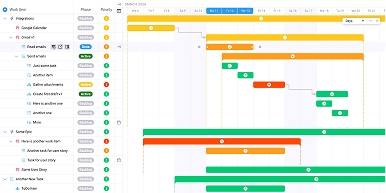
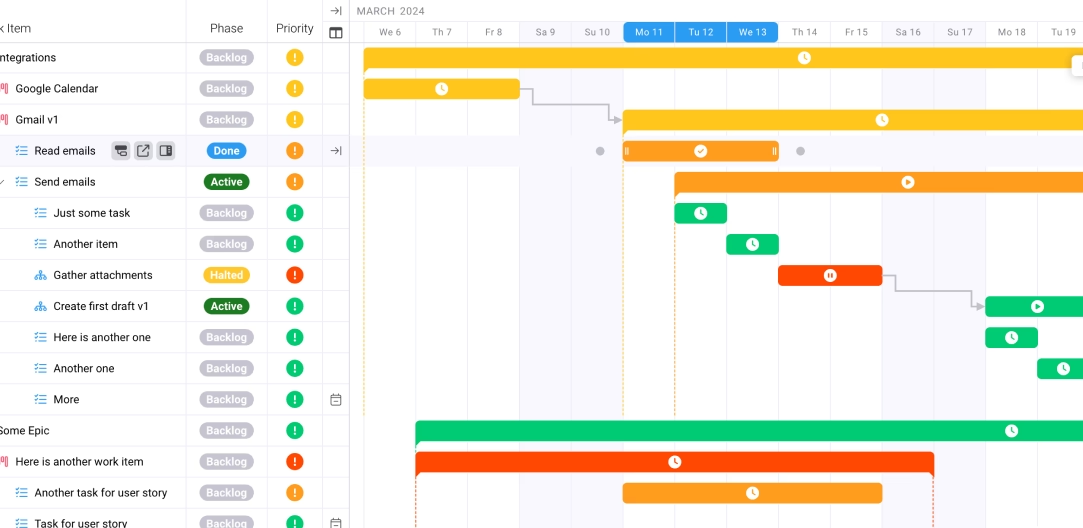
What sets Ravetree apart is its depth across the entire project lifecycle. It combines robust project planning with Gantt charts, Kanban boards, and workload views alongside native time and expense tracking, automated invoicing, resource scheduling, and a built-in CRM with client portals. This means data flows seamlessly from project kickoff through final billing without manual reconciliation.
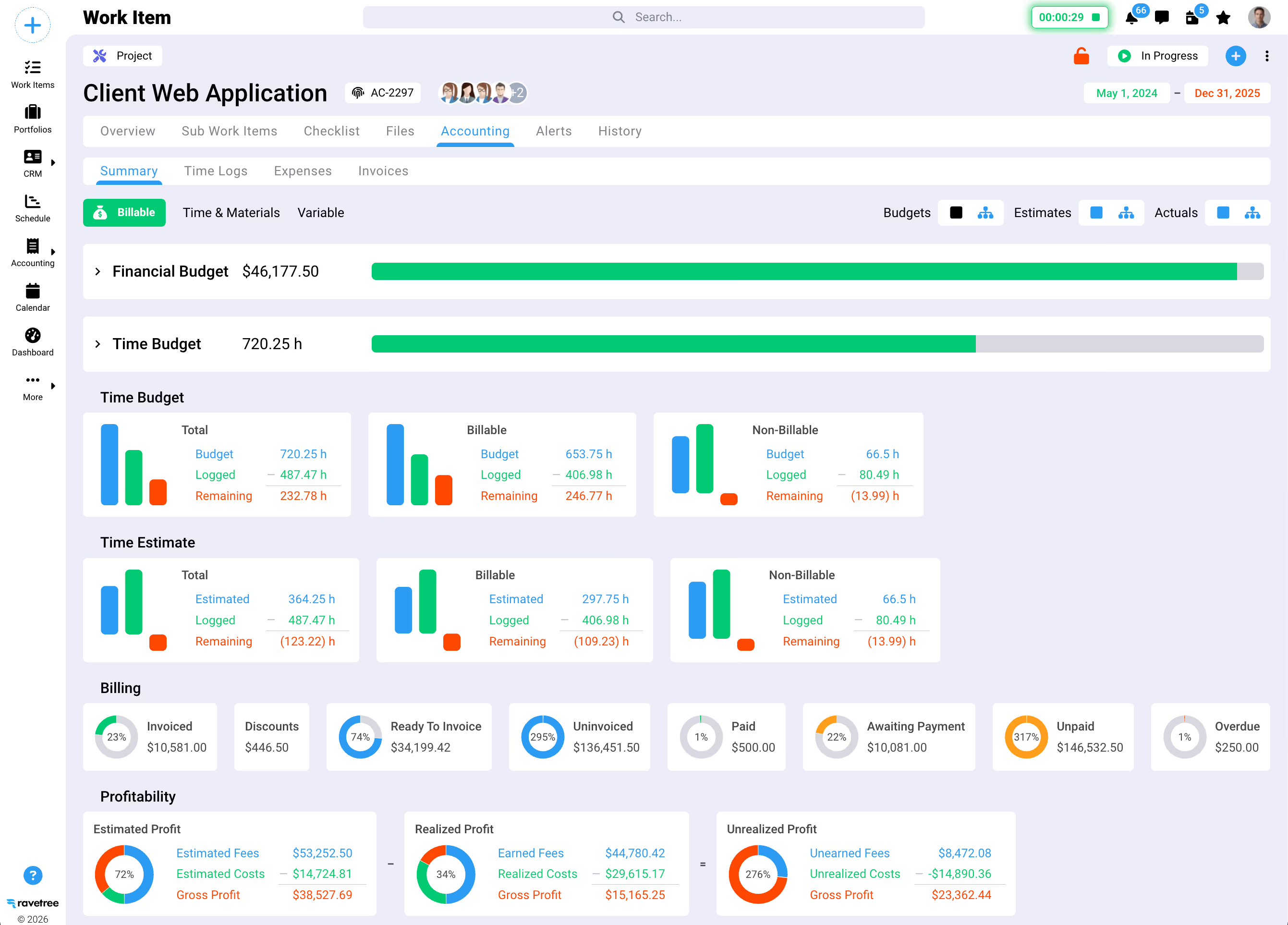
For mid-sized firms, Ravetree's approach solves the integration problem at its root. Instead of paying for and maintaining multiple subscriptions—and dealing with the inevitable sync failures—everything lives in one place. The platform's project management software features are specifically designed for client service businesses, including multi-project dashboards, real-time budget burn-down tracking, and utilization reports that help leadership make smarter staffing decisions.
Ravetree is particularly strong for firms that need to manage both project-based and retainer-based work. Its flexible billing models accommodate fixed-fee, time-and-materials, and recurring retainer arrangements—all within the same system.
2. Wrike
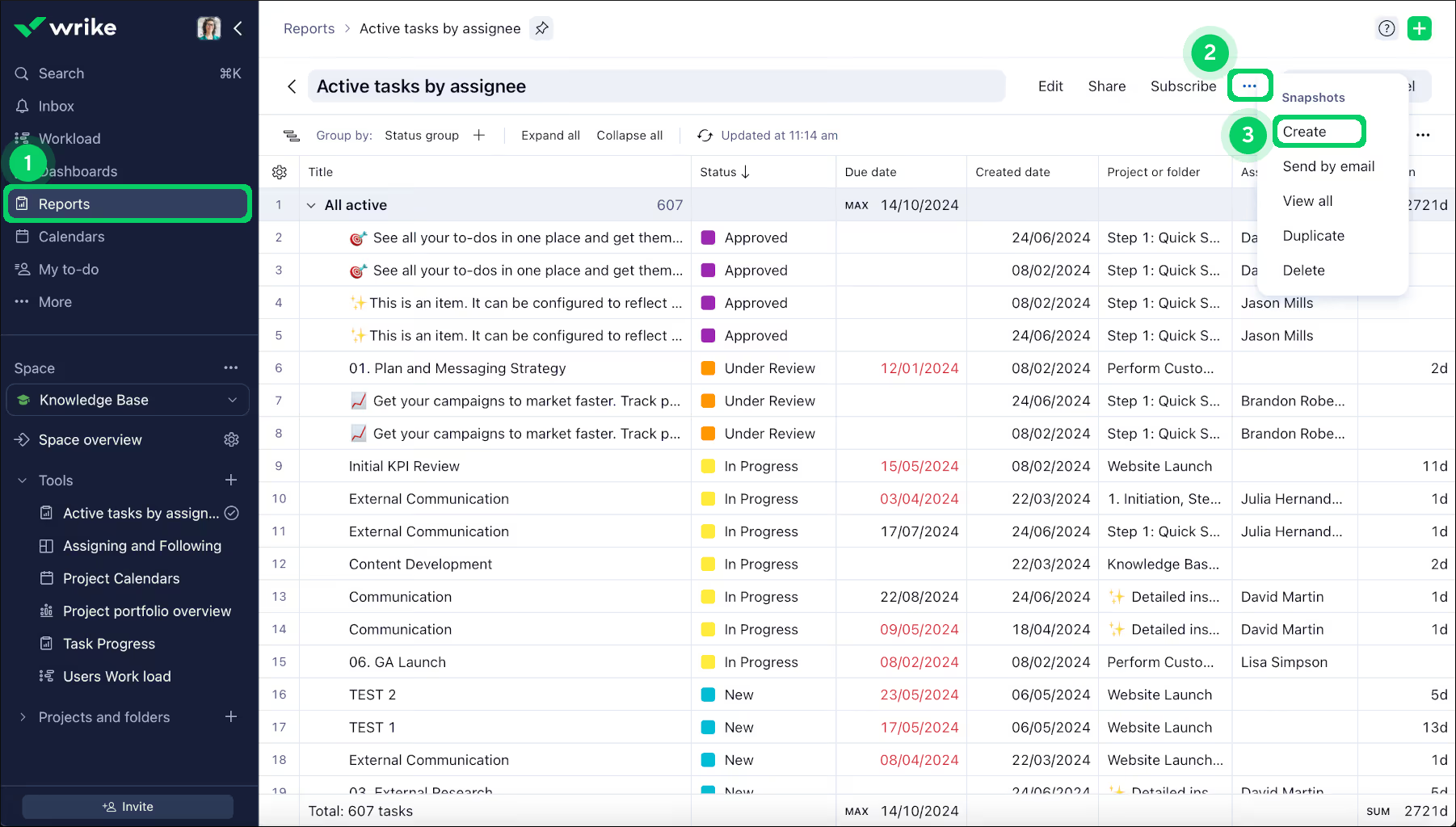
Wrike is a well-established project management and collaboration platform that serves a broad range of industries and team sizes. It offers strong task management, real-time collaboration features, and extensive customization through custom workflows, request forms, and dashboards.
For mid-sized professional services firms, Wrike's appeal lies in its flexibility. The platform supports multiple project views—list, board, Gantt, and table—and its automation engine can streamline repetitive processes like client intake and approval routing. Wrike also offers proofing and approval tools, which are valuable for creative and marketing teams that handle frequent asset reviews.
However, Wrike was designed as a general-purpose work management platform rather than a purpose-built professional services tool. Firms needing native invoicing, deep financial analytics, or integrated CRM will likely need to connect Wrike with third-party tools. According to a Gartner analysis, integration complexity remains one of the top barriers to software ROI for mid-market companies, so firms evaluating Wrike should factor in the cost and effort of building out their integration stack.
Wrike's pricing scales with feature access, and some of its most advanced capabilities—like resource management and time tracking—are reserved for higher-tier plans. For firms on a tighter budget, this tiered approach can mean paying more than expected to access the features that professional services teams actually need.
3. BigTime
BigTime is a professional services automation (PSA) platform with a strong emphasis on the financial side of project delivery. It has deep roots in accounting, architecture, engineering, and consulting, and its feature set reflects that heritage.
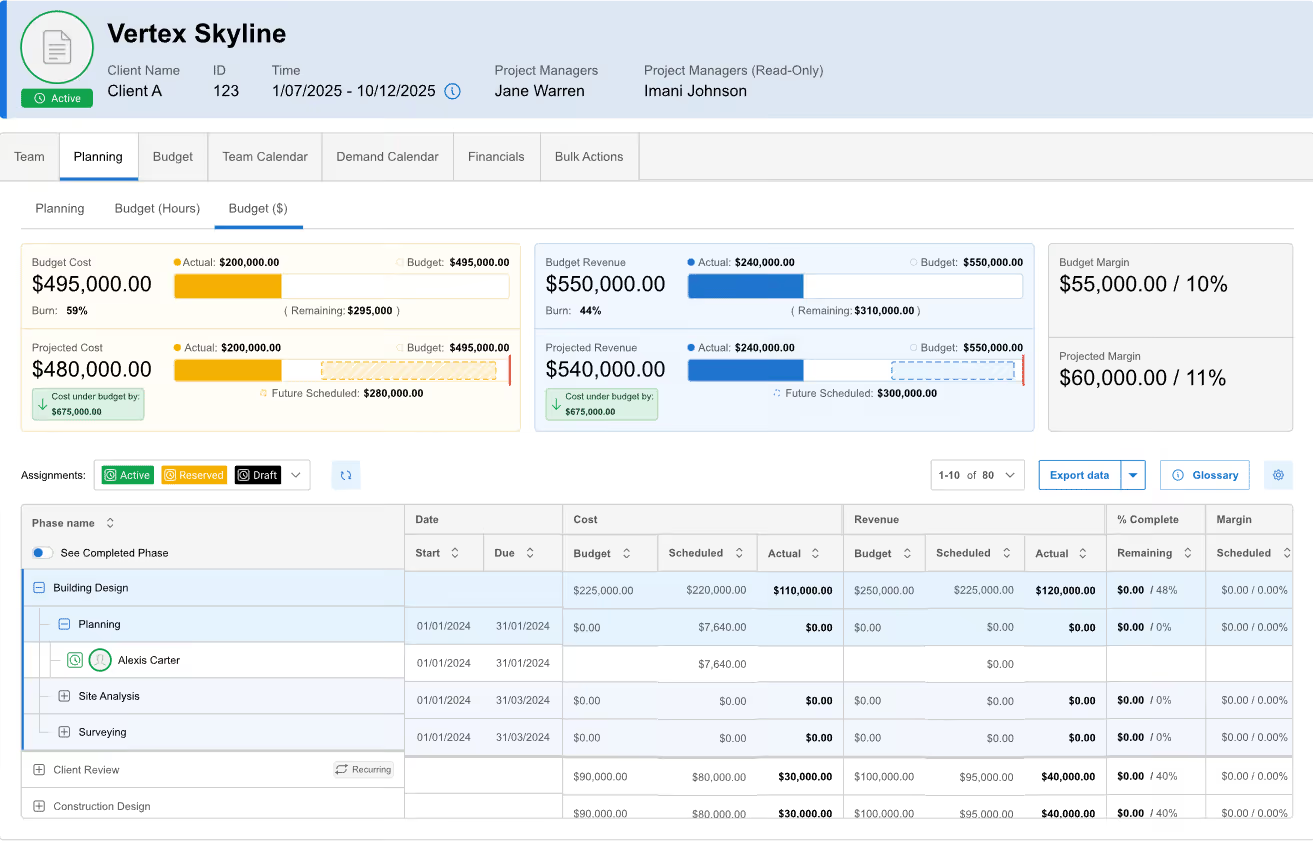
Where BigTime shines is in its financial rigor. The platform offers detailed project budgeting, real-time profitability tracking, DCAA-compliant time tracking, and robust invoicing with support for complex billing arrangements. For firms where the CFO is as important a stakeholder as the project manager, BigTime speaks the language of margins, utilization rates, and work-in-progress reporting.
BigTime also provides resource planning capabilities that allow firms to forecast demand and allocate team members based on availability, skill set, and project requirements. Firms that actively manage utilization report 15–20% higher billable rates on average, making this functionality critical for profitability.
The trade-off is that BigTime's project management capabilities—while functional—are not as visually rich or flexible as platforms that put collaboration and task management front and center. Teams that prioritize Kanban boards, creative proofing, or extensive task-level customization may find BigTime's interface more utilitarian. It excels at the business of running a services firm but may require a supplemental tool for day-to-day team collaboration.
4. Kantata
Kantata (formed from the merger of Mavenlink and Kimble) positions itself as a purpose-built professional services cloud. It targets mid-to-large services organizations and offers a comprehensive suite that includes project management, resource optimization, business intelligence, and financial management.
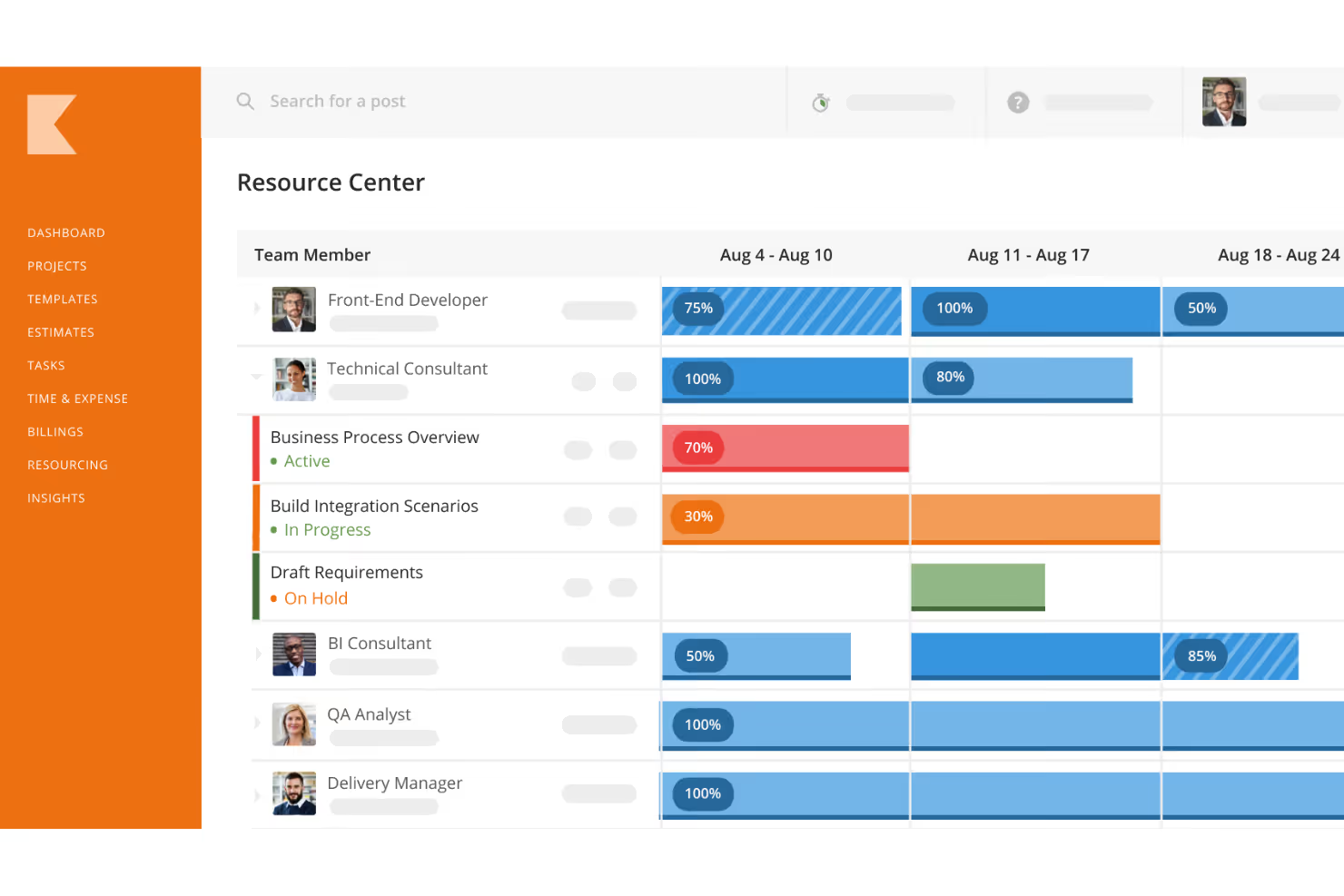
Kantata's strength is its resource optimization engine. The platform uses skills-based matching and capacity forecasting to help firms put the right people on the right projects. For consulting and technology services firms where talent is the product, this capability can be a significant competitive advantage. Research from Harvard Business Review suggests that better resource allocation can improve project success rates by as much as 30%.
Kantata also integrates with Salesforce, which makes it appealing for firms that have already invested heavily in that CRM ecosystem. Its business intelligence module provides advanced analytics on project health, revenue pipelines, and operational performance.
The considerations for mid-sized firms are around complexity and cost. Kantata was built to serve enterprise-grade services organizations, and its depth can translate into a steeper learning curve and longer implementation timeline. Smaller mid-market firms may find that they are paying for capabilities they do not yet need. Additionally, some users note that Kantata's user interface, while powerful, is not as modern or intuitive as newer competitors.
Measuring Success: KPIs That Matter
Implementing new project management software is only valuable if it moves the needle on the metrics that drive professional services profitability. Here are the benchmarks mid-sized firms should track:
Utilization rate. Industry benchmarks suggest that top-performing services firms maintain utilization rates between 75% and 85%. Anything below 70% signals a resource allocation or demand generation problem.
Project margin. Track the actual margin on every project against the original estimate. Consistent negative variance points to estimation failures, scope creep, or inefficient delivery processes. An analysis of operations strategies for professional services firms highlights how connecting project tracking to financial reporting closes the feedback loop on profitability.
Revenue leakage. This includes unbilled time, write-offs, and scope that was delivered but never invoiced. Technology Services Industry Association (TSIA) research found that the average professional services firm loses 3–5% of revenue to leakage annually, much of which is preventable with better time capture and billing automation.
Time to invoice. The faster you invoice after delivering work, the faster you collect. Platforms that automate the path from time entry to invoice generation can reduce DSO (days sales outstanding) significantly.
Employee satisfaction and adoption. Software that frustrates teams leads to workarounds, which leads to bad data, which leads to poor decisions. Track adoption metrics like login frequency, time entry compliance, and feature usage alongside qualitative feedback.
Future Considerations: Where Professional Services Technology Is Headed
The project management software landscape is evolving rapidly, and mid-sized firms should be thinking about where the category is going, not just where it is today.
AI-powered project intelligence. Artificial intelligence is beginning to reshape how project risks are identified, resources are allocated, and timelines are forecasted. A 2024 PwC survey found that 73% of U.S. companies have adopted AI in at least some areas of their business, and project management is a natural next frontier. Expect to see predictive analytics that flag at-risk projects before they go off the rails and automated scheduling that optimizes team assignments in real time.
Deeper financial integration. The line between project management software and financial management software continues to blur. Firms increasingly expect their work management platform to handle not just task tracking but also revenue recognition, work-in-progress accounting, and real-time margin analysis. Platforms that treat financials as an afterthought will struggle to remain competitive.
Client experience as a differentiator. Client portals, real-time project dashboards, and self-service reporting are moving from nice-to-have to expected. Firms that can offer their clients transparency into project status, budget consumption, and deliverable timelines build deeper trust and reduce the overhead of status meetings and email updates.
The consolidation trend. Mid-sized firms are increasingly moving away from best-of-breed tool stacks in favor of consolidated platforms that reduce complexity. A Forrester study found that organizations using integrated platforms reported 20% higher employee productivity compared to those using disconnected point solutions. This trend favors all-in-one solutions that can serve as the operational backbone for the entire firm.
Conclusion
Selecting the best project management software for mid-sized professional services firms is not simply a technology decision—it is a strategic one that directly impacts profitability, client satisfaction, and operational resilience. The four platforms evaluated here—Ravetree, Wrike, BigTime, and Kantata—each bring different strengths to the table. Ravetree offers the most comprehensive all-in-one approach purpose-built for services firms. Wrike delivers flexible collaboration with broad customization. BigTime provides unmatched financial depth for numbers-driven organizations. Kantata excels at enterprise-grade resource optimization. The right choice depends on where your firm's priorities lie: if integrated project management software that unifies every aspect of service delivery matters most, start with the platform that was designed for that mission from the ground up.
Frequently Asked Questions
What makes project management software for professional services different from general tools?
Professional services firms need software that natively connects project delivery to financial outcomes, including time tracking, billing, utilization reporting, and client management. General tools typically focus on task management alone and require third-party integrations to cover the full workflow.
How long does implementation typically take for a mid-sized firm?
Implementation timelines vary by platform complexity and firm size, but most mid-sized firms can expect a 2–12 week rollout period including data migration, configuration, and team training.
Can these platforms handle both project-based and retainer-based work?
Yes, though the depth of support varies. Ravetree and BigTime offer particularly strong support for mixed billing models, including fixed-fee, time-and-materials, and recurring retainer arrangements within the same platform.
What is the most important KPI to track after adopting new project management software?
Utilization rate is typically the single most impactful metric. Improving utilization by even a few percentage points can translate to significant revenue gains without adding headcount.
Should we choose a specialized PSA tool or a broader project management platform?
It depends on your primary pain point. If financial management and compliance are your biggest challenges, a PSA-focused tool like BigTime may be the best fit. If you need a unified system that covers projects, resources, clients, and billing equally, a comprehensive platform like Ravetree is worth evaluating.