
Key takeaways:
Managing client retainers effectively can mean the difference between a thriving agency and one struggling with cash flow unpredictability. For professional services firms, retainer agreements represent more than just recurring revenue—they're strategic partnerships that demand sophisticated management tools. Whether you're tracking billable hours, managing scope boundaries, or ensuring profitability across multiple retainer clients, How Ravetree Can Help You Manage Client Retainers becomes the central question for agencies seeking operational excellence and sustainable growth.
The Retainer Management Challenge Facing Modern Agencies
Professional services firms face mounting complexity when managing client retainers. The traditional approach—juggling spreadsheets, disconnected time tracking tools, and manual invoicing processes—creates operational bottlenecks that directly impact profitability and client satisfaction.
Retainer agreements come in multiple forms: time-based arrangements where clients purchase a specific number of hours monthly, project-based structures focused on deliverables, pay-for-access models granting clients priority support, and hybrid combinations. Each type requires different tracking mechanisms, billing approaches, and performance metrics. Without integrated systems, agencies struggle to maintain visibility across their retainer portfolio.
Scope creep represents one of the most persistent challenges. Clients naturally push boundaries, requesting "quick favors" that consume retainer hours without proper tracking. Before long, your team has delivered far more value than the retainer covers, eroding profit margins and creating unsustainable precedents.
Time tracking accuracy poses another hurdle. When team members work across multiple retainer clients simultaneously, manual time entry becomes unreliable. Hours get logged to wrong clients, forgotten entirely, or estimated rather than precisely tracked. This inaccuracy makes it impossible to understand true retainer profitability or identify which clients deserve renewal discussions.
Invoicing complexity multiplies these problems. Different retainer types require different billing approaches—some need monthly recurring invoices, others require usage-based calculations with overage charges, and hybrid models demand both. Coordinating these billing cycles manually consumes valuable administrative time while increasing error rates.
Resource allocation becomes particularly challenging at scale. When your agency manages ten, twenty, or fifty retainer clients, ensuring the right team members have capacity for each client's work requires sophisticated planning. Overcommitment leads to rushed work and client dissatisfaction, while underutilization means leaving revenue on the table.
Why Traditional Tools Fall Short for Retainer Management
Generic project management platforms weren't designed with retainer-specific workflows in mind. They excel at one-off projects with clear start and end dates but struggle with the recurring, ongoing nature of retainer work.
Spreadsheets offer flexibility but demand constant manual updates. Every hour tracked, every invoice sent, and every budget adjustment requires someone to remember to update multiple interconnected sheets. As your retainer portfolio grows, this approach becomes untenable. Human error inevitably creeps in, creating discrepancies between what was delivered and what gets billed.
Standalone time tracking tools capture hours but lack context. They don't understand retainer budgets, can't alert teams when hours are running low, and provide no connection to invoicing or financial reporting. This creates information silos where operational data lives separately from financial insights.
Disconnected invoicing systems compound the problem. When your billing platform doesn't integrate with time tracking and project management, creating accurate invoices becomes an exhausting monthly ritual of data reconciliation. Finance teams spend hours cross-referencing multiple systems to ensure billing accuracy.
The absence of real-time visibility means agencies operate reactively rather than proactively. You discover retainer budget overruns after the fact, when it's too late to course-correct. Clients receive surprise overage charges without advance warning, damaging relationships and creating payment disputes.
The Ravetree Approach to Comprehensive Retainer Management
Ravetree addresses these challenges through purpose-built retainer management functionality that unifies time tracking, project management, billing, and client communication in a single platform designed specifically for professional services firms.
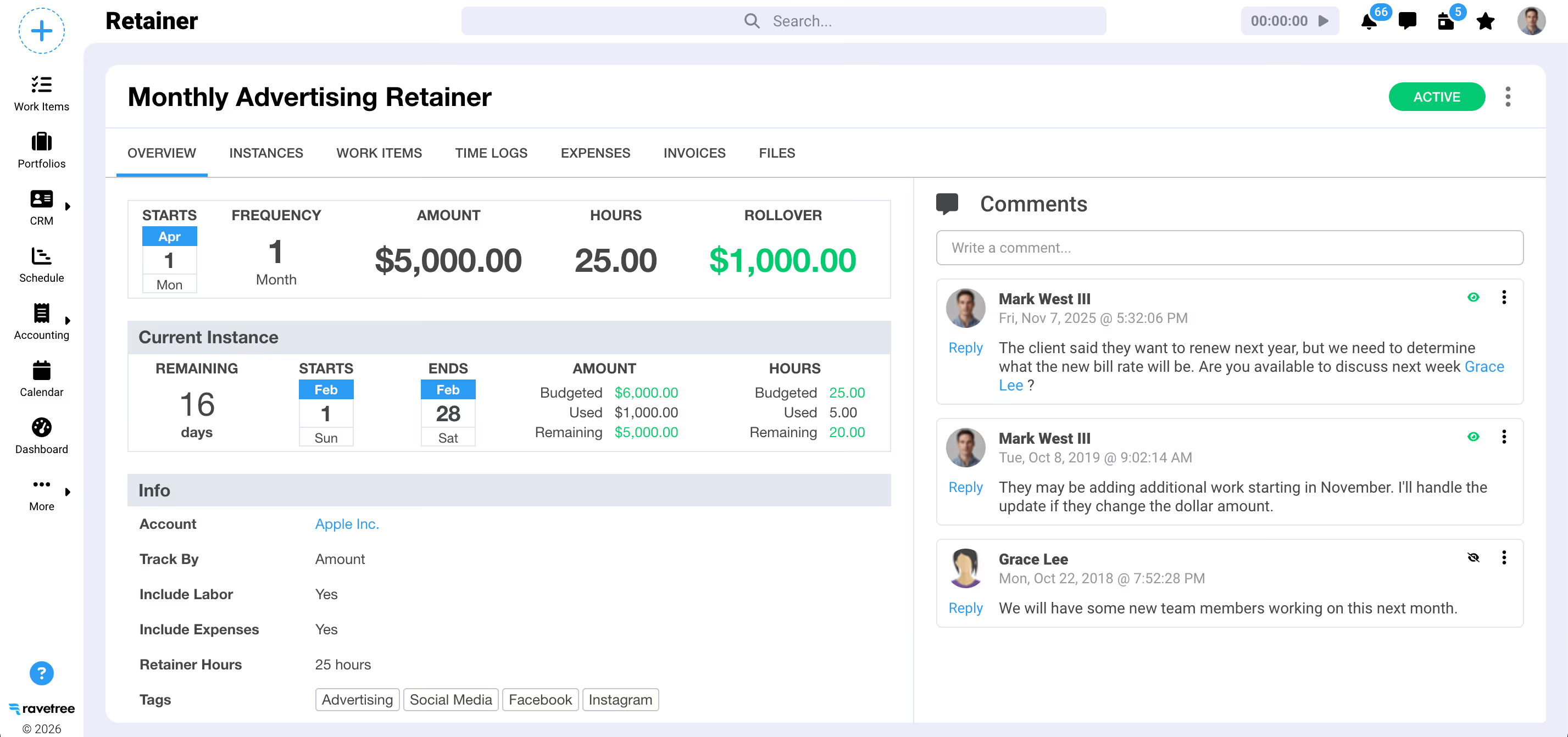
The platform's retainer module allows agencies to configure multiple retainer types simultaneously. Time-based retainers track hours against monthly allocations, automatically alerting teams and clients as budgets approach limits. Project-based retainers link deliverables to recurring budgets, ensuring scope remains controlled. Pay-for-access retainers provide priority support frameworks without hour-by-hour tracking requirements.
Real-time budget tracking gives everyone visibility into retainer utilization. Team members see exactly how many hours remain for each client before starting new work. Project managers receive automated notifications when retainers reach 50%, 75%, and 90% utilization, enabling proactive client conversations about scope adjustments or budget increases.
Integrated time tracking captures effort precisely where work happens. Rather than requiring end-of-day time entry from memory, team members log hours directly within tasks and projects. This context-aware approach improves accuracy while reducing administrative burden. Time entries automatically allocate against the correct retainer budgets, eliminating manual categorization errors.
The billing engine handles retainer complexity automatically. Recurring retainer invoices generate on schedule without manual intervention. Usage-based components calculate overage charges automatically based on actual hours tracked. Hybrid models combine fixed retainer fees with additional project charges seamlessly.
Effective billable project management requires tracking not just hours, but profitability against retainer agreements to ensure sustainable margins.
Resource planning capabilities prevent overcommitment across retainer clients. Visual capacity planning shows which team members have availability for new retainer work and which are already fully allocated. This prevents the common mistake of signing new retainers without adequate delivery capacity.
Client portals provide transparency that strengthens retainer relationships. Clients log in to view their current retainer balance, see how hours have been allocated across different projects, and understand what capacity remains. This self-service visibility reduces "where do we stand" emails while demonstrating clear value delivery.
Strategic Framework for Retainer Success with Ravetree
Implementing effective retainer management requires more than just tools—it demands a strategic framework that aligns technology with business processes.
Define Clear Retainer Structures: Begin by standardizing your retainer offerings. Create templates for common retainer types your agency offers, including specific scope definitions, hour allocations, and deliverable expectations. Ravetree's project management templates allow you to configure these retainer structures once and apply them consistently across new client engagements.
Establish Scope Boundaries Proactively: Use Ravetree's project briefs and scope documentation features to create crystal-clear boundaries for what each retainer includes and excludes. Document these boundaries in the client portal, ensuring clients understand exactly what their retainer covers. When out-of-scope requests arise, the system provides documentation to support productive conversations about additional fees or retainer adjustments.
Implement Automated Tracking Workflows: Configure time tracking policies that require team members to log hours daily rather than weekly or monthly. Set up automated reminders for team members working on retainer projects. Enable mobile time tracking so hours can be captured regardless of where work happens. These workflow optimizations dramatically improve data accuracy.
Create Proactive Communication Triggers: Set up automated notifications that alert both your team and clients when retainers reach specific utilization thresholds. A notification at 75% utilization gives everyone advance warning, enabling discussions about additional budget before work stops. This proactive approach transforms potentially negative surprise conversations into collaborative planning discussions.
Build Comprehensive Reporting Rhythms: Establish monthly retainer review meetings with each client. Use Ravetree's reporting capabilities to generate visual summaries showing exactly how retainer hours were allocated, what deliverables were completed, and what value was created. Strong financial management practices include regular retainer reviews that demonstrate value while identifying opportunities for expanded engagement.
Optimize Resource Allocation Continuously: Review team utilization across all retainer clients weekly. Identify team members who are overallocated and redistribute work proactively. Spot underutilization early and either reduce capacity commitments or pursue additional retainer work to fill gaps. Maximizing billable hours through intelligent resource allocation ensures retainer profitability while maintaining quality delivery.
Leverage Historical Data for Pricing: After managing retainers for several months, analyze historical utilization patterns to refine your pricing models. Identify which services consistently consume more hours than initially estimated and adjust retainer pricing accordingly. Use this data to create more accurate proposals for new retainer clients.
Implementation Tactics for Retainer Excellence
Moving from strategy to execution requires specific tactical approaches that leverage Ravetree's comprehensive capabilities.
Retainer Onboarding Process: When a new retainer client signs on, create a dedicated onboarding project within Ravetree that walks through scope confirmation, communication protocol establishment, access provisioning, and initial planning. Use task templates to ensure consistency across all new retainer clients. Schedule an initial kickoff meeting to review the client portal, explain how they'll track retainer usage, and set expectations for ongoing communication.
Time Tracking Enforcement: Implement a policy requiring same-day time entry for all retainer work. Configure Ravetree to send daily digest emails reminding team members to log their time. Create accountability by including time tracking completion rates in team member performance reviews. Accurate time data forms the foundation for all other retainer management activities.
Budget Monitoring Dashboards: Create custom dashboards that display key retainer metrics at a glance. Include widgets showing current utilization across all active retainers, retainers approaching budget limits, and month-over-month utilization trends. Review these dashboards during weekly operations meetings to identify issues before they become problems.
Scope Change Management: When clients request work outside their retainer scope, use Ravetree's change order functionality to document and approve scope changes before work begins. This creates a clear paper trail distinguishing core retainer work from additional services. The system automatically tracks which hours apply to the base retainer versus change orders, simplifying invoicing and preventing disputes.
Client Communication Automation: Set up automated email communications that keep clients informed without requiring manual effort. Configure monthly retainer summary emails that automatically pull utilization data, completed deliverables, and remaining balance information from Ravetree. These regular touchpoints demonstrate value while keeping clients engaged.
Profitability Analysis: Use Ravetree's financial reporting to analyze profitability at the individual retainer level. Calculate the true cost of serving each client by factoring in the hourly cost of team members working on their retainer. Identify which retainers generate healthy margins and which are unprofitable. Increasing agency margins often starts with making data-driven decisions about which retainer relationships to expand and which to restructure or exit.
Renewal Preparation: Sixty days before each retainer renewal date, trigger a renewal preparation workflow in Ravetree. This workflow includes pulling historical performance data, analyzing utilization patterns, documenting deliverables and value created, calculating actual profitability, and preparing renewal proposals. This systematic approach ensures renewals happen proactively rather than reactively.
Measuring Retainer Success Through Key Metrics
Effective retainer management requires tracking specific metrics that indicate health and profitability. Ravetree provides the data infrastructure to monitor these critical indicators.
Utilization Rate: Calculate the percentage of retainer hours actually used by clients each month. Target rates between 85-95% indicate healthy utilization—high enough to demonstrate value but with some buffer to prevent constant overage situations. Consistently low utilization suggests the retainer may be overpriced or not well-aligned with client needs. Consistently exceeding 100% indicates underpricing or scope creep.
Profit Margin by Retainer: Track the gross margin for each retainer by comparing revenue against the fully-loaded cost of team members working on that account. Healthy retainer margins typically range from 35-50% depending on seniority levels and service types. Margins below 25% warrant immediate attention to understand whether scope creep, inefficient delivery, or underpricing is the culprit.
Client Retention Rate: Monitor what percentage of retainer clients renew their agreements. High-performing agencies maintain retainer retention rates above 85%. Retaining clients for years rather than months creates compounding business value through reduced acquisition costs and deeper client relationships.
Average Retainer Value: Track the average monthly retainer fee across your portfolio. Growing this metric indicates you're either moving upmarket to larger clients or successfully expanding scope with existing clients. Stagnant or declining average retainer values suggest commoditization pressure or inability to demonstrate expanding value.
Scope Creep Frequency: Monitor how often retainer clients exceed their hour allocations or request out-of-scope work. Occasional overages are normal and create upsell opportunities. Consistent scope creep across multiple clients indicates inadequate initial scope definition or insufficient boundary enforcement.
Invoice Collection Time: Measure how quickly retainer invoices get paid. Retainer clients paying consistently late may indicate dissatisfaction with value delivery or financial constraints that could threaten renewal. Fast payment cycles often correlate with strong client satisfaction and relationship health.
Team Utilization Variance: Calculate the difference between planned retainer capacity and actual delivery capacity. Large variances indicate resource planning problems—either overcommitting capacity that doesn't exist or underutilizing available talent. Minimizing this variance improves both profitability and team satisfaction.
Future-Proofing Your Retainer Management Approach
The professional services landscape continues evolving, with client expectations for transparency, flexibility, and measurable outcomes intensifying. Forward-thinking agencies are preparing for these shifts today.
Value-Based Retainer Evolution: While most retainers today operate on time-based or deliverable-based models, sophisticated agencies are experimenting with value-based retainers where pricing connects to business outcomes rather than inputs. Ravetree's flexible billing configuration supports these innovative models, allowing agencies to define custom billing rules that align with outcome achievement rather than just hours consumed.
Predictive Analytics for Capacity Planning: As your Ravetree implementation matures and accumulates historical data, leverage that information for predictive planning. Analyze seasonal patterns in retainer utilization to anticipate capacity needs months in advance. Identify which types of retainer work consistently take longer than estimated and adjust pricing or resource allocation accordingly.
API Integration for Ecosystem Expansion: Connect Ravetree with complementary tools in your technology stack through API integrations. Sync client retainer data with your CRM to enrich account records. Push financial data to accounting systems for streamlined reconciliation. Pull marketing performance data into Ravetree to correlate retainer utilization with campaign delivery outcomes.
Advanced Automation Opportunities: Explore opportunities to automate routine retainer management tasks further. Configure workflows that automatically adjust resource allocations based on retainer utilization patterns. Set up intelligent routing that assigns incoming retainer requests to team members with appropriate capacity and expertise.
Client Self-Service Expansion: Enhance client portals to enable greater self-service functionality. Allow clients to view granular time tracking details, download custom reports, submit project requests directly through the portal, and even adjust their retainer scope through pre-approved modification templates. This self-service approach scales client communication without proportional increases in account management overhead.
Overcoming Common Retainer Management Obstacles
Even with sophisticated tools, agencies encounter predictable obstacles when managing retainer portfolios. Understanding these challenges enables proactive solutions.
Challenge: Inconsistent Time Tracking: Team members forget to log hours or do so inconsistently, creating data gaps that undermine accurate retainer management.
Solution: Implement Ravetree's time tracking reminders and make time entry completion a weekly review item in team meetings. Consider tying time tracking compliance to performance reviews or incentive structures. Enable mobile time tracking to capture hours regardless of work location.
Challenge: Scope Creep Resistance: Account managers struggle to enforce scope boundaries for fear of damaging client relationships.
Solution: Empower account managers with clear escalation paths and pricing authority for common scope additions. Create a library of response templates for scope change requests that maintain positive client relationships while protecting profitability. Use data from Ravetree's reporting to show clients exactly where their retainer hours are being allocated.
Challenge: Resource Conflicts: Multiple retainer clients need the same specialized team members simultaneously, creating capacity conflicts.
Solution: Use Ravetree's resource planning tools to identify these conflicts early. Establish clear prioritization criteria for how competing retainer demands get resolved. Consider building deeper benches in high-demand specializations or adjusting retainer timing to smooth demand peaks.
Challenge: Retainer Profitability Variance: Some retainer clients are highly profitable while others barely break even, but this reality isn't visible without detailed analysis.
Solution: Conduct quarterly retainer profitability reviews using Ravetree's financial reporting. Identify unprofitable retainers and diagnose root causes—underpricing, inefficient delivery, scope creep, or wrong skill mix. Address issues through price increases at renewal, scope refinement, or process improvements.
Challenge: Client Communication Gaps: Clients feel disconnected from how their retainer hours are being used and question value delivery.
Solution: Establish automated monthly reporting that shows detailed hour allocation, completed deliverables, and remaining capacity. Schedule regular check-ins to discuss retainer utilization and upcoming priorities. Use Ravetree's client portal to provide real-time transparency into retainer status.
Challenge: Renewal Deadline Management: Retainer renewal dates sneak up without adequate preparation time, leading to reactive renewal conversations or accidental lapses.
Solution: Configure automated renewal reminders in Ravetree 60, 30, and 15 days before each retainer expiration. Create a standardized renewal preparation workflow that triggers automatically, ensuring consistent, proactive renewal management across all retainer clients.
Conclusion
Successfully managing client retainers requires purpose-built tools that understand the unique dynamics of ongoing service relationships. Generic project management platforms and disconnected spreadsheets simply cannot provide the real-time visibility, automated workflows, and comprehensive financial tracking that professional services firms need to maximize retainer profitability while delivering exceptional client value.
How Ravetree Can Help You Manage Client Retainers comes down to its comprehensive integration of time tracking, project management, financial management, and client communication in a single platform designed specifically for agencies and professional services firms. From initial retainer setup through monthly tracking, automated billing, and strategic renewal management, Ravetree provides the infrastructure agencies need to scale their retainer portfolios profitably.
The agencies that thrive with client retainers are those that treat retainer management as a strategic capability rather than an administrative burden. They leverage sophisticated tools like Ravetree to gain visibility, automate routine tasks, and make data-driven decisions about which client relationships to nurture and grow. By implementing the frameworks, tactics, and measurement approaches outlined in this guide, your agency can transform retainer management from a source of stress into a competitive advantage that drives predictable revenue growth and stronger client relationships.
Frequently Asked Questions
What types of retainer agreements does Ravetree support?
Ravetree supports time-based retainers (fixed monthly hours), project-based retainers (recurring deliverables), pay-for-access retainers (priority support without hour tracking), and hybrid models combining multiple approaches. The platform's flexible configuration allows agencies to customize retainer structures to match their specific service offerings.
How does Ravetree prevent scope creep on retainer projects?
Ravetree prevents scope creep through clear scope documentation in project briefs, real-time budget tracking with automated utilization alerts, change order workflows for out-of-scope requests, and client portal transparency showing exactly how retainer hours are being allocated. These features enable proactive conversations before scope creep erodes profitability.
Can clients view their retainer balance in real-time?
Yes, Ravetree's client portal provides clients with real-time visibility into their retainer balance, hour utilization, completed deliverables, and remaining capacity. This transparency reduces administrative inquiries while strengthening client confidence in value delivery.
How does Ravetree handle retainer billing and invoicing?
Ravetree automates retainer billing through recurring invoice generation, automatic overage charge calculations for usage-based components, and integrated financial tracking that connects time entry directly to billing. The system supports various billing cycles and can handle complex hybrid retainer models.
What reports are available for analyzing retainer profitability?
Ravetree provides comprehensive financial reporting including utilization rates by retainer, profit margin analysis comparing revenue to fully-loaded costs, historical utilization trends, budget vs. actual comparisons, and team member productivity metrics. These reports enable data-driven decisions about retainer pricing and client relationships.
How long does it take to implement Ravetree for retainer management?
Initial Ravetree implementation typically takes 1-2 weeks including configuration, team training, and data migration. Most agencies begin seeing value immediately as retainer tracking becomes centralized. Full optimization usually occurs over 2-3 weeks as teams refine workflows and establish reporting rhythms.
Does Ravetree integrate with accounting software?
Yes, Ravetree integrates with popular accounting platforms including QuickBooks and Xero, allowing seamless financial data synchronization. This integration eliminates duplicate data entry while ensuring accurate financial records for retainer revenue and expenses.
Can Ravetree handle multiple retainer types for the same client?
Absolutely. A single client can have multiple concurrent retainers (for example, a monthly recurring marketing retainer plus a separate project-based retainer for website maintenance). Ravetree tracks each retainer independently while providing consolidated client-level reporting.
How does Ravetree help with retainer renewals?
Ravetree supports retainer renewals through automated renewal reminders, historical performance reporting for renewal discussions, utilization analysis to inform pricing adjustments, and workflow templates that standardize the renewal preparation process across all retainer clients.