
Key takeaways:
Marketing teams juggle more campaigns, channels, and deliverables than ever before — yet nearly 70% of projects fail to meet their original goals, often due to poor coordination and a lack of centralized oversight. If your team is still relying on scattered spreadsheets and endless email threads to manage campaigns, you're leaving results on the table. The right marketing project management software can be the difference between a campaign that delivers measurable ROI and one that quietly dies in a shared drive. In this guide to the best marketing project management software, we break down the top platforms purpose-built to help marketing teams plan, execute, and measure work — so you can stop firefighting and start scaling.
The Current Challenge: Why Marketing Teams Struggle Without Dedicated Tools
Modern marketing is a high-wire act. Teams are expected to produce more content across more channels while maintaining brand consistency, meeting deadlines, and proving return on investment. According to CoSchedule, marketers who plan their projects proactively are 331% more likely to report success than those who don't — yet many still operate without a structured system.
The core problems are familiar to anyone who has led a marketing department. Campaign timelines slip because task dependencies aren't visible. Team members are over-allocated on some projects and idle on others. Budget tracking lives in a finance spreadsheet that nobody updates in real time. And stakeholder feedback creates revision loops that spiral out of control.
These aren't minor inconveniences — they're profit killers. Inefficient processes cost businesses an estimated 20–30% of their revenue each year, according to IDC research. For marketing agencies and in-house teams alike, that kind of waste is unsustainable. As one Ravetree analysis explains, marketing teams that lack a central hub for project management end up spending more time coordinating work than actually doing it.
The rise of omnichannel campaigns has only intensified the problem. A single product launch might require coordinated efforts across paid media, organic social, email nurture sequences, website landing pages, and PR outreach. Without a dedicated project management tool, these moving parts create chaos rather than cohesion.
What to Look For: A Strategic Framework for Evaluation
Before diving into specific platforms, it's worth establishing what actually matters in marketing project management software. Not every tool is built for marketing workflows, and a platform that works beautifully for software development might be a poor fit for a creative team managing content calendars and client approvals.
Workflow flexibility is paramount. Marketing campaigns don't follow a single methodology. Some projects are agile sprints; others are traditional waterfall timelines. The best platforms support both, letting you switch between Kanban boards, Gantt charts, and list views depending on the project phase.
Resource planning and capacity management are equally critical. Knowing who is available, who is overloaded, and where skill gaps exist prevents the burnout that plagues marketing teams. Research from Gallup shows that 76% of employees experience burnout at least sometimes, and poor workload distribution is a leading driver.
Integrated time tracking separates serious project management platforms from simple task managers. For agencies, tracking billable hours against projects directly impacts profitability. For in-house teams, understanding where time goes reveals optimization opportunities.
Client collaboration and CRM capabilities matter for agencies that need to manage external stakeholders without granting full access to internal workflows. A client portal that lets clients view progress, approve deliverables, and submit feedback in one place eliminates the back-and-forth that bogs down campaigns.
Finally, billing and financial tracking should live alongside project data. When budget information is siloed from execution, overspending becomes invisible until it's too late. A study by Wellingtone found that only 34% of organizations consistently complete projects on budget, underscoring how common financial drift really is.
The Top 5 Marketing Project Management Software Platforms
With those criteria in mind, here are the five platforms that stand out for marketing teams in 2026. Each offers a distinct approach, and the best choice depends on your team's size, complexity, and workflow style.
1. Ravetree
Ravetree is an all-in-one work management platform designed specifically for client-service businesses — including marketing agencies, creative shops, and consulting firms. Unlike tools that focus narrowly on task management, Ravetree combines project management, resource planning, time and expense tracking, CRM, and billing into a single unified platform.
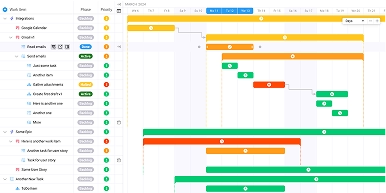
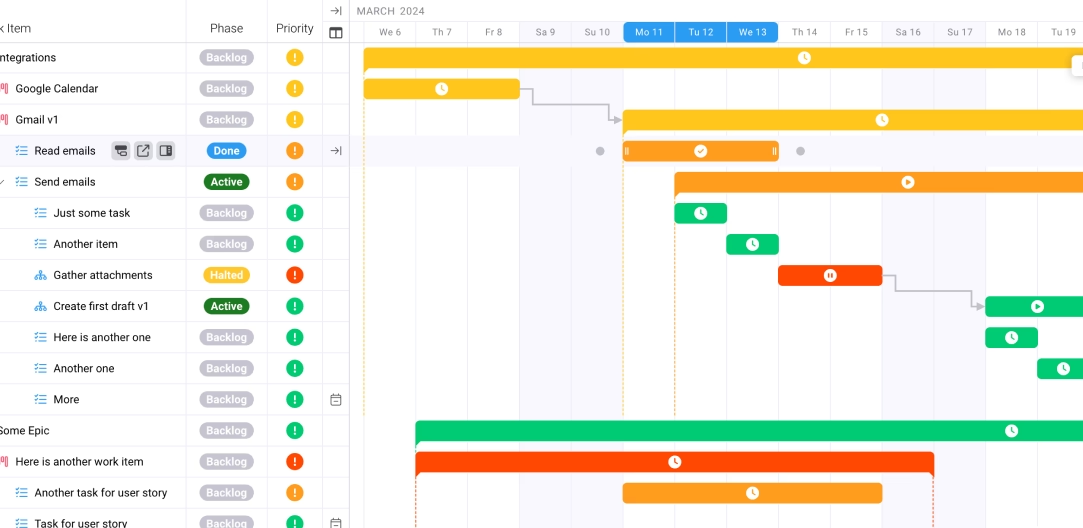
What makes Ravetree particularly strong for marketing teams is its depth. You can plan a campaign using Gantt charts or Kanban boards, allocate team members based on real-time availability, track hours against budgets, and invoice clients — all without leaving the platform. This eliminates the "tool sprawl" that forces teams to stitch together five or six different apps. As Ravetree's own research on agency tool selection explains, consolidating your tech stack into one platform significantly reduces context-switching and data inconsistency.
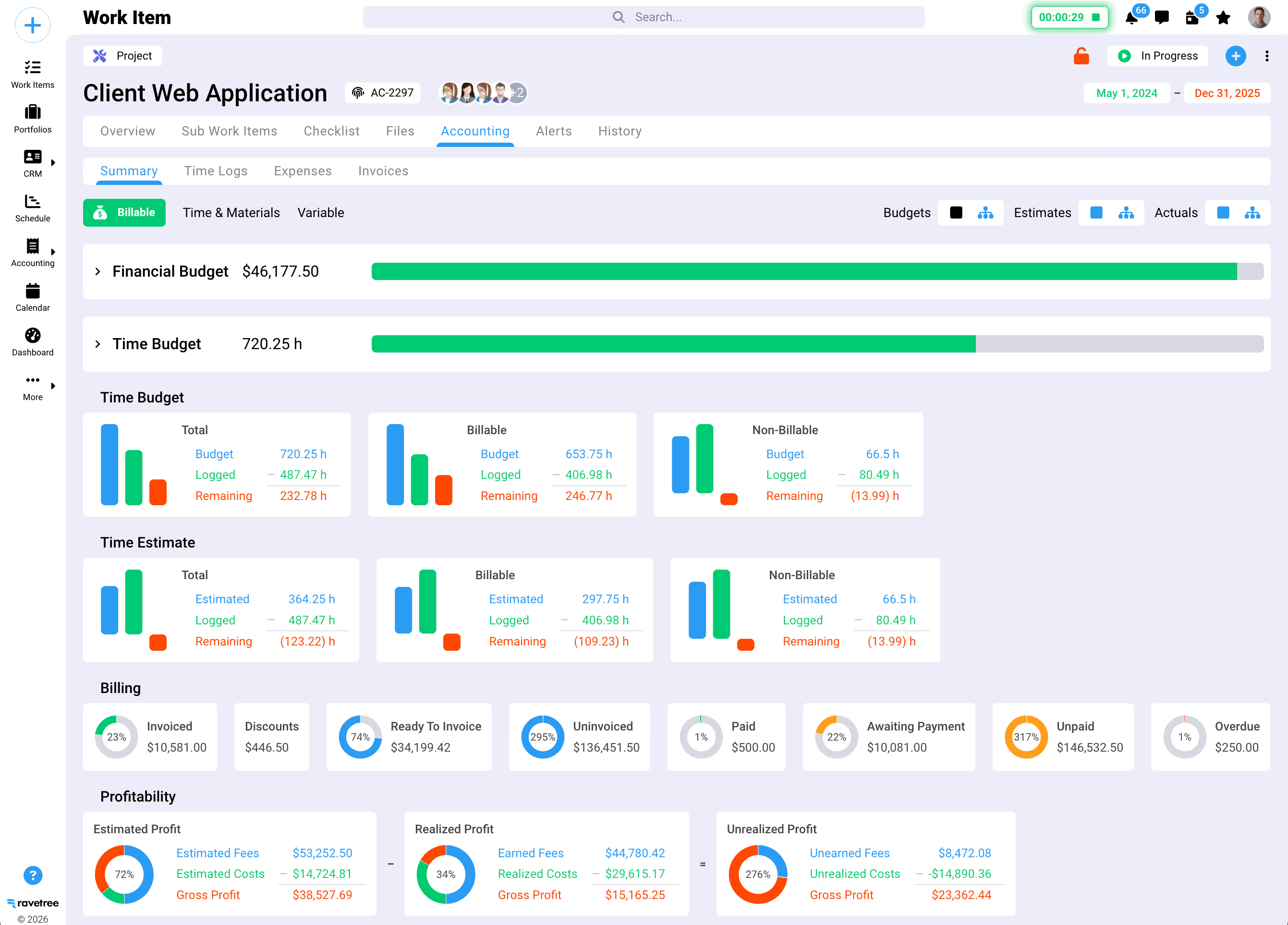
For agencies managing multiple client accounts simultaneously, Ravetree's integrated approach to project financials is a standout feature. You can see profitability at the project, client, or portfolio level in real time — a capability that helps marketing leaders track weekly KPIs more effectively than cobbling together reports from multiple systems.
Best for: Marketing agencies and mid-sized teams that need a comprehensive platform covering project execution, financials, and client management in one place.
2. Trello
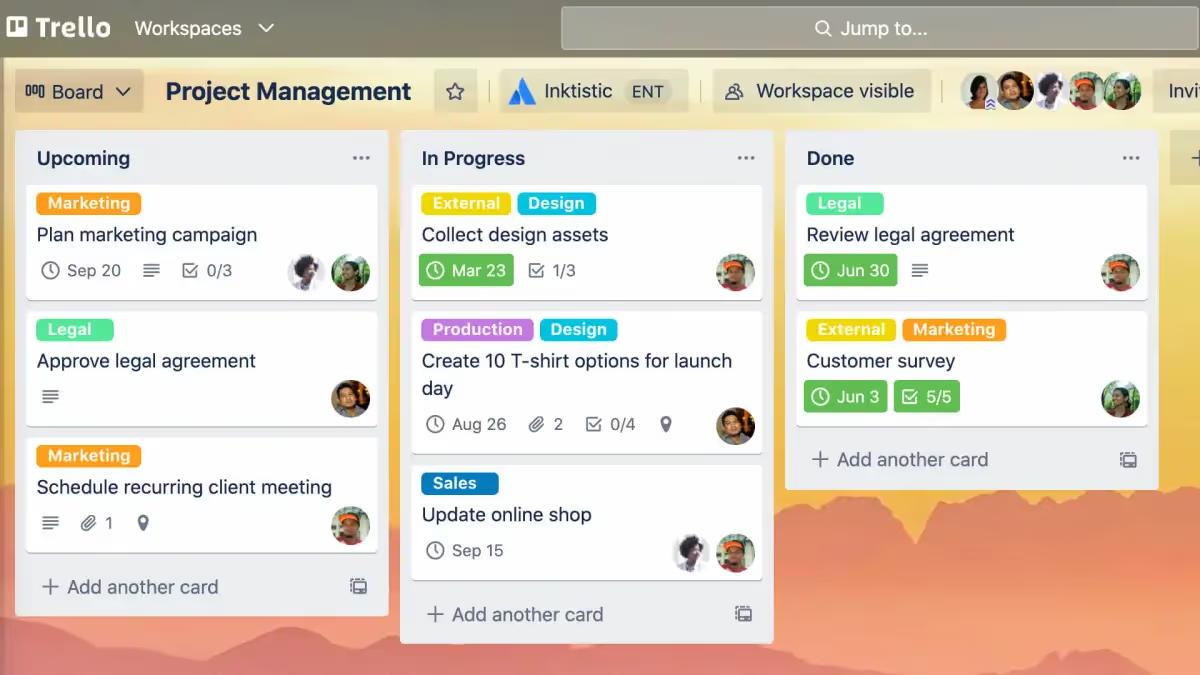
Trello is the platform that popularized Kanban-style project management for non-technical teams, and it remains one of the most accessible entry points for marketing teams adopting project management software for the first time. Its card-and-board interface is intuitive enough that team members can start using it with virtually no training.
For smaller marketing teams running straightforward campaigns, Trello's simplicity is its greatest asset. You can create a board for each campaign, add cards for individual deliverables, and drag them through stages like "Brief," "In Progress," "Review," and "Published." A 2024 Capterra survey found that 38% of small businesses cite ease of use as the most important factor when selecting project management software, which explains Trello's enduring popularity in that segment.
Trello's Power-Up ecosystem extends its capabilities with calendar views, automation rules, and integrations with tools like Slack, Google Drive, and HubSpot. However, the platform starts to show its limits when campaigns grow complex. There's no built-in resource management, time tracking, or financial reporting — features that larger marketing teams and agencies need for operational visibility.
Best for: Small marketing teams and freelancers who want a simple, visual way to organize campaigns and don't need advanced resource or financial management.
3. Basecamp
Basecamp takes a deliberately opinionated approach to project management. Rather than offering dozens of customizable views and features, it provides a streamlined set of tools — message boards, to-do lists, schedules, file storage, and group chat — organized around individual projects.
This simplicity appeals to marketing teams that are overwhelmed by feature-heavy platforms. Everything related to a campaign lives in one place, and the conversation-focused design encourages asynchronous communication rather than constant real-time messaging. Research by the Harvard Business Review found that excessive collaboration and meetings can consume up to 85% of a knowledge worker's week — Basecamp's model pushes back against that tendency.
Basecamp also uses a flat pricing model rather than per-seat pricing, which can be cost-effective for larger teams. The trade-off is that it lacks the structured workflow capabilities — like Gantt charts, dependency tracking, and workload management — that complex multi-channel campaigns demand. Marketing teams using Basecamp often supplement it with spreadsheets or secondary tools for resource allocation and timeline management.
Best for: Teams that value communication clarity and simplicity over granular workflow control, particularly those running smaller, less interdependent marketing projects.

4. Asana
Asana has become one of the most widely adopted marketing project management software platforms, known for its balance of power and usability. It offers multiple project views — list, board, timeline, and calendar — and supports both simple task tracking and more complex multi-project portfolios.
Marketing teams appreciate Asana's workflow automation capabilities, which can automatically assign tasks, update due dates, and move work between project stages based on triggers. Asana's own work management research indicates that workers spend approximately 58% of their time on "work about work" — coordinating, searching for information, and switching between apps — rather than the skilled work they were hired to do. Asana's automations aim to reclaim some of that lost time.
The platform also offers goal-tracking features that allow marketing leaders to connect individual tasks and projects to broader strategic objectives. This top-down visibility helps ensure that day-to-day work aligns with quarterly and annual marketing goals. Where Asana falls short for some marketing teams is on the financial side — it doesn't offer native time tracking, billing, or profitability reporting, which limits its utility for agencies that need to monitor project economics.
Best for: Mid-sized marketing teams and departments that need a versatile project management platform with strong automation and portfolio-level visibility but can manage financials separately.

5. Notion
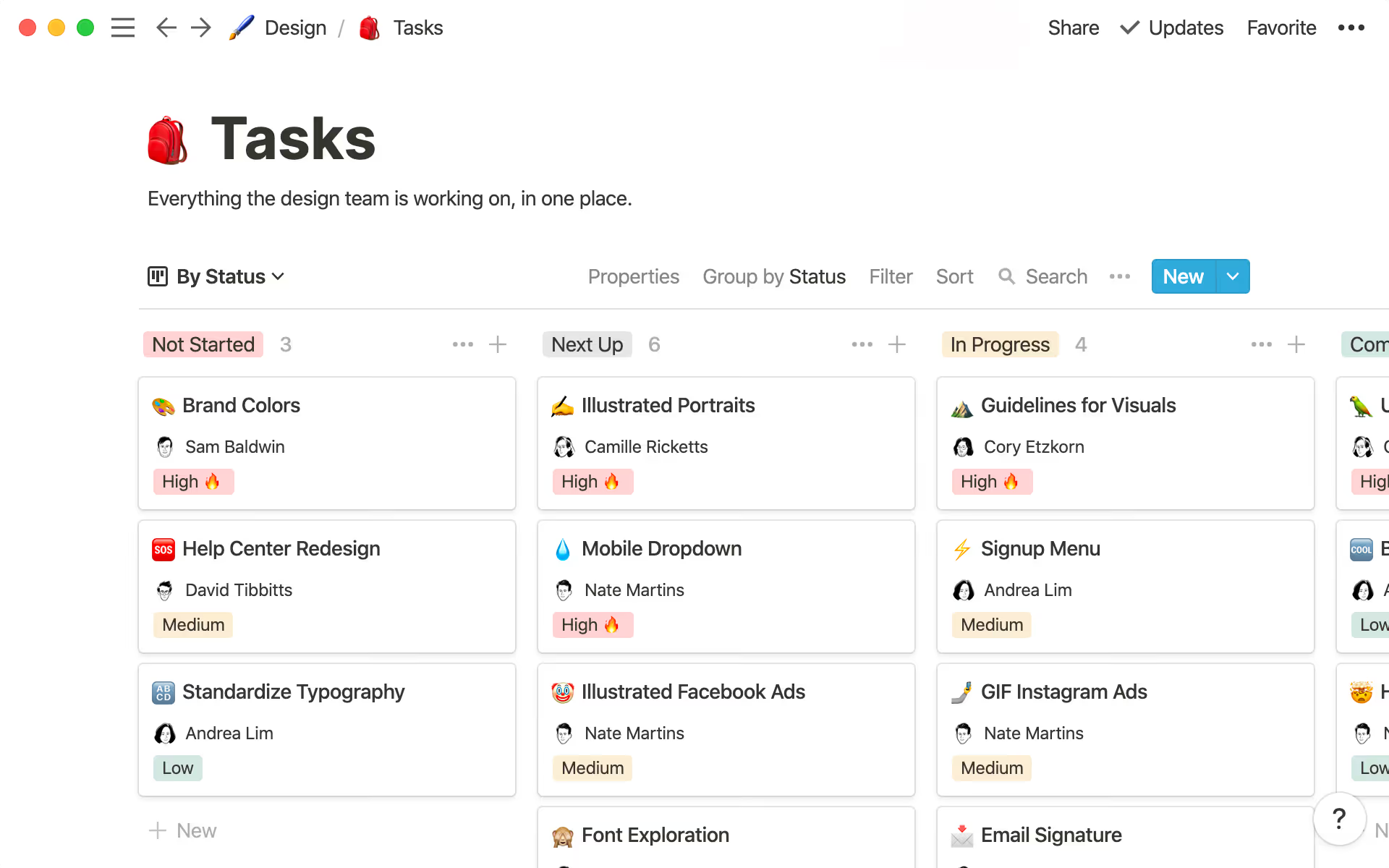
Notion occupies a unique space in the marketing project management software landscape. It's not a traditional project management tool — it's a flexible workspace that combines documents, databases, wikis, and task management into a single platform that teams can customize to fit virtually any workflow.
For marketing teams, this flexibility is both Notion's greatest strength and its biggest challenge. You can build a content calendar database, link it to a campaign tracker, embed SOPs alongside project briefs, and create client-facing dashboards — all within the same environment. A 2024 report from Statista noted that the collaborative software market is projected to surpass $40 billion globally by 2027, and Notion's all-in-one philosophy positions it squarely in that trend.
However, Notion lacks dedicated project management features like Gantt charts with dependency tracking, resource capacity planning, and automated workload balancing. Teams using Notion for marketing project management are essentially building their own system from scratch, which requires more upfront investment than a purpose-built platform.
Best for: Marketing teams that prioritize documentation and knowledge management alongside task tracking, and that have the time to build and maintain custom workflows.
Measuring Success: How to Get ROI From Your Platform
Adopting marketing project management software isn't just about buying a tool — it's about changing how your team works. The most common reason implementations fail isn't the software itself; it's a lack of process alignment and adoption discipline.
Start by defining clear success metrics before you roll out any platform. According to a 2024 Gartner survey, organizations that set explicit adoption KPIs see 2.5x higher tool utilization rates within the first six months. Useful benchmarks for marketing teams include on-time delivery rates for campaigns, utilization rates for team members, project profitability margins, and the reduction in time spent on status meetings and update emails.
Process mapping is equally important. Before configuring your new platform, document your current campaign workflows from kickoff to completion. Identify bottlenecks, redundant approval steps, and handoff points where work typically stalls. Then design your project templates and automation rules to eliminate those friction points. Ravetree's guide to workflow optimization offers a practical framework for streamlining agency operations that applies to any marketing team.
Finally, invest in training and change management. Even the best marketing project management software delivers zero value if your team reverts to old habits within a month. Designate platform champions, build a 30-60-90 day adoption plan, and review usage data regularly to identify team members who may need additional support.
Future Considerations: Where Marketing PM Is Headed
The marketing project management software category is evolving rapidly, driven by three major trends that will reshape how teams work over the next several years.
AI-powered automation is moving beyond simple rule-based triggers. Next-generation platforms are incorporating predictive analytics that can forecast project timelines based on historical data, recommend optimal resource allocation, and flag at-risk campaigns before deadlines are missed. McKinsey research suggests that AI could automate up to 30% of work activities across most occupations by 2030, and project management is one of the highest-impact areas for this transformation.
Deeper financial integration is becoming table stakes. Marketing teams — especially agencies — are demanding platforms that connect project execution directly to revenue outcomes. The days of managing campaigns in one tool and tracking profitability in another are numbered. Platforms that unify these functions, as Ravetree does today, will have a significant competitive advantage.
Real-time collaboration across distributed teams will continue to evolve. Buffer's 2024 State of Remote Work report found that 98% of respondents want to work remotely at least some of the time, making asynchronous-friendly project management tools essential rather than optional. Expect deeper integrations with communication platforms, smarter notification management, and better cross-timezone scheduling capabilities.
Conclusion
Choosing the right marketing project management software is one of the most impactful operational decisions a marketing team can make. The five platforms reviewed here — Ravetree, Trello, Basecamp, Asana, and Notion — each offer distinct strengths, from Ravetree's comprehensive all-in-one approach to Notion's endlessly customizable workspace. The best choice depends on your team's size, budget, workflow complexity, and whether you need financial management built into the same platform where you manage campaigns.
Whatever you choose, the key is to commit fully. Define your workflows, train your team, and measure adoption rigorously. The best marketing project management software won't transform your operations on its own — but paired with the right processes and discipline, it becomes the foundation for consistent, scalable marketing execution. If you're ready to explore a platform that brings project management, resource planning, time tracking, and billing together, start with a Ravetree demo and see the difference an integrated approach makes.
Frequently Asked Questions
What is marketing project management software?
Marketing project management software is a platform designed to help marketing teams plan, execute, track, and measure campaigns and deliverables. It typically includes features like task management, timeline planning, team collaboration, and reporting — often with workflow automation tailored to marketing processes.
How is marketing project management software different from general project management tools?
While general tools handle tasks and timelines, marketing-specific platforms often include features like content calendars, campaign templates, creative asset management, client approval workflows, and budget tracking tied to campaign ROI. Some, like Ravetree, integrate billing and CRM alongside project management.
Do small marketing teams need project management software?
Yes. Even small teams benefit from centralizing tasks, deadlines, and communication in one place. Tools like Trello offer a low-complexity entry point, while platforms like Ravetree scale as teams grow and operational needs become more sophisticated.
What features matter most for marketing agencies?
Agencies should prioritize resource management, time tracking, client portals, and profitability reporting alongside standard project management features. The ability to manage multiple clients and projects simultaneously without losing financial visibility is critical.
How long does it take to implement marketing project management software?
Implementation timelines vary from a few days for simpler tools like Trello to several weeks for comprehensive platforms like Ravetree or Asana, depending on team size, data migration, and customization depth.
Can marketing project management software integrate with other tools?
Most modern platforms integrate with Google Workspace, Slack, HubSpot, Adobe Creative Suite, and analytics platforms. Integration depth varies, so verify specific compatibility before committing.