Key takeaways:
Most small marketing agencies don't fail because of a lack of talent. They fail because of a lack of structure. Missed deadlines, scope creep, and chaotic client communication quietly erode profitability long before leadership realizes there's a problem. Choosing the best project management software is one of the highest-leverage decisions a small agency can make — and yet 77% of high-performing projects use dedicated project management software, while the majority of struggling agencies still rely on email threads and spreadsheets. This guide cuts through the noise to help you find the right tool for your team.
The Current Challenge: Why Most Agency Tools Fall Short
Small marketing agencies operate in a uniquely demanding environment. You're simultaneously managing client expectations, creative output, campaign deadlines, and financial performance — often with a lean team wearing multiple hats. The gap between what generic tools offer and what agencies actually need is wider than most people realize.
Only 58% of organizations fully understand the value of project management, according to PMI's Pulse of the Profession — which means nearly half of all businesses are flying blind when it comes to structured delivery. For small agencies, that blind spot is especially costly. A single mismanaged campaign can damage a client relationship that took years to build.
54% of project managers cite a lack of clear objectives as the top cause of project failure. For marketing agencies, unclear scope translates directly into unpaid overtime, rework, and eroded margins. The best project management platforms address this by building structure into every stage of the client workflow, from kickoff to delivery.
70% of organizations experienced at least one project failure in the past year. When you're running a small agency with tight margins and a handful of retainer clients, one failure isn't a statistic — it's potentially a quarter of your revenue walking out the door.
As outlined in Ravetree's deep-dive on why project management is essential for modern marketing teams, the right platform doesn't just organize tasks — it fundamentally changes how teams collaborate, communicate, and deliver value to clients.
What Small Marketing Agencies Actually Need: A Strategic Framework
Before comparing tools, it's worth establishing what "good" actually looks like for a small agency. Not every team needs enterprise-grade complexity. But dismissing structure entirely is equally dangerous.
The right platform for a small marketing agency should deliver across five dimensions:
1. Client-Centric Workflow Management — The ability to create project templates, assign deliverables, and track progress against deadlines without requiring a dedicated operations person to maintain the system.
2. Financial Visibility — Integration between project delivery and billing so you always know whether a project is profitable before the invoice goes out. Poor planning causes an average 27% cost overrun on projects — a figure that becomes existential for agencies operating on thin margins.
3. Resource Clarity — Resource planning capabilities that show who is over-allocated, who has capacity, and whether you can realistically take on a new client without burning out your team.
4. Time Tracking Integration — Accurate time tracking tied directly to projects and clients, so billing is always based on reality rather than guesswork.
5. Client Communication Tools — Whether through a built-in CRM, client portal, or structured messaging, the platform should reduce the amount of time spent managing communication about work versus actually doing it.
Teams using PM software report a 28% improvement in team productivity — but that improvement only materializes when the tool is well-matched to the team's actual workflows. Picking the wrong platform often means adoption stalls within 60 days, and the agency reverts to the chaos it was trying to escape.
The Top 5 Project Management Tools for Small Marketing Agencies
1. Ravetree
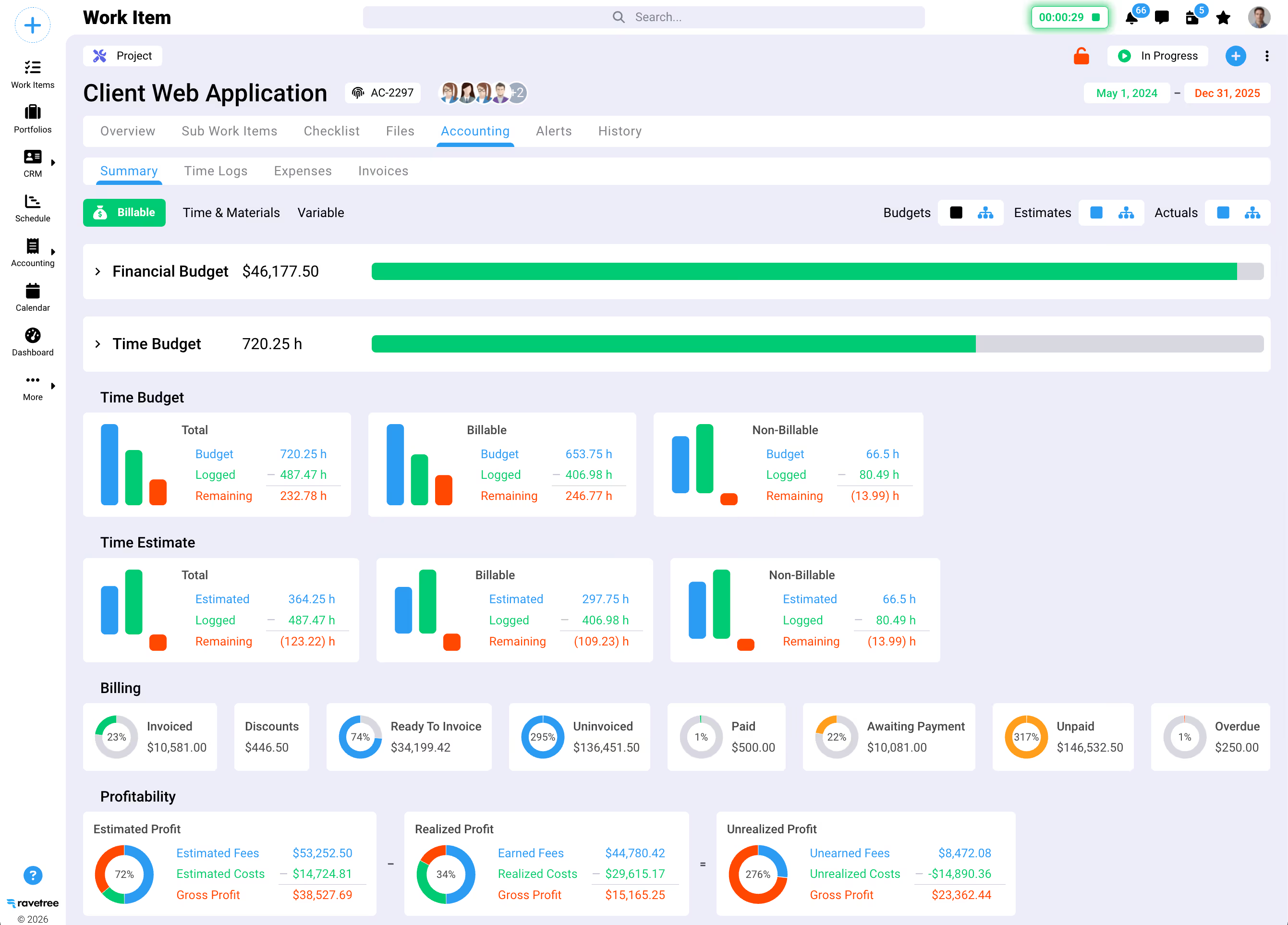
Ravetree is purpose-built for client service businesses — and that distinction matters enormously. While most general-purpose project management platforms bolt on features for agencies as an afterthought, Ravetree was designed from the ground up for teams that need to manage projects, clients, billing, and resources inside a single, unified platform.
For small marketing agencies, the key advantage is the elimination of tool sprawl. Instead of piecing together separate apps for task management, time tracking, invoicing, and client communication, Ravetree consolidates all of it. You get Gantt charts, Kanban boards, resource scheduling, budget tracking, retainer management, and a built-in CRM — without paying for five separate subscriptions.
Ravetree's client portals feature is particularly valuable for agencies managing multiple active client relationships. Rather than sending status update emails or scheduling check-in calls, clients can log in to see real-time progress, approve deliverables, and communicate directly with the team.
The platform's financial management capabilities set it apart from purely task-focused competitors. You can track budgets at the project level, flag scope creep before it becomes a billing dispute, and generate invoices directly from tracked time — all within the same environment where the work is happening.
For agencies exploring how digital tools stack up in real-world conditions, Ravetree's own breakdown of top project management software for digital agencies provides a candid comparison of where different platforms excel and fall short.
Best for: Agencies that want an all-in-one operations platform and are ready to invest in a tool that scales with them.
2. Basecamp
Basecamp takes a deliberately simple approach to project management, and for some small agencies, that simplicity is its greatest strength. The platform organizes work around "projects" that contain to-do lists, message boards, file storage, schedules, and group chat — all in a single, flat structure that requires very little onboarding.
Its flat-rate pricing model (one price for unlimited users) makes it especially attractive for growing teams where per-seat costs would otherwise balloon. Agencies that are primarily communication-driven — where the bigger problem is keeping everyone on the same page rather than tracking granular task dependencies — often find Basecamp to be exactly what they need.
The trade-off is depth. Basecamp lacks native time tracking, doesn't have built-in invoicing, and offers minimal reporting capabilities. Agencies with complex financial workflows or detailed resource planning needs will quickly hit its ceiling. But as a lightweight coordination hub, it punches above its weight class.
Best for: Small teams (under 10 people) where the primary challenge is communication and document organization.

3. Trello
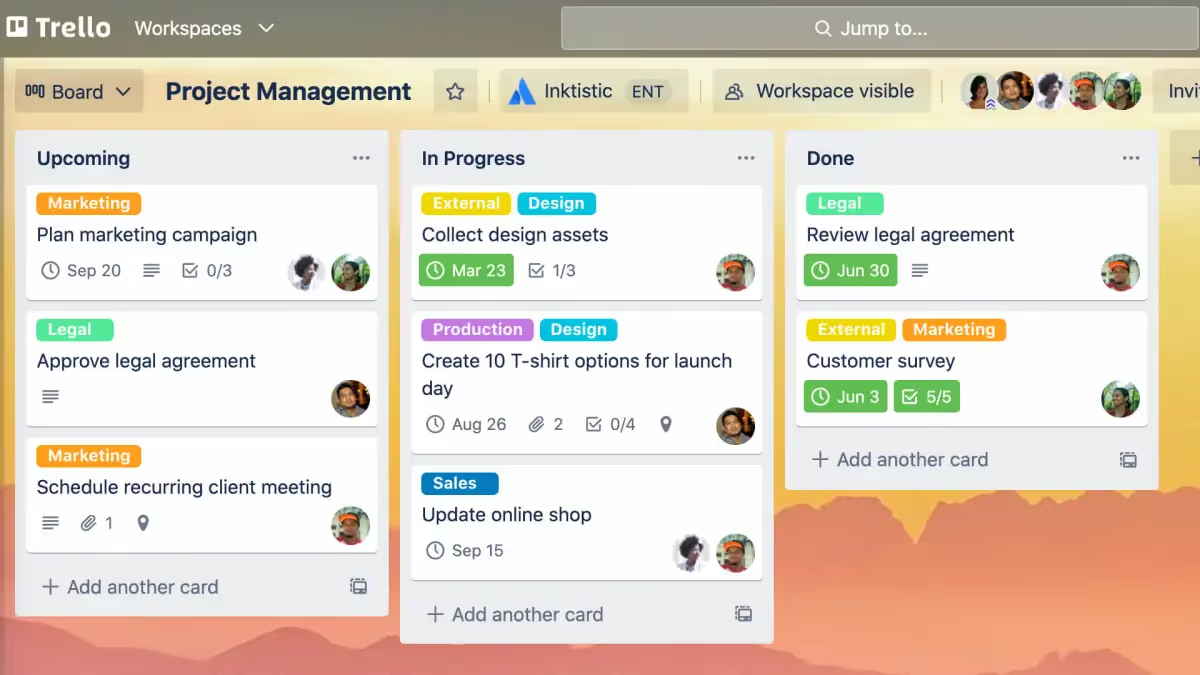
Trello's visual Kanban boards have made it one of the most recognizable project management tools on the market, and for good reason. Its drag-and-drop card system is genuinely intuitive — most people can start using it productively within an hour of signing up. The free tier is also one of the most generous available, making it a logical starting point for early-stage agencies.
For marketing teams running content calendars, social media campaigns, or editorial pipelines, Trello's visual layout creates an immediate sense of clarity. Each card can hold checklists, attachments, due dates, and comments, keeping all relevant information in one accessible place.
The limitations become apparent as agencies scale. Trello doesn't offer native Gantt charts on its free tier, has limited reporting, and lacks the financial management capabilities that growing agencies need. Power-Ups (integrations) can extend its functionality, but assembling a coherent agency management system from Trello plus multiple third-party tools often becomes more work than it's worth.
Best for: Solo consultants or very small teams running campaign-based workflows who need a low-cost entry point.
4. Asana
Asana occupies a strong middle ground between the simplicity of Trello and the complexity of enterprise platforms. It offers multiple project views — list, board, timeline, and calendar — giving teams the flexibility to work the way they prefer. Its automation capabilities are notably strong, allowing agencies to build rule-based workflows that reduce repetitive manual tasks.
For marketing agencies, Asana's timeline view is particularly useful for campaign planning. You can map out multi-week or multi-month campaigns with dependencies, ensuring that a delayed asset doesn't silently derail the entire launch sequence. Its workload view also provides basic resource management, showing which team members are over-allocated.
The platform's reporting dashboards have improved substantially in recent versions, offering portfolio-level visibility across multiple active projects. For a small agency principal who needs to quickly assess where every active engagement stands, that bird's-eye view is genuinely valuable.
Asana's main drawback for agencies is that it doesn't natively handle billing or invoicing. You'll need integrations with accounting tools to close that gap, which adds complexity and cost.
Best for: Growing agencies (5–20 people) with complex project structures who need strong automation and multi-view project management.

5. Monday.com
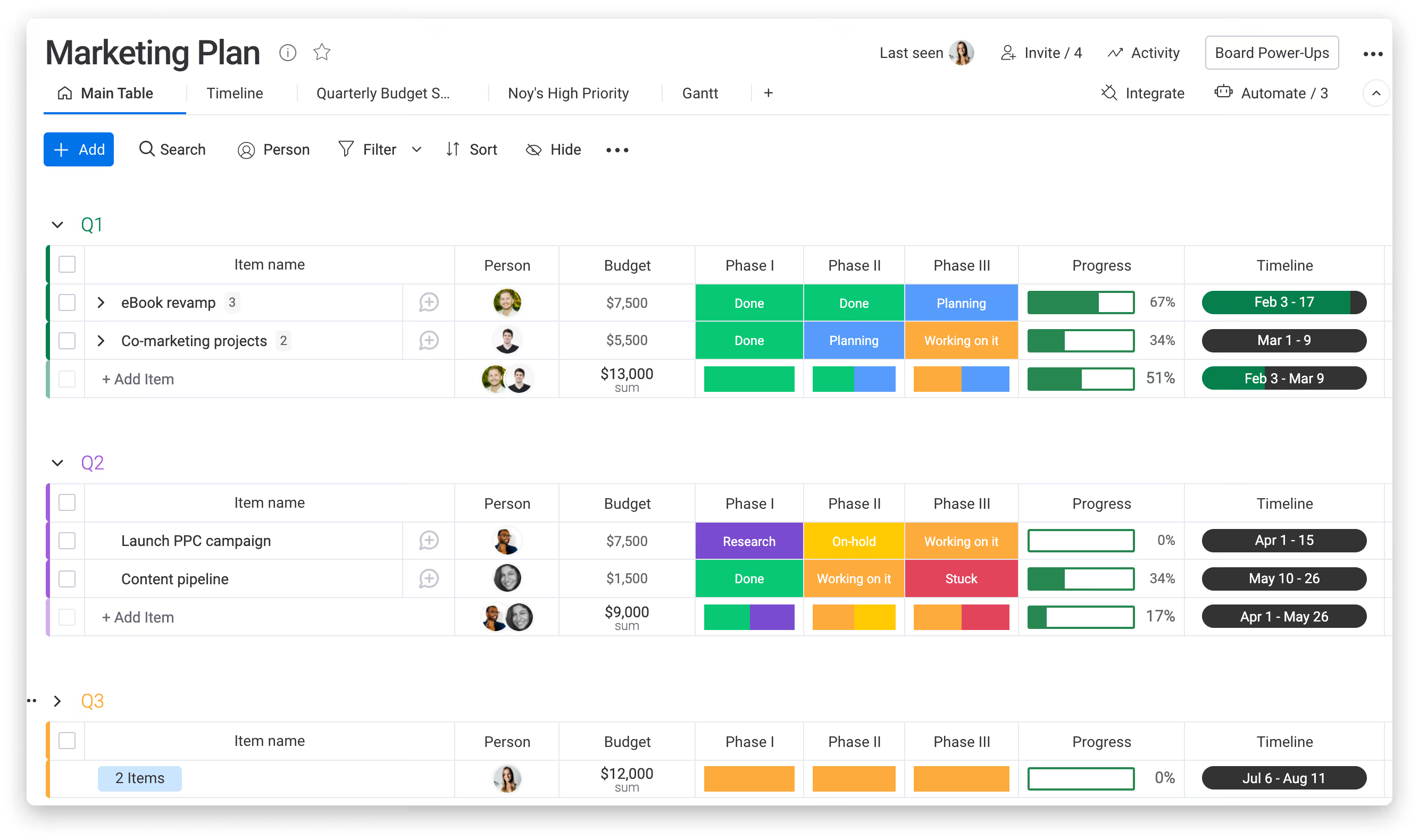
Monday.com is one of the most visually polished platforms in the category, with a highly customizable interface that can be adapted to nearly any workflow. Its strength lies in flexibility — you can build custom dashboards, automate status updates, and create reporting views that surface exactly the metrics your leadership team cares about.
For marketing agencies, Monday's campaign management templates provide a strong starting point, and its integration library is one of the most extensive available. The ability to connect Monday to ad platforms, CRMs, and creative tools means it can function as a genuine operational hub.
The downside is that this flexibility comes with complexity. Monday requires meaningful configuration time upfront, and without a dedicated operations person to build and maintain the system, it can become as chaotic as the spreadsheet it replaced. Its per-seat pricing also escalates quickly as teams grow.
Best for: Agencies with a dedicated operations or systems-thinking leader who can build and maintain a custom workflow environment.
Measuring Success: KPIs That Tell You Whether Your PM Tool Is Actually Working
Choosing a platform is only the first step. The more important question is how you'll know whether it's delivering value. The global project management software market is projected to exceed $9.81 billion by 2026, which tells you that the category is growing — but growth doesn't guarantee that any individual agency is getting ROI from their investment.
Four metrics matter most for small agencies:
Project Margin Accuracy — Are your actual project margins landing within 10% of your estimates? If not, your time tracking or scoping process has a gap that the platform should help you close.
On-Time Delivery Rate — What percentage of client deliverables are hitting their agreed deadlines? A healthy agency should be above 85%. If your platform isn't making this visible, you're managing by feel.
Team Utilization Rate — Are your team members consistently billing between 70–80% of their available hours? Both under-utilization (wasted capacity) and over-utilization (burnout) are symptoms of resource planning gaps.
Scope Creep Frequency — How often are projects running over their originally agreed scope? If it's more than 30% of engagements, your intake and tracking process needs structural reinforcement.
The frameworks outlined in project management for marketing agencies — tools and frameworks that actually work provide a practical methodology for building these measurement systems into your day-to-day operations rather than treating them as end-of-quarter retrospectives.
Future Considerations: Where Agency Project Management Is Heading
45% of projects run over budget, according to McKinsey research — and artificial intelligence is increasingly being positioned as the solution to this chronic problem. AI-assisted project planning tools are beginning to appear across the category, offering predictive scheduling, automatic risk flagging, and intelligent resource recommendations.
For small agencies evaluating platforms today, AI capability shouldn't be the primary selection criterion — but it should be on your radar as a forward-looking consideration. Platforms that are investing in AI-powered features today are likely to deliver meaningful efficiency gains in the next 18–24 months.
The shift toward integrated platforms is also accelerating. Agencies that are currently operating across five or six disconnected tools — one for tasks, one for time, one for billing, one for CRM — are feeling the drag of that fragmentation in their day-to-day operations. The market is moving toward consolidation, and agencies that make intentional platform choices now will be better positioned to scale without rebuilding their operations stack from scratch.
Understanding how to choose the right project management tool for your agency isn't a one-time decision — it's a strategic process that should be revisited as your team size, client mix, and service offerings evolve.
Conclusion
The best project management software for your small marketing agency is the one your team will actually use — and that maps directly to how your business delivers value to clients. This article on the best project management software for small marketing agencies has covered five strong options, each suited to different team sizes, growth stages, and operational priorities. Ravetree stands out for agencies ready for an all-in-one operational platform. Basecamp works for simplicity-first teams. Trello is ideal as an entry point. Asana serves growing agencies with complex workflows. Monday suits highly customizable environments. Evaluate each against your specific constraints, start with a free trial, and measure adoption within the first 30 days. The right tool pays for itself quickly. The wrong one quietly costs you more than its subscription fee.
Frequently Asked Questions
What is the best project management software for a small marketing agency?
The best choice depends on your agency's size and operational complexity. Ravetree is the strongest all-in-one option for agencies needing integrated billing, CRM, and resource planning. Asana and Monday are excellent for teams that need robust task management with strong integrations.
Do small marketing agencies really need dedicated project management software?
Yes. Research consistently shows that teams using dedicated project management software deliver better results and report higher productivity. The question isn't whether you need it — it's which platform fits your current stage.
How much does project management software typically cost for a small agency?
Pricing varies widely. Trello offers a generous free tier. Basecamp charges a flat monthly fee regardless of team size. Asana and Monday charge per seat, which escalates with team growth. Ravetree offers tiered pricing designed for client service businesses of varying sizes.
What features are most important for marketing agency project management?
Time tracking, budget management, task dependencies, client communication tools, and reporting dashboards are the five most critical features for marketing agencies specifically.
Can project management software help reduce scope creep?
Yes — significantly. Platforms that provide clear project baselines, change request workflows, and real-time budget tracking make scope creep visible before it becomes a billing dispute.
How long does it take to implement a new project management platform?
For a small agency, expect two to four weeks for full adoption of a new platform. Choosing a tool with strong onboarding resources and templates for marketing workflows can compress this timeline meaningfully.