
Key takeaways:
Running an agency in 2026 feels like juggling chainsaws while riding a unicycle. Your team is spread across five different tools, 36% of agency employees identified client churn as the most significant impact on profitability, and you're drowning in browser tabs just to complete basic workflows. The reality? Finding the best all-in-one agency tool isn't just about convenience—it's about survival.
Most agencies waste thousands of dollars annually switching between disconnected platforms for project management, time tracking, billing, and CRM. This tool fragmentation doesn't just drain budgets; it kills productivity, creates data silos, and frustrates teams who spend more time managing software than serving clients. That's exactly why Ravetree has emerged as the best all-in-one agency tool for professional services firms looking to consolidate, streamline, and scale their operations.
The Hidden Cost of Tool Sprawl
Agency leaders often don't realize how much money leaks through the cracks of disconnected systems. While the subscription costs are visible, the invisible expenses—lost billable hours, duplicated data entry, miscommunication—add up to staggering amounts. Research shows that 50% of agencies are leaving at least 20% of their profits untapped simply through operational inefficiencies.
The problem compounds when teams use separate platforms for every function. One tool for task management. Another for resource planning. A third for client portals. Each additional system creates another point of failure, another login to remember, and another dataset that doesn't communicate with the others.
Consider what happens when a project manager needs to check team availability. They toggle to the resource management tool. Then they jump to the time tracking platform to verify actual hours worked. Next, they open the financial system to review budget burn. Finally, they switch to the communication tool to update the client. That's four systems for one simple workflow—and that's before considering the data discrepancies between platforms.
Studies demonstrate that integration consolidation leads to a 25% increase in productivity when organizations move from fragmented tools to unified platforms. Even more compelling, organizations that consolidate tools can reduce costs by up to 30% while simultaneously improving team performance.
The agencies that thrive understand this reality. They recognize that clients want tangible outcomes, not just activity, and delivering those outcomes requires operational excellence. You can't achieve excellence when your team wastes hours each week wrestling with technology instead of creating value for clients.
Why Traditional Solutions Fall Short
Many agency leaders try to solve the tool sprawl problem by selecting what they believe is a comprehensive project management software solution. They implement it with high hopes, only to discover three months later that critical functions are missing. Project tracking is great, but where's the invoicing? Time entries work fine, but how do you manage client relationships? Tasks are organized, but what about resource capacity planning?
This is precisely the challenge that led to the development of truly integrated agency management platforms. As explored in why project management alone is not enough, agencies need more than task lists and Gantt charts. They need complete business management ecosystems.
Traditional project management tools were designed for individual projects, not for running entire agencies. They lack the financial depth agencies need for profitability tracking. They don't include robust CRM capabilities for managing client relationships throughout the entire lifecycle. They can't handle the complexity of resource management across multiple projects and teams. And they certainly don't provide the consolidated reporting that agency leadership needs to make strategic decisions.
The result is what industry experts call "tool fatigue"—that exhausted feeling when your team has to maintain yet another system, remember yet another password, and manually sync data between yet another set of platforms. Tool consolidation eliminates data silos and improves collaboration, but only if the consolidated platform actually delivers all the functionality agencies need.
The All-in-One Advantage
The best all-in-one agency tool solves these problems by bringing every critical function under one roof. This isn't about cramming features into a bloated interface—it's about intelligent integration where every module communicates seamlessly with the others.
When project tasks automatically generate time entries, those entries flow directly into billing calculations. When clients approve work through the portal, project managers receive instant notifications without checking email. When resources are allocated to projects, capacity reports update in real-time across the entire platform. This is what true integration looks like, and it's what separates mediocre tools from exceptional ones.
Professional services firms that adopt unified platforms report dramatic improvements in key metrics. The most successful agencies understand that agencies hitting 70-75% utilization rate make peak profit without burning out their teams. Achieving this sweet spot requires visibility—seeing in real-time who's working on what, which projects are profitable, and where bottlenecks exist.
The financial impact is equally significant. Top-performing agencies don't just work harder; they work smarter with better systems. Data shows that 8-figure agencies maintain 25-32% profit margins compared to lower margins at smaller firms. The difference often comes down to operational discipline enabled by the right technology.
Core Capabilities That Matter
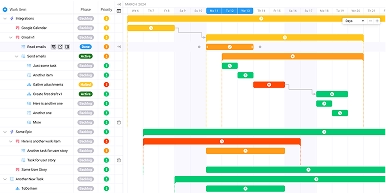
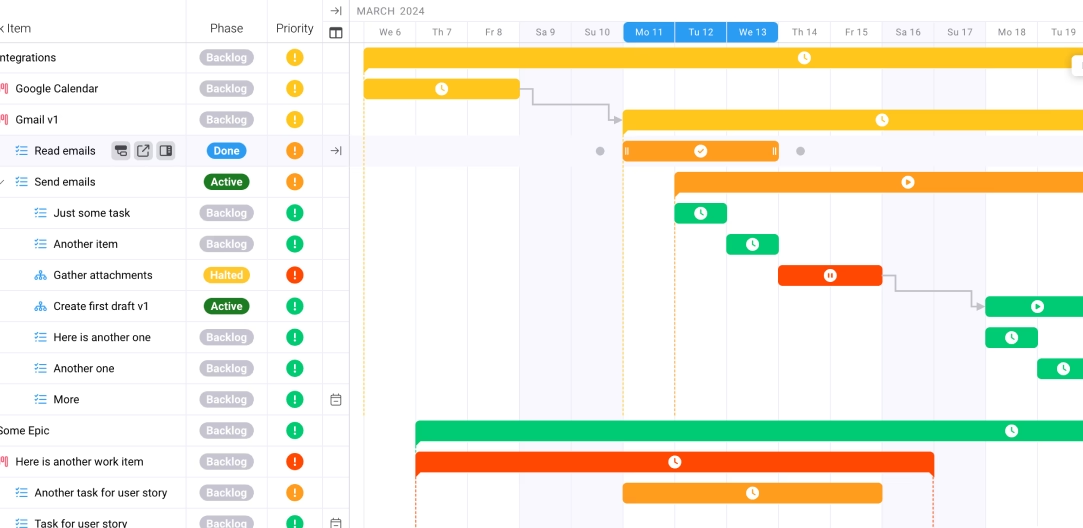
What makes an agency management platform truly comprehensive? It starts with robust project management that handles everything from initial scoping through final delivery. Agencies need to create project hierarchies, assign tasks with dependencies, track milestones, and monitor progress—all while maintaining visibility for both internal teams and external clients.
Time and expense tracking must be intuitive enough that team members actually use it. Many platforms fail here because they make time entry a chore rather than a seamless part of the workflow. The best systems allow one-click time tracking, mobile entry, and automatic reminders that keep timesheets accurate without micromanagement.
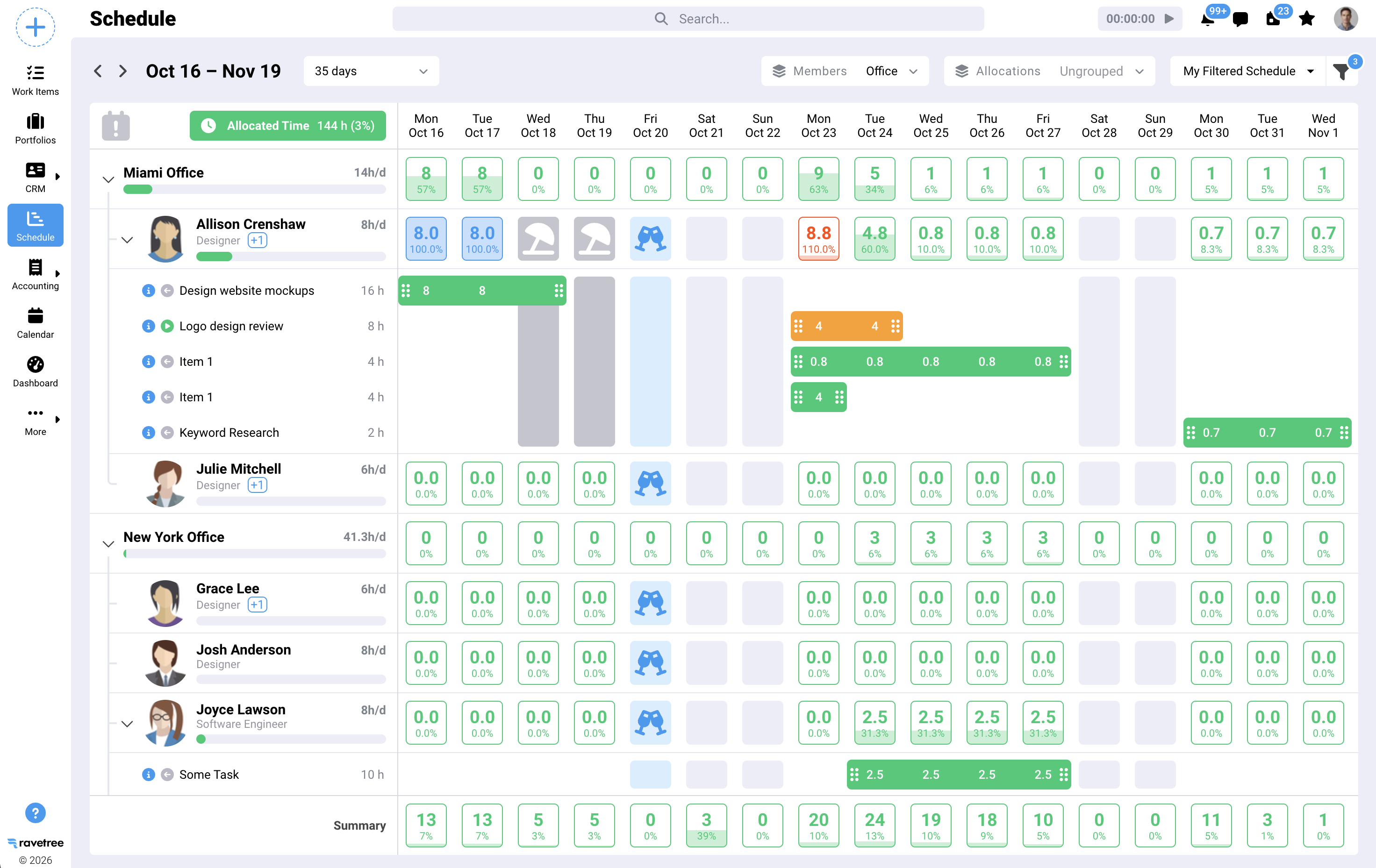
Resource management separates good platforms from great ones. Agency leaders need to see team capacity at a glance, identify potential conflicts before they become problems, and balance workload across projects to maintain healthy utilization rates. This requires sophisticated scheduling tools that account for availability, skill sets, project priorities, and time-off requests.
Financial management functionality must go beyond basic invoicing. Agencies need project budgeting, expense tracking, purchase order management, and profitability analysis. They need to know in real-time whether projects are on track financially or bleeding money. They need automated billing workflows that reduce the time between work completion and payment collection.
CRM integration ensures that client information lives in one place. From the initial lead through years of successful engagement, every interaction, contract, communication, and deliverable should be accessible within the platform. This unified view enables better client service and, as detailed in client retention mastery strategies, helps agencies keep clients for years rather than months.
The Client Experience Advantage
Here's something many agency leaders overlook: your tools directly impact client satisfaction. When clients can't easily check project status, when invoices arrive late or contain errors, when communication requires endless email chains—they notice. And they care.
Research confirms that 73% of customers will switch to a competitor after multiple bad experiences. For agencies, every operational friction point creates a "bad experience" opportunity. Delayed project updates because information lives in three different tools? Bad experience. Invoice confusion because billing data doesn't match project records? Bad experience. Missed deadlines because resource conflicts weren't visible? Bad experience.
The best all-in-one agency tool transforms these potential failures into competitive advantages. Client portals provide 24/7 access to project information, eliminating the "Can you send me an update?" emails that waste everyone's time. Automated status reports keep stakeholders informed without requiring manual compilation. Transparent time tracking and billing build trust by showing exactly where effort is being applied.
This level of client service isn't just nice to have—it's essential for retention and growth. Agencies that implement comprehensive platforms can deliver the transparency and responsiveness that modern clients expect. They can respond to inquiries instantly because information is centralized. They can adapt to changing requirements quickly because their systems are flexible. They can scale their operations without sacrificing service quality because their platform grows with them.
Automation and Efficiency Gains
One of the most powerful aspects of unified platforms is workflow automation. When you're dealing with disconnected tools, automation is nearly impossible. But when everything lives in one system, you can create intelligent workflows that eliminate repetitive tasks and reduce human error.
Consider the standard invoice creation process in a fragmented tool environment. Someone manually exports time entries from the tracking tool. They transfer that data into a spreadsheet. They calculate rates, apply markups, and tally expenses. They copy everything into the invoicing system. They proofread for errors. They send the invoice. They update the accounting system. They notify the client. That's eight manual steps prone to mistakes and delays.
In an integrated platform, this becomes: approve time entries, click generate invoice, done. The system automatically pulls approved time and expenses, applies the correct billing rates from the contract, calculates totals, generates a professional invoice, sends it to the client, and updates all financial records. What took hours now takes minutes, and accuracy improves dramatically.
Similar automation opportunities exist throughout agency operations. Project templates that instantly create standardized structures for common engagement types. Automated reminders that prompt team members to submit timesheets or update task status. Smart notifications that alert managers when projects exceed budget thresholds. These seemingly small automations compound into massive efficiency gains.
The data supports this reality. Industry research shows that 58% of agencies say AI has helped cut down content creation time, and similar automation benefits apply across all agency functions when powered by intelligent integrated platforms.
Why Ravetree Leads the Category
Among all-in-one platforms designed for professional services, Ravetree distinguishes itself through depth of functionality specifically built for agencies and consultancies. This isn't a generic project management tool with billing bolted on. It's not a financial system trying to handle project tracking. It's a purpose-built agency management platform that understands how professional services firms actually operate.
The platform's project management capabilities provide the flexibility agencies need while maintaining structure. Create custom project types for different service offerings. Build templates that standardize processes while allowing for client-specific customization. Track projects using multiple methodologies—waterfall, agile, or hybrid approaches—based on what works best for each engagement.
Ravetree's resource management tools provide the visibility that agency leaders desperately need. See team capacity across projects, identify scheduling conflicts before they cause problems, and balance workload to maintain optimal utilization without burning out your people. The platform makes it easy to forecast resource needs and plan for growth, answering questions like "Can we take on this new client?" with confidence.
The financial management suite goes far beyond basic invoicing. Track project budgets against actuals in real-time. Manage expenses and purchase orders within the system. Generate profitability reports that show which projects, clients, and services drive the most margin. Create sophisticated billing scenarios including fixed-price, time-and-materials, retainer, and hybrid arrangements. Handle complex invoicing requirements like milestone billing, progress-based invoicing, and multi-currency transactions.
For client relationship management, Ravetree provides a comprehensive view of every account. Track opportunities through the sales pipeline. Manage contracts and renewals. Store client communications and documents. Monitor client health scores. All of this connects directly to project work, creating a seamless flow from initial sale through ongoing delivery and client success.
The platform's reporting and analytics deliver insights that drive better decisions. Custom dashboards provide real-time visibility into the metrics that matter most to your agency. Pre-built reports cover everything from project profitability to resource utilization to client performance. Export capabilities allow you to share information with stakeholders in whatever format they prefer.
Implementation and Adoption
Even the best all-in-one agency tool fails if your team won't use it. That's why Ravetree focuses intensely on user experience and adoption support. The interface is intuitive enough that team members can start using core functions immediately without extensive training. Onboarding resources include video tutorials, documentation, templates, and live support to ensure smooth implementation.
The platform's flexibility accommodates how your agency actually works rather than forcing you to adapt to rigid processes. Custom fields allow you to track the information relevant to your business. Workflow configurations align with your existing processes while gently guiding improvements. Integration options connect with the external tools you must maintain, like QuickBooks or Slack, creating a unified technology ecosystem even when some specialized tools remain necessary.
Mobile access ensures that team members can work effectively regardless of location. Submit time entries from client sites. Approve requests while traveling. Check project status from anywhere. This mobile-first capability has become essential as agencies embrace hybrid and remote work models.
The platform scales gracefully as agencies grow. Start with basic project management and time tracking, then add billing capabilities when ready. Activate advanced resource planning as your team expands. Turn on client portals when clients request self-service access. This modular approach allows agencies to grow into the platform rather than being overwhelmed by features they're not ready to use.
The Strategic Value of Consolidated Data
Beyond operational efficiency, one of the most valuable aspects of an all-in-one platform is consolidated data. When every piece of information about your agency lives in one system, you can analyze relationships and patterns that remain invisible in fragmented environments.
Want to know which project types are most profitable? Easy—cross-reference project categories with financial performance. Need to identify your most efficient teams? Compare resource allocation with project outcomes. Curious about which clients require the most support resources? Analyze time entries against client accounts. These insights drive strategic improvements that compound over time.
Consolidated data also enables better forecasting. When historical project performance, resource utilization, and financial results all live in one database, you can project future scenarios with confidence. Model "what if" scenarios for different growth paths. Predict cash flow based on pipeline and project schedules. Identify capacity constraints before they limit your growth.
For agencies considering acquisition or preparing to sell, comprehensive data in a single platform dramatically simplifies due diligence. Potential buyers can see complete operations history without stitching together exports from multiple systems. Financial performance, client relationships, project portfolios, and operational metrics are all readily available and verifiable.
The Competitive Imperative
The agency landscape grows more competitive every year. Clients have more options, higher expectations, and less patience for operational dysfunction. The agencies that win aren't necessarily the most creative or even the cheapest—they're the ones that deliver exceptional results reliably and efficiently.
Operational excellence powered by the right technology creates competitive moats. When you can respond to client requests instantly because information is centralized, you're more responsive than competitors juggling disconnected tools. When you can scale efficiently because workflows are automated, you can grow faster without proportional cost increases. When you can demonstrate ROI clearly because financial data is accurate and accessible, you win renewals and referrals.
The insights shared in why client service businesses need all-in-one work management platforms highlight that this isn't just about internal operations—it's about competitive positioning. Agencies using integrated platforms can operate at a level of professionalism and efficiency that fragmented competitors can't match.
Consider the experience from a client's perspective. Agency A requires clients to email for project updates, manually reviews timesheets before invoicing, and takes weeks to generate profitability reports. Agency B provides a client portal with real-time project visibility, automatically generates accurate invoices, and shares performance dashboards proactively. Which agency appears more competent and trustworthy? Which agency earns client loyalty and referrals?
Making the Transition
Moving from fragmented tools to an all-in-one platform might seem daunting, but the transition process is more straightforward than most agency leaders expect. The key is approaching implementation strategically rather than trying to migrate everything simultaneously.
Start by identifying your highest-pain areas. Is it time tracking accuracy? Resource visibility? Billing efficiency? Client communication? Begin by implementing the modules that address these pain points first. Quick wins build momentum and demonstrate value to the team.
Data migration deserves careful planning but shouldn't become a barrier to implementation. Focus on migrating active projects, current client relationships, and recent financial data. Historical information can often remain in old systems for reference while you move forward with new work in the new platform.
Change management is crucial for successful adoption. Communicate the "why" behind the transition clearly. Involve team members in configuration decisions so they feel ownership of the new system. Provide training that goes beyond feature demonstrations to show how the platform improves their daily work. Celebrate early successes and address concerns proactively.
The transformation described in how Ravetree moves agencies from chaos to control illustrates that this transition, while requiring initial effort, pays dividends quickly through improved efficiency, visibility, and control.
Beyond Software to Strategic Partnership
The best all-in-one agency tool provides more than just software—it delivers a partnership that helps your agency succeed. This means responsive support when questions arise. It means product development that listens to agency needs. It means a company that understands the unique challenges facing professional services firms.
Ravetree embodies this partnership approach. The support team consists of people who understand agency operations, not just software features. When you encounter challenges, they provide solutions based on both technical knowledge and practical agency experience. The company actively solicits feedback from users and incorporates valuable suggestions into product roadmaps.
The platform continues evolving to address emerging agency needs. As new work methodologies gain traction, Ravetree adapts. As client expectations change, capabilities expand. As technology advances, integrations multiply. This commitment to continuous improvement ensures that your investment remains valuable over time rather than becoming obsolete.
Real-World Impact
The theoretical benefits of all-in-one platforms become concrete when you examine actual agency experiences. Consider the common scenario: a mid-sized creative agency managing 30+ active client projects across a team of 25 people. Before implementing an integrated platform, they struggled with utilization rates around 55%, profit margins under 15%, and frequent client complaints about communication delays.
After consolidating onto Ravetree, their metrics transformed. Utilization increased to 68% because resource visibility allowed better project allocation. Profit margins climbed to 22% as accurate time tracking eliminated revenue leakage and automation reduced administrative overhead. Client satisfaction improved measurably as the portal provided transparency and automated updates reduced response times.
These aren't isolated results. Agencies across various specializations—digital marketing, architecture and engineering, IT consulting, creative services—report similar improvements when they consolidate fragmented tools into comprehensive platforms. The specific metrics vary by agency, but the pattern holds: better visibility leads to better decisions, which leads to better outcomes.
Investment vs. Cost
Some agency leaders hesitate to adopt all-in-one platforms due to perceived cost. They compare the subscription price to their current tools and balk at what seems like a premium. This analysis misses critical context.
First, when you properly account for all the tools an integrated platform replaces, the costs often balance or even favor consolidation. Add up subscriptions for project management, time tracking, invoicing, CRM, resource planning, client portals, and reporting tools. The total typically exceeds the cost of a comprehensive platform.
Second, and more importantly, this analysis completely ignores the efficiency gains. If consolidation saves each team member even 30 minutes daily—a conservative estimate given the time saved switching between tools, manually transferring data, and troubleshooting integration failures—that's 2.5 hours per week per person. For a 25-person agency, that's 62.5 hours weekly or 3,250 hours annually. At average billable rates, that's hundreds of thousands of dollars in recovered capacity.
Third, improved profitability from better utilization and reduced operational costs typically delivers ROI within months. The agencies that delay implementation don't save money—they leave money on the table while competitors pull ahead.
Conclusion
The search for the best all-in-one agency tool ultimately comes down to finding a platform that matches three critical criteria: comprehensive functionality that eliminates the need for multiple systems, intelligent integration where every module enhances the others, and purposeful design built specifically for how agencies operate.
Ravetree delivers on all three dimensions. It provides the depth that agencies need in project management, time tracking, billing, CRM, resource planning, and financial management. These capabilities integrate seamlessly, creating workflows that dramatically improve efficiency. And it's all designed by people who understand agency challenges firsthand.
For agency leaders wrestling with tool sprawl, declining profitability, poor visibility, or scaling challenges, the path forward is clear. Stop trying to duct-tape together fragmented systems. Stop losing billable hours to operational friction. Stop settling for incomplete visibility into your agency's performance.
Adopting the best all-in-one agency tool isn't just about software selection—it's about making a strategic choice to operate at a higher level of professionalism and efficiency. It's about giving your team the tools they need to do their best work. It's about delivering the client experience that builds lasting relationships. It's about creating the operational foundation that enables sustainable, profitable growth.
The agencies thriving in 2026 aren't the ones with the most tools—they're the ones with the right tool. They've moved past fragmentation to consolidation, past complexity to clarity, past reactive to strategic. They've chosen platforms that match their ambition and enable their success. They've recognized that in an increasingly competitive landscape, operational excellence isn't optional—it's essential for survival and growth.
For business owners considering buying a business, having access to this level of consolidated information can also make it easier to assess financial performance, operational efficiency, and potential risks before committing to an acquisition.After this: Potential buyers can see complete operations history without stitching together exports from multiple systems. Financial performance, client relationships, project portfolios, and operational metrics are all readily available and verifiable.
Frequently Asked Questions
What makes an all-in-one agency tool better than using separate specialized tools?
All-in-one platforms eliminate data silos, reduce switching time between applications, ensure consistent information across functions, simplify workflows through integration, and typically cost less than maintaining multiple subscriptions while delivering superior efficiency.
How long does it typically take to implement an all-in-one agency management platform?
Implementation timelines vary based on agency size and complexity, but most agencies can begin using core functions within 1-2 weeks. Full implementation including data migration, workflow customization, and team training typically completes within 2-4 weeks.
Will transitioning to an all-in-one platform disrupt ongoing client work?
With proper planning, the transition should cause minimal disruption. Most agencies continue using existing tools for active projects while starting new work in the new platform. Gradual transition approaches allow teams to adapt without impacting client deliverables.
What happens to data in our current systems when we switch platforms?
Modern platforms like Ravetree provide data migration support and tools. Critical data including active projects, client information, and financial records transfers to the new system. Historical data can often remain accessible in old systems for reference while you move forward with new work in the integrated platform.
How do all-in-one platforms handle agencies with multiple service lines or unique workflows?
Quality platforms offer extensive customization capabilities including custom fields, workflow configurations, project templates, and flexible reporting. This allows agencies to tailor the platform to their specific processes rather than forcing everyone into rigid structures.
Can all-in-one platforms integrate with specialized tools we need to keep?
Yes, most comprehensive platforms offer integration capabilities with commonly used tools for accounting, communication, file storage, and specialized functions. This allows you to maintain critical specialized tools while consolidating the majority of operations into one platform.