
Key takeaways:
Running a successful agency in 2026 demands more than creative brilliance and client-winning presentations. 36% of agency employees identify client churn as the issue with the most significant impact on profitability, while operational inefficiencies quietly drain margins from even the most promising agencies. The harsh reality is that agency operations and profitability are inextricably linked, and without the right tools for managing agency operations and profitability, even talented teams struggle to scale sustainably. This comprehensive guide explores the top 5 tools that transform chaotic workflows into profit-generating machines, giving you the operational foundation needed to compete and win in an increasingly competitive landscape.
The Profitability Crisis Facing Modern Agencies
The agency landscape has never been more challenging. Nearly 70% of agencies cite new business sales as their main challenge, but acquisition isn't the only pressure point squeezing margins. Behind closed doors, agency leaders grapple with resource allocation nightmares, scope creep that devours profitability, and visibility gaps that make forecasting feel like guesswork.
The numbers tell a sobering story. The average profit margin for marketing agencies is around 15-20% in 2024, a tight window that leaves little room for error. Even more concerning, 32.4% of agencies cite ensuring profitability among their top challenges for 2025, indicating this isn't a temporary headwind but a fundamental operational challenge.
The root causes run deeper than most realize. Agencies often operate with fragmented technology stacks—one tool for project management, another for time tracking, a separate system for billing, and yet another for CRM. This disconnected approach creates data silos, duplicative work, and critical visibility gaps that prevent leaders from making informed decisions about agency operations and profitability.
However, there's encouraging news beneath these challenges. 52.94% of surveyed agencies saw profit growth of 5-25% in the past 12 months, demonstrating that the right operational foundation can drive measurable improvements. The difference between struggling and thriving agencies increasingly comes down to operational maturity and the strategic deployment of purpose-built tools.
Understanding What Agencies Really Need
Before diving into specific tools for managing agency operations and profitability, it's essential to understand what separates effective solutions from glorified task managers. Agencies don't just need project management software—they need comprehensive operational platforms that address the entire value chain from lead to invoice.
Effective tools must deliver visibility across three critical dimensions. First, financial visibility that tracks project profitability in real-time, not after projects close. Second, resource visibility that shows utilization rates, capacity constraints, and allocation patterns. Third, operational visibility that illuminates bottlenecks, inefficiencies, and workflow friction points before they escalate into crisis.
Generalist agencies net 15-20% profit margins while specialists achieve 25-40%, and this disparity isn't accidental. Specialist agencies typically have more sophisticated operational systems that allow them to command premium pricing while maintaining efficiency. The tools they choose enable this competitive advantage.
Beyond core functionality, two often-overlooked factors separate exceptional tools from adequate ones: usability and customer support. A platform packed with powerful features delivers little value if your team struggles to use it effectively. Similarly, even the most robust software becomes a liability when you can't get timely help resolving issues or learning advanced capabilities. The best tools balance comprehensive functionality with intuitive interfaces and responsive support teams that genuinely understand agency operations.
The Top 5 Tools for Managing Agency Operations and Profitability
After analyzing hundreds of agencies and evaluating dozens of platforms, five tools consistently emerge as leaders in transforming agency operations and profitability. Each addresses critical operational challenges while providing the foundation for sustainable growth.
1. Ravetree: The All-in-One Professional Services Platform
Ravetree stands out as the most comprehensive solution for agencies serious about optimizing operations and profitability. Unlike generic project management tools, Ravetree was built specifically for professional services firms, with deep functionality for agencies, consultancies, and creative teams.
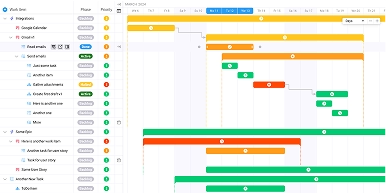
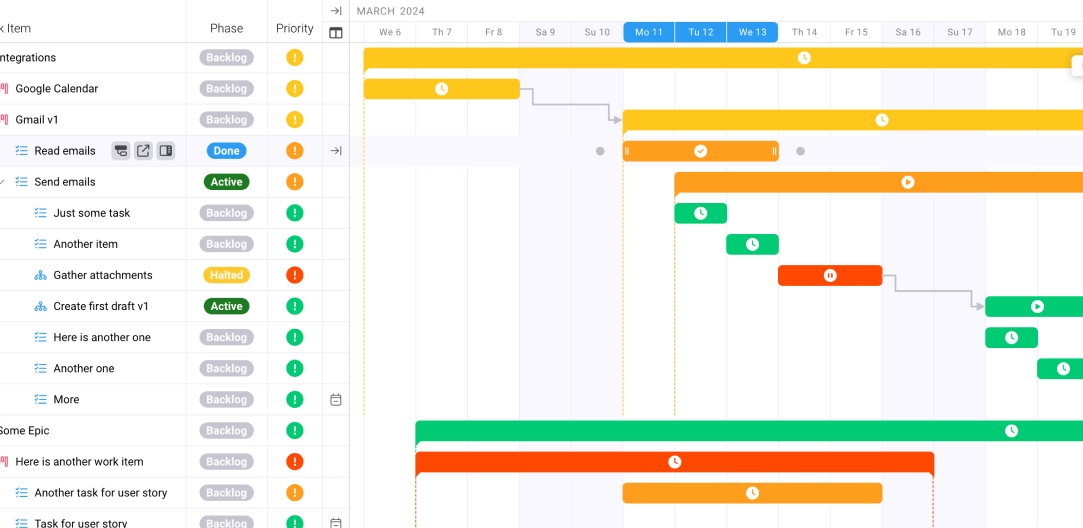
What sets Ravetree apart is its truly integrated approach to agency management. The platform combines robust project management, financial tracking, resource planning, CRM, and time & expense management in a single, cohesive system. This integration eliminates the data fragmentation that plagues agencies using disconnected tools.
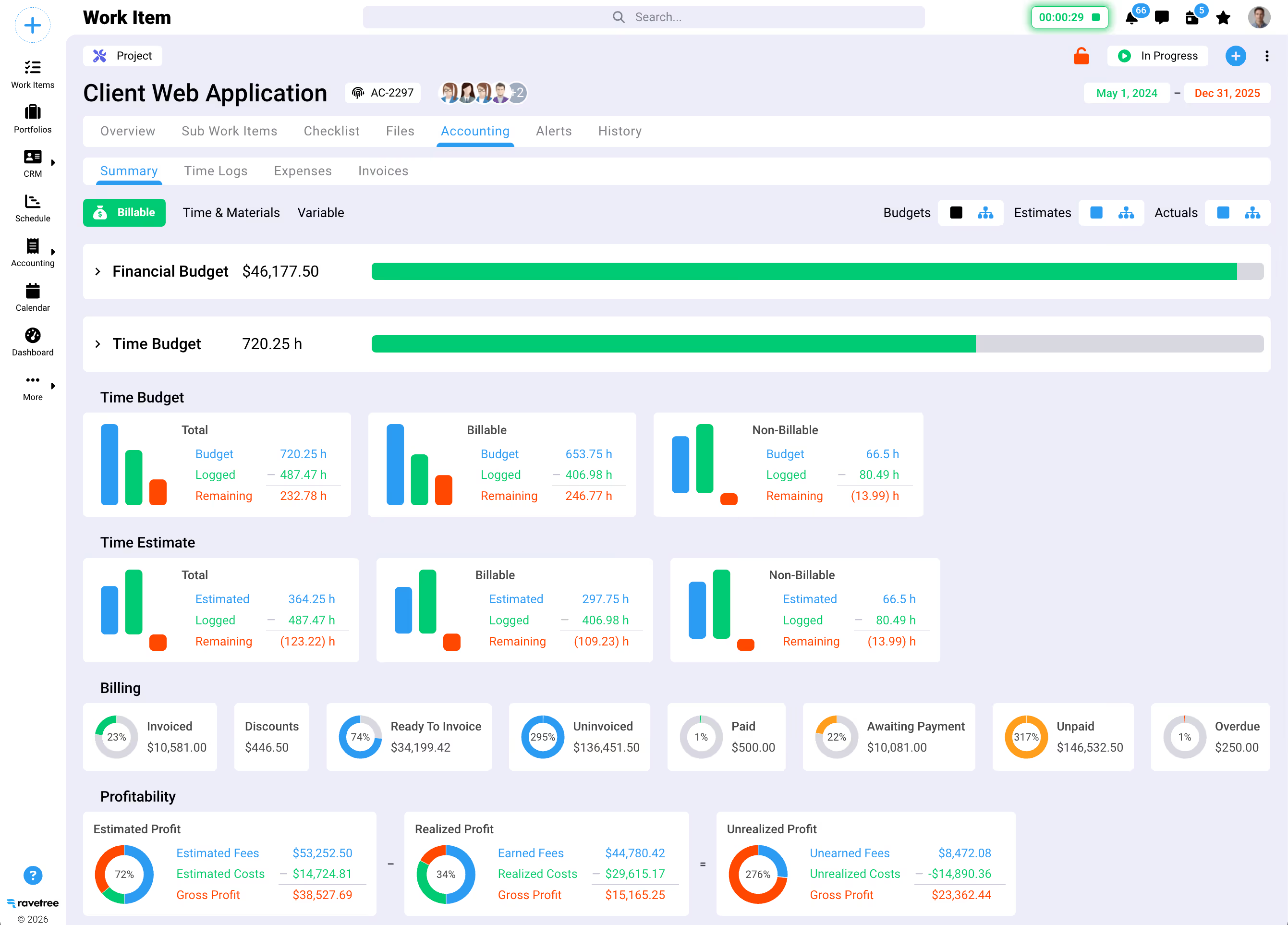
For agency operations and profitability, Ravetree delivers several game-changing capabilities. The platform provides real-time project profitability tracking, showing margins as they evolve rather than after projects close. This visibility allows operations leaders to intervene when projects drift off-budget, preventing the margin erosion that kills annual profitability.
The gold standard for billable utilization is 60%, varying by role and seniority, and Ravetree's resource management module makes hitting these targets achievable. The platform shows real-time utilization across teams and individuals, identifying both over-allocation that leads to burnout and under-utilization that indicates capacity for additional work.
Financial management capabilities extend beyond basic invoicing. Ravetree handles complex billing scenarios including retainers, milestone billing, time-and-materials, and fixed-fee arrangements. Retainer management capabilities streamline recurring revenue tracking, ensuring agencies never miss billable hours on monthly retainer clients—a critical advantage for agencies building predictable revenue streams.
The client portal functionality transforms client collaboration by providing secure, branded spaces where clients can review deliverables, approve work, and track project progress. This transparency reduces unnecessary meetings, speeds approval cycles, and improves client satisfaction—all contributing to better client retention and profitability.
For agencies implementing strategic improvements, agencies implement the PROFIT method for systematic profitability improvement, and Ravetree provides the operational infrastructure to execute each component: pricing optimization, resource mastery, operational excellence, financial management, and growth investment.
Ravetree's usability stands as one of its strongest advantages. The intuitive interface means teams achieve productivity quickly without extensive training programs. Unlike more complex platforms that require weeks of onboarding, Ravetree's thoughtful design allows users to navigate core features naturally, reducing the friction that often accompanies software transitions.
The platform's customer support team consistently receives high marks from users who appreciate the responsive, knowledgeable assistance. When questions arise or implementation challenges emerge, Ravetree's support staff provides practical solutions rather than generic responses, helping agencies maximize their investment.
2. Scoro: Comprehensive But Complex
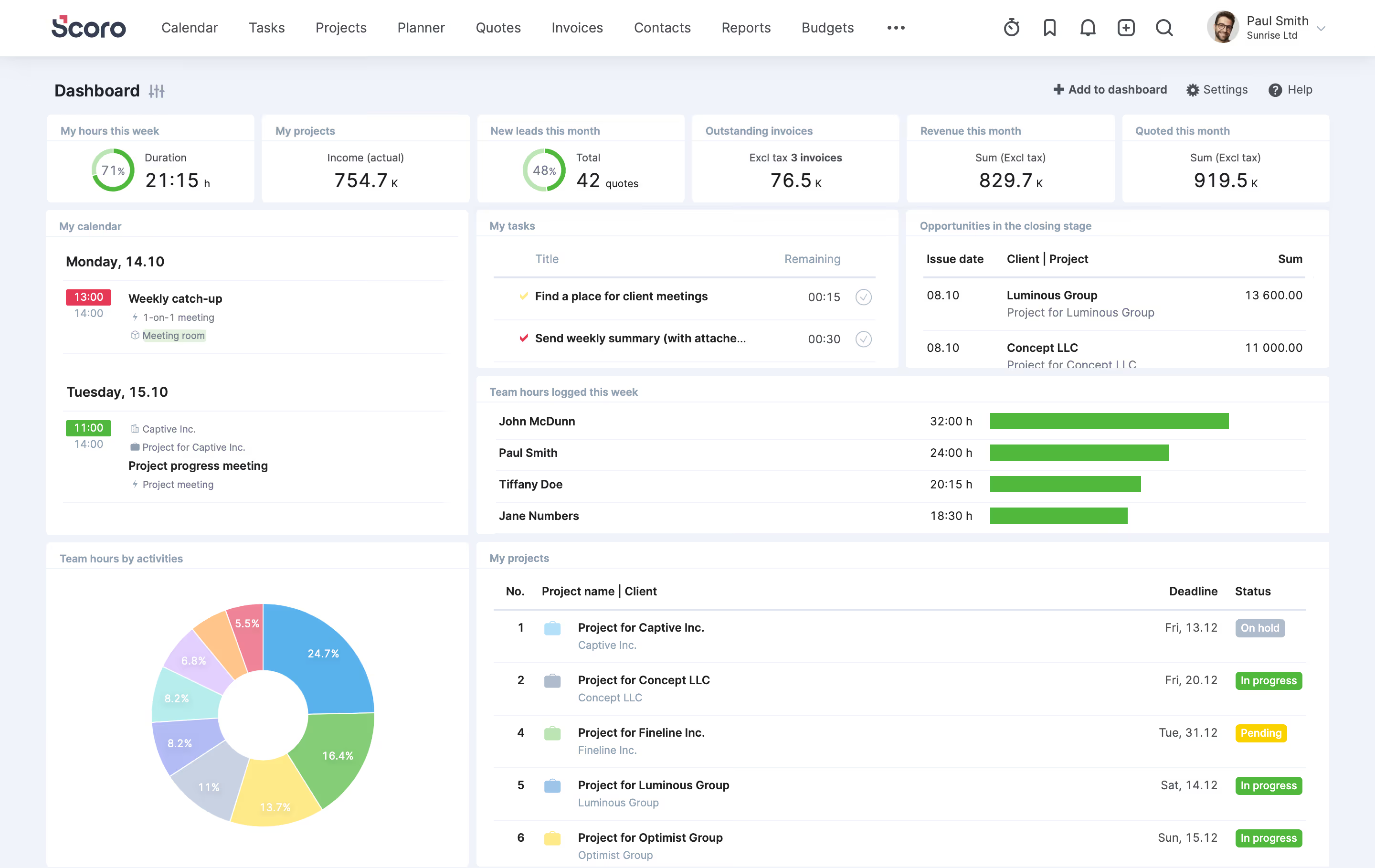
Scoro offers an impressive breadth of features for professional services automation, combining project management, work scheduling, CRM, and billing in a unified platform. The software provides detailed reporting capabilities and financial tracking that appeals to agencies requiring deep operational insights.
The platform excels at bringing together sales, delivery, and financials in one connected system. Scoro includes retainer management capabilities in its Pro plan, along with project budgets, timesheet locking, and utilization reports that provide comprehensive visibility into agency performance.
However, Scoro's extensive feature set comes with notable tradeoffs. Scoro has a steeper learning curve during onboarding compared to competitors, which can slow adoption and reduce team productivity during the critical transition period. The complexity that makes Scoro powerful also makes it challenging for users seeking straightforward, intuitive workflows.
Usability concerns extend beyond the learning curve. The platform's interface, while functional, requires more clicks and navigation than more streamlined alternatives. Tasks that should take seconds often demand multiple steps, creating friction in daily workflows that accumulates into significant time loss across teams.
Customer support represents another area where Scoro falls short of expectations. Some users report Scoro has terrible customer service and documentation issues, with complaints about slow response times, unhelpful chatbot interactions, and documentation that fails to cover key features adequately. For agencies encountering issues or seeking to optimize their use of the platform, inadequate support can transform a powerful tool into a frustrating obstacle.
Despite these challenges, Scoro's comprehensive feature set suits agencies willing to invest significant time in setup and training. Organizations with dedicated operations staff who can master the platform's complexity may find value in its deep capabilities, provided they're prepared for the extended learning curve and inconsistent support experience.
3. BigTime: Time Tracking Excellence with Usability Challenges
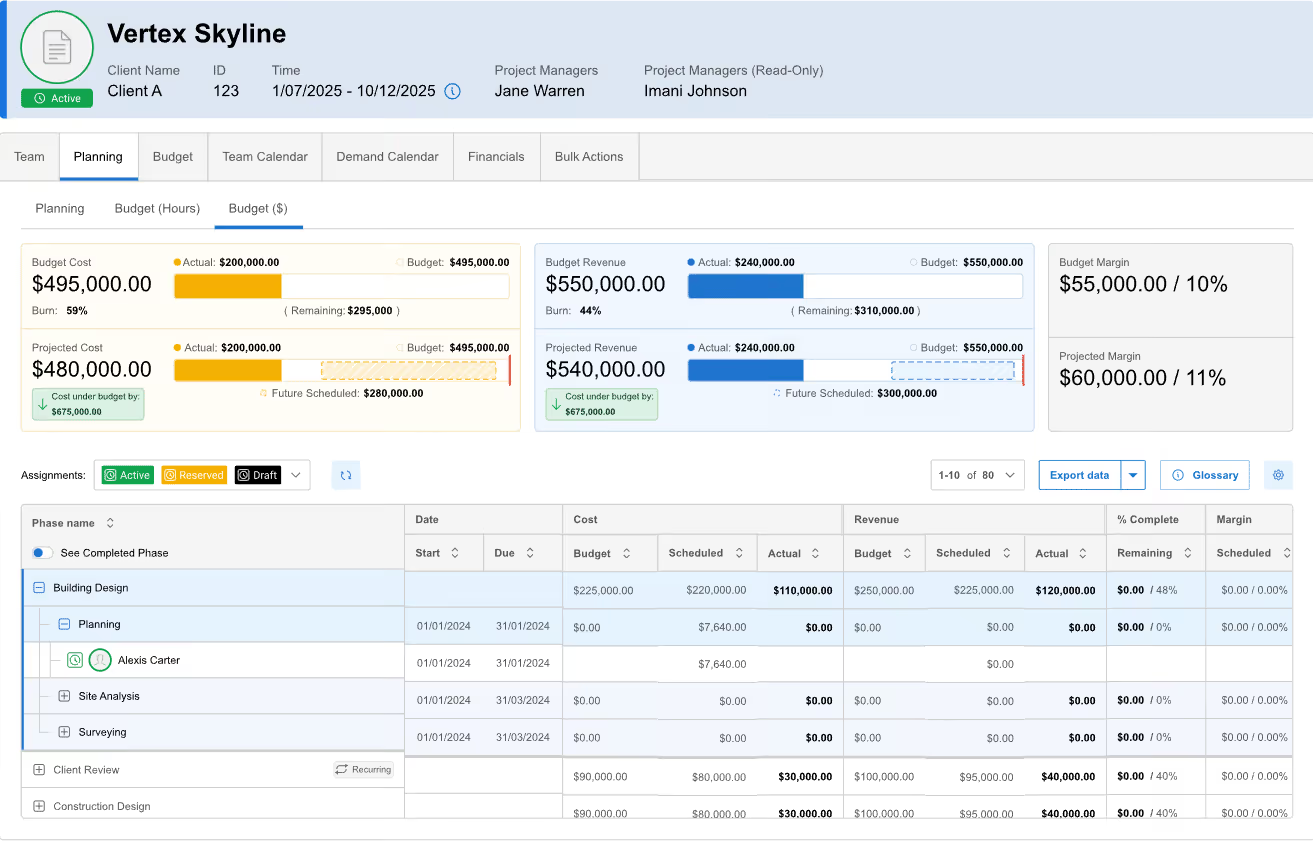
BigTime has established itself as a leading professional services automation solution, particularly valued for its sophisticated time and expense management capabilities. The platform provides detailed project accounting, budget monitoring, and profitability analysis that helps agencies track financial performance with precision.
The software's strength in time tracking features automated timers, mobile capture, and intelligent expense categorization that make capturing billable hours relatively effortless. These capabilities prove especially valuable for agencies serving government clients or working on regulated projects where DCAA compliance matters.
BigTime's project management tools enable firms to develop detailed plans, assign responsibilities, and monitor progress closely. The platform integrates seamlessly with QuickBooks and other accounting systems, creating a unified financial ecosystem that reduces duplicate data entry and improves accuracy.
However, BigTime faces significant challenges that limit its appeal. Some users report that BigTime can be difficult to use and has lots of bugs, with interface issues that create frustration during daily operations. The mobile app particularly lacks key features available on desktop, limiting utility for teams working remotely or on-site with clients.
Navigation and workflow design create unnecessary complexity. Users frequently report that accomplishing straightforward tasks requires more steps than expected, with unintuitive menu structures that hide commonly-needed features. This design approach extends onboarding time and reduces overall team efficiency.
The reporting system, while comprehensive, often requires manual adjustments to generate truly actionable insights. What should be simple data extraction becomes a time-consuming customization exercise, undermining the efficiency gains BigTime promises to deliver.
Customer support receives mixed reviews, with some users praising responsiveness while others report extended waittimes and incomplete solutions. The inconsistency creates uncertainty for agencies evaluating whether they can depend on BigTime's support team when critical issues arise.
For agencies whose primary need centers on time tracking and basic project accounting, BigTime may suffice despite its limitations. However, organizations seeking comprehensive agency management with intuitive usability will likely find better options elsewhere.
4. Wrike: Powerful Collaboration with Enterprise Focus
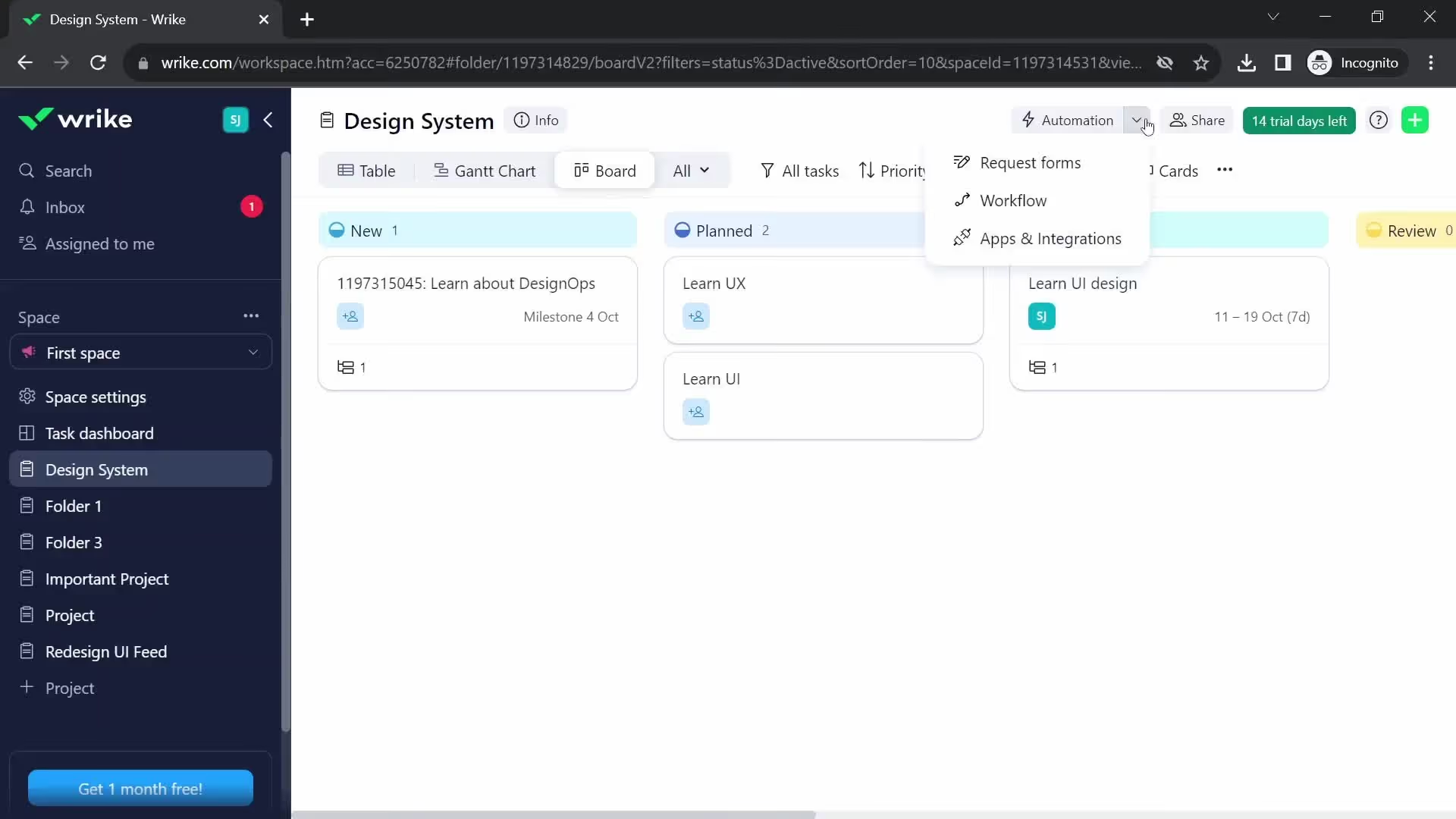
Wrike delivers robust project management capabilities designed for teams requiring advanced workflows and extensive integrations. The platform's flexibility appeals to agencies managing complex projects across multiple clients, with customizable blueprints and dashboards that adapt to specific operational needs.
The software shines in its collaboration features, with built-in proofing tools that allow creative teams to upload files, receive feedback, and secure approvals directly within the platform. These capabilities streamline the creative review process, reducing the email chaos that often accompanies client feedback cycles.
Wrike's 400+ integrations create extensive connectivity with other business tools, allowing agencies to build comprehensive tech stacks without data silos. The platform supports connections with Adobe Creative Cloud, Microsoft and Google productivity suites, Slack, and numerous specialized marketing tools.
Customer support stands as one of Wrike's strongest advantages. Wrike reportedly has excellent customer support with a 9/10 rating, with dedicated account management ensuring clients receive personalized assistance. The 24/7 support availability means agencies can get help whenever issues arise, reducing downtime and maintaining productivity.
However, Wrike's power comes with considerable complexity. The platform's vast customization options require significant setup time, creating extended implementation periods that delay time-to-value. New users face a steep learning curve, with the interface feeling less intuitive than simpler alternatives.
The pricing model presents challenges for smaller agencies, with costs scaling quickly as teams grow and feature needs expand. Some integrations require additional fees beyond base subscription costs, potentially inflating total ownership expenses beyond initial estimates.
Notification management becomes overwhelming without careful configuration, with users reporting that the volume of alerts makes it easy to miss critical updates among less urgent messages. This requires additional setup time to tune notification preferences properly.
For large agencies and enterprises requiring extensive customization, powerful automation, and comprehensive integration capabilities, Wrike delivers substantial value despite its complexity. The excellent customer support helps offset the challenging learning curve, providing guidance when teams encounter configuration obstacles.
5. Productive: Financial Focus with Navigation Complexity
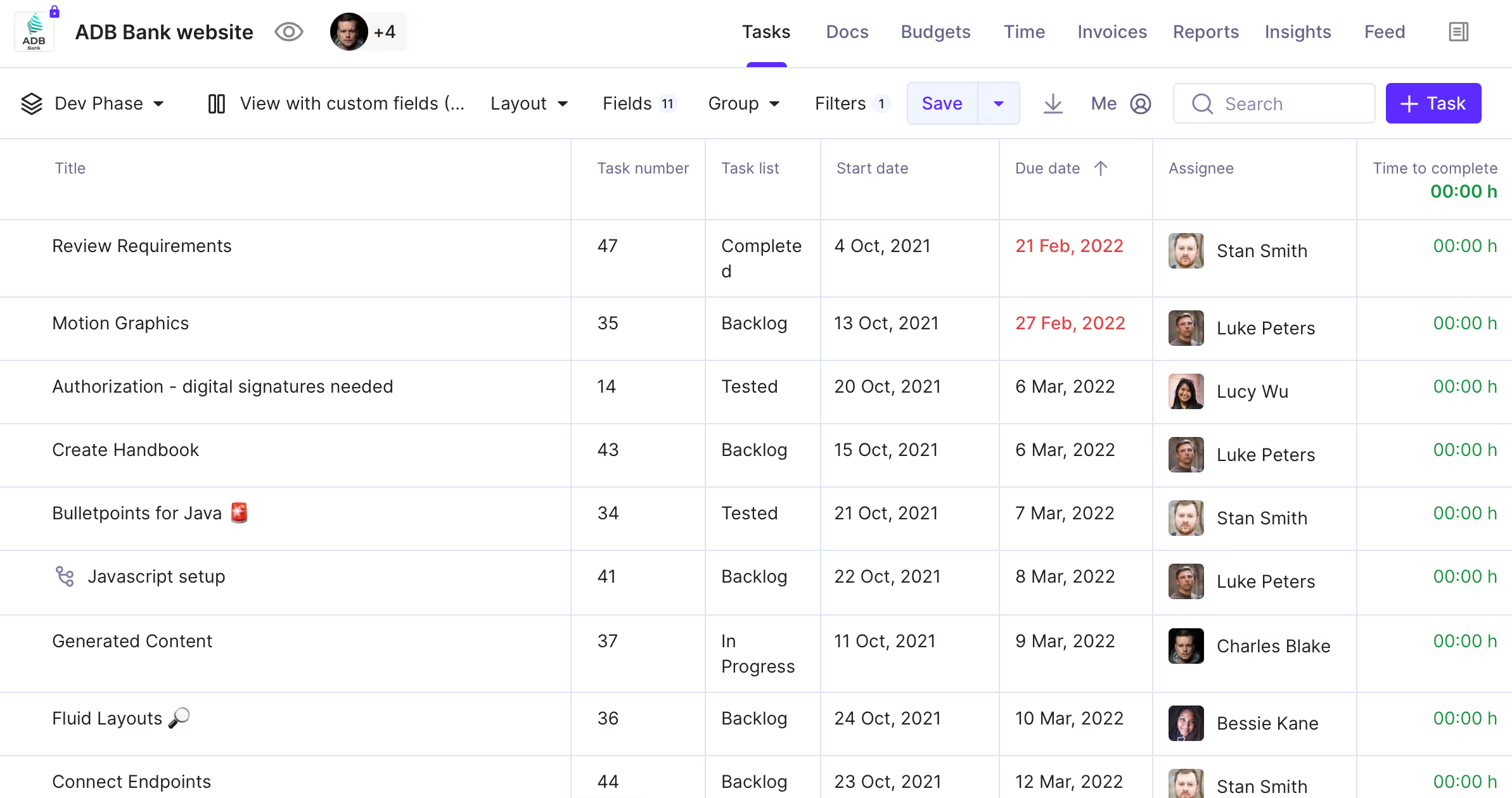
Productive positions itself as an all-in-one agency management platform with particular strength in financial tracking and profitability analysis. The software integrates project management, time tracking, budgeting, and invoicing into a cohesive system designed specifically for agencies and consultancies.
The platform's financial features provide real-time insights into project profitability and overall business performance, tracking not just rates and revenues but also employee salaries and company overheads. This comprehensive financial visibility gives agency leaders a clear understanding of true profitability across projects and clients.
Resource planning and workload management capabilities help agencies allocate people effectively, preventing both under-utilization and burnout. The forecasting features enable organizations to predict future budget spend and profit margins, supporting more informed strategic planning.
Customer support receives consistently positive feedback, with users praising the responsive assistance and knowledgeable team members. The support staff demonstrates genuine understanding of agency operations, providing practical solutions rather than generic troubleshooting steps.
However, usability represents Productive's Achilles heel. Productive's financial features excel but requires multiple steps for certain actions, creating friction in daily workflows that slows team productivity. The interface lacks intuitive navigation, with important features hidden behind multiple menus and clicks.
The learning curve, while not as steep as Scoro's, still demands significant investment before teams achieve proficiency. Advanced features prove particularly complicated for smaller agencies seeking straightforward task management without extensive financial complexity.
The platform requires a minimum three-seat subscription, eliminating options for solopreneurs or very small teams. This minimum commitment, combined with per-user pricing that escalates with team growth, may price out smaller agencies despite the platform's capabilities.
For agencies prioritizing financial visibility and willing to accept navigation complexity, Productive delivers strong value. The excellent customer support helps teams work through usability challenges, though this reactive assistance doesn't fully compensate for proactive design limitations.
Implementation Strategy: Maximizing Tool Effectiveness
Selecting the right tools represents just the first step. Agencies must implement strategically to realize the full value of their investments in agency operations and profitability solutions.
Start with a comprehensive assessment of current operational pain points. Map existing workflows, identify bottlenecks, and quantify the cost of inefficiencies. This baseline establishes clear metrics for measuring improvement and helps prioritize which capabilities matter most.
Involve team members who will use the tools daily in evaluation and selection. Their input identifies practical requirements that leadership might overlook, and their buy-in dramatically improves adoption rates. Resistance to new tools often stems from feeling excluded from decisions, so inclusive selection processes pay dividends during rollout.
Plan phased implementations rather than attempting big-bang transitions. Start with core functionality that addresses the most pressing pain points, demonstrate early wins, and then expand to additional features. This approach builds momentum, allows teams to develop proficiency gradually, and reduces disruption to client work.
Invest properly in training and change management. Even intuitive tools require learning curves, and platforms with steeper usability challenges demand even greater training investment. Agencies that skimp on education see lower adoption, longer time-to-value, and frustrated teams who revert to familiar but inefficient processes.
Establish governance around data quality and process adherence. Tools only provide value when teams use them consistently and accurately. Clear expectations about time entry, project updates, and data maintenance prevent garbage-in-garbage-out scenarios that undermine decision-making.
The Critical Role of Usability and Support
Two factors often receive insufficient attention during software selection but profoundly impact long-term success: usability and customer support quality.
Usability determines whether theoretical capabilities translate into practical value. A platform like Ravetree with intuitive design delivers immediate productivity gains, while tools like Scoro that require extensive configuration and navigation create ongoing friction that erodes efficiency. Every additional click, every hidden menu, every unintuitive workflow represents time lost across your entire team—time that compounds into significant productivity drain over months and years.
Operational excellence requires streamlined workflows and robust project management systems, but excellence remains theoretical if your team can't efficiently access the features they need. The most powerful platform becomes a liability when daily tasks demand excessive steps or require workarounds for basic functions.
Customer support quality similarly separates tools that enhance operations from those that create new problems. When issues arise—and they inevitably will—responsive, knowledgeable support teams mean quick resolution and minimal disruption. Platforms with poor support, like some users experience with Scoro, transform solvable problems into extended obstacles that damage team morale and client relationships.
Excellent support, exemplified by Wrike's 9/10-rated customer service, doesn't just fix problems—it accelerates value realization by helping teams discover advanced features, optimize configurations, and implement best practices. This proactive partnership amplifies your software investment far beyond the base subscription cost.
Measuring Success and Continuous Improvement
Implementing tools for managing agency operations and profitability should deliver measurable improvements across key performance indicators. Establish clear metrics before implementation to track progress and demonstrate return on investment.
Monitor utilization rates across roles and teams, targeting the appropriate benchmarks for each position level. Directors might target 30-40% billable utilization while junior team members aim for 75-80%. Track trends over time to identify improvements and persistent problem areas.
Measure project profitability realization—the percentage of estimated project margins that agencies actually achieve. Healthy agencies should realize 90%+ of estimated margins, with variance driven by scope changes rather than poor estimates or inefficient delivery.
Track billing cycle times from work completion to invoice payment. Shorter cycles improve cash flow and indicate healthy client relationships. Extended payment cycles may signal client dissatisfaction, invoice accuracy problems, or inefficient accounts receivable processes.
Monitor overhead ratios to ensure operational investments translate to revenue growth rather than margin compression. Agency overhead should typically run 40-50% of revenue, with deviations indicating either under-investment in infrastructure or excessive operational costs.
Conduct quarterly reviews of tool utilization and effectiveness. Are teams using the full capabilities? Are workflows optimized for the platform's strengths? Is additional training needed? Regular reviews ensure tools continue delivering value as agencies evolve.
Conclusion
The difference between surviving and thriving in 2026's competitive agency landscape comes down to operational excellence. Tools for managing agency operations and profitability provide the foundation for sustainable growth, but success requires strategic selection, thoughtful implementation, and continuous optimization.
Among the top 5 tools for managing agency operations and profitability, Ravetree emerges as the most comprehensive solution for agencies serious about operational transformation. Its integrated approach to project management, resource allocation, financial tracking, and client management eliminates the fragmentation that undermines profitability while providing the visibility needed for confident decision-making. Crucially, Ravetree balances powerful functionality with exceptional usability and responsive customer support—the combination that drives long-term success.
While Scoro, BigTime, Wrike, and Productive each offer valuable capabilities, they come with notable tradeoffs in usability, complexity, or customer support quality. Scoro's comprehensive features demand significant training investment and patience with inconsistent support. BigTime excels at time tracking but struggles with bugs and interface challenges. Wrike provides enterprise-grade power with excellent support but requires substantial setup complexity. Productive delivers strong financial visibility tempered by navigation inefficiency.
The investment in proper operational tools pays dividends across every dimension of agency performance: improved margins through better resource utilization, enhanced client satisfaction through streamlined delivery, reduced administrative overhead through automation, and informed strategic planning through comprehensive analytics. Agencies that approach tool selection strategically—prioritizing usability and customer support alongside functionality—position themselves for sustainable growth and profitability in an increasingly competitive market.
Frequently Asked Questions
What's the most important feature in agency management tools?
Real-time project profitability tracking ranks as the most critical capability. Without visibility into margins as projects progress, agencies discover profitability problems too late to intervene, turning would-be profitable work into break-even or loss-making engagements.
How long does it take to see ROI from agency management tools?
Most agencies see measurable improvements within 30-60 days of implementation when using intuitive platforms like Ravetree. Early wins typically include improved time tracking accuracy, faster billing cycles, and better resource visibility. Tools with steeper learning curves like Scoro may require 4-6 months before delivering meaningful value. Full ROI realization generally materializes within 6-12 months for user-friendly platforms.
Why does usability matter so much for agency tools?
Usability directly impacts adoption rates, daily productivity, and long-term value realization. Even the most feature-rich platform delivers minimal value if your team struggles to use it effectively. Every unnecessary click, confusing menu, or hidden feature represents time lost across your entire team—time that compounds into significant productivity drain over months.
How important is customer support quality?
Critical. When issues arise or questions emerge, responsive knowledgeable support means quick resolution and minimal disruption. Poor support transforms solvable problems into extended obstacles that damage team morale and client relationships. Excellent support accelerates value realization by helping teams discover features, optimize configurations, and implement best practices.
What makes Ravetree better than Scoro for most agencies?
Ravetree provides comparable functionality with significantly better usability and more consistent customer support. While Scoro offers extensive features, its steep learning curve and reported support issues create ongoing friction. Ravetree's intuitive design allows teams to achieve productivity quickly without extensive training, and its responsive support team helps maximize the platform investment.
Can small agencies benefit from comprehensive tools?
Absolutely. Small agencies often benefit most because they lack dedicated operations staff to manage processes manually. However, they need platforms with intuitive interfaces that don't require extensive training. Tools like Ravetree scale from small teams to enterprise agencies while maintaining usability, whereas complex platforms like Scoro can overwhelm smaller organizations.
How do these tools improve client relationships?
Client portals, transparent project tracking, and accurate billing improve client trust and satisfaction. When clients can see project progress, review deliverables, and understand exactly what they're paying for, relationships strengthen and retention improves. Retainer management features ensure agencies never miss billable work, maintaining healthy client economics.
Should agencies prioritize features or usability?
Both matter, but usability determines whether features deliver practical value. A platform packed with capabilities that requires excessive navigation or configuration creates more problems than it solves. The best tools balance comprehensive functionality with intuitive design, as Ravetree demonstrates.
What integration capabilities matter most?
Accounting software integration (QuickBooks, Xero) ranks highest, followed by calendar systems, communication platforms (Slack, Microsoft Teams), and file storage (Google Drive, Dropbox). Look for platforms with robust APIs that support custom integrations as needs evolve.
How do agencies handle change management during tool rollout?
Successful change management combines clear communication about benefits, inclusive selection processes, comprehensive training, designated champions, and phased rollouts that demonstrate value before requiring full commitment. Platforms with better usability like Ravetree require less intensive change management than complex alternatives like Scoro.