.png)
Key takeaways:
Choosing the right Professional Services Automation software can make or break your firm's profitability. With PSA software market projected to reach USD 40.25 billion by 2033, the stakes have never been higher for service firms selecting platforms that genuinely drive results. The decision between Ravetree vs. BigTime represents more than just a software purchase—it's a strategic choice that impacts everything from billable utilization to client satisfaction. Both platforms promise to streamline operations, yet they take fundamentally different approaches to solving the challenges professional services firms face daily.
The modern PSA landscape has evolved far beyond simple time tracking and invoicing. Today's professional services organizations demand integrated platforms that connect project execution, resource allocation, financial management, and client communication into a unified operational framework. This comprehensive analysis examines Ravetree vs. BigTime through the lens of real-world performance metrics, feature depth, user experience, and long-term scalability to help you make an informed decision.
The Professional Services Software Challenge
Professional services firms operate in an increasingly complex environment where margins are tight and client expectations continue to escalate. Traditional project management approaches—spreadsheets, disconnected tools, and manual processes—simply cannot keep pace with the demands of modern service delivery.
The fundamental problem isn't a lack of available software options. Rather, it's finding a platform that genuinely addresses the interconnected challenges service firms face without creating new complications. Many organizations find themselves trapped between generic project management tools that lack industry-specific capabilities and overly complex enterprise systems that demand extensive customization.
Resource utilization remains the single most critical metric for professional services profitability. IT consulting organizations achieved 72% billable utilization in 2023, yet many firms still struggle to reach even 65% due to poor visibility into team capacity and project demands. This gap between actual and optimal utilization directly translates to hundreds of thousands in lost revenue annually.
The billing cycle presents another persistent pain point. Firms that rely on manual processes or disconnected systems experience significant revenue leakage—time that goes unbilled, expenses that aren't captured, and invoice delays that impact cash flow. Research demonstrates that PSA implementation raised project margins from 32.4% to 38.5%, primarily by eliminating these inefficiencies and ensuring every billable hour reaches the invoice.
Client expectations have fundamentally shifted as well. Modern professional services buyers expect transparency, real-time project visibility, and seamless communication throughout the engagement lifecycle. Firms still operating with email updates and monthly status reports find themselves at a competitive disadvantage against organizations leveraging modern client portal technology.
Understanding Ravetree and BigTime
Before diving into feature comparisons, it's essential to understand what each platform fundamentally represents in the PSA ecosystem.
Ravetree positions itself as an all-in-one work management platform purpose-built for professional services organizations including marketing agencies, IT services firms, consulting practices, accounting & bookkeeping, and architecture and engineering companies. The platform emphasizes integrated functionality across project management, resource planning, time tracking, billing, and CRM—all designed to work together seamlessly rather than as loosely connected modules.
Ravetree's architecture reflects a philosophy that professional services firms need purpose-built software rather than adapted generic tools. The platform includes native capabilities for managing retainers, tracking utilization, handling complex billing scenarios, and providing clients with real-time project visibility. This integrated approach means firms can manage their entire operation within a single platform rather than stitching together multiple tools.
BigTime has established itself as a specialized time tracking and billing platform that evolved into a more comprehensive PSA solution. The software built its reputation on making time entry intuitive and invoice generation streamlined, particularly for accounting firms, law practices, and consulting organizations focused on professional billing.
Optimal utilization rates above 75% indicate strong performance, and BigTime's core strength lies in helping firms accurately capture billable time and convert it into revenue. BigTime receives 4.6 out of 5 rating for customer support, reflecting the company's investment in helping users maximize the platform's capabilities.
The platform emphasizes ease of use for time tracking, robust invoicing capabilities, and integration with popular accounting systems. BigTime integrates with QuickBooks, Sage Intacct, Jira, and Salesforce, enabling firms to connect their PSA data with existing business systems.
Ravetree vs. BigTime: Core Capabilities Comparison
Understanding how Ravetree and BigTime approach essential PSA functions reveals important differences in philosophy and execution.
Project Management Depth
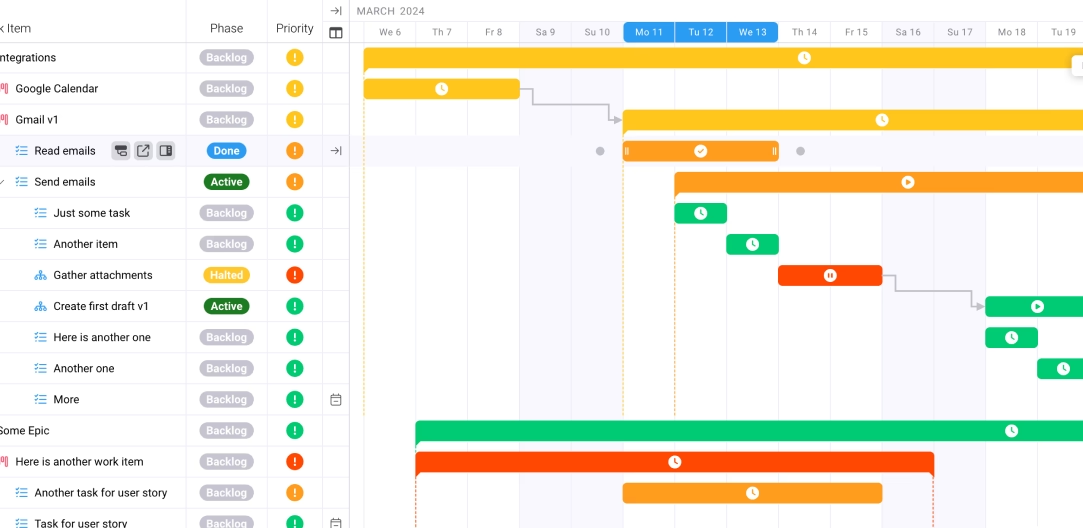
Ravetree provides comprehensive project management capabilities designed specifically for client service work. The platform supports multiple project methodologies including waterfall, agile, and hybrid approaches. Teams can create detailed project plans with task dependencies, assign resources based on availability and skills, set milestones, and track progress against budgets in real-time.
The project dashboard provides stakeholders with instant visibility into project health, budget status, and team workload. Project managers can identify risks early, reallocate resources as needed, and maintain alignment between project execution and client expectations. The system also supports project templates, making it easy to standardize delivery processes across similar engagements.
BigTime's project management functionality focuses primarily on time tracking and budget monitoring rather than comprehensive project planning. While teams can create projects, assign tasks, and track hours, the platform lacks some advanced project management features like sophisticated task dependencies, Gantt charts, or resource leveling. For firms where time tracking and billing accuracy are paramount, this streamlined approach may actually be an advantage.
Resource Planning and Utilization
Effective resource management separates profitable service firms from struggling ones. Professional services firms typically target 70-75% utilization rates, yet achieving this consistently requires excellent visibility into team capacity and project demands.
Ravetree includes robust resource planning capabilities that enable managers to visualize team availability, identify capacity constraints, and make data-driven staffing decisions. The platform's resource scheduler shows which team members are over or underutilized, helping managers balance workloads and maximize billable time. Skills-based resource matching ensures the right people are assigned to appropriate projects.
The system also forecasts future capacity needs based on the sales pipeline, helping firms anticipate hiring requirements and avoid either resource shortages or costly bench time. This proactive approach to resource management drives significantly higher utilization rates compared to reactive, ad-hoc staffing approaches.
BigTime provides basic resource allocation features but lacks the sophisticated planning and forecasting tools found in dedicated resource management modules. Firms can assign people to projects and track their time, but they don't get the advanced capacity planning, skills matching, or pipeline-based forecasting that helps optimize utilization across the organization.
Time and Expense Tracking
Both platforms excel at time tracking, though they approach it differently.
Ravetree integrates time tracking seamlessly with project tasks, making it easy for team members to log hours against specific deliverables. The system supports multiple time entry methods including timers, manual entry, and bulk entry. Managers can review and approve timesheets, and the platform automatically flags potential issues like missing time entries or unusual patterns.
Expense tracking in Ravetree connects directly to projects and clients, ensuring all costs are captured for invoicing and profitability analysis. Receipts can be attached electronically, and the approval workflow ensures proper authorization before expenses are billed to clients.
BigTime built its reputation on intuitive time tracking, and this remains one of its strongest features. The platform makes it remarkably easy for professionals to enter their time, whether through desktop, mobile, or browser-based interfaces. The time entry screen is highly customizable, allowing firms to configure it to match their specific workflows.
BigTime's expense management similarly emphasizes ease of use, with mobile receipt capture, automated expense categorization, and straightforward approval processes. For firms where time and expense tracking are the primary pain points, BigTime's focused approach delivers excellent results.
Billing and Invoicing
The billing function directly impacts cash flow and client satisfaction, making it a critical evaluation criterion.
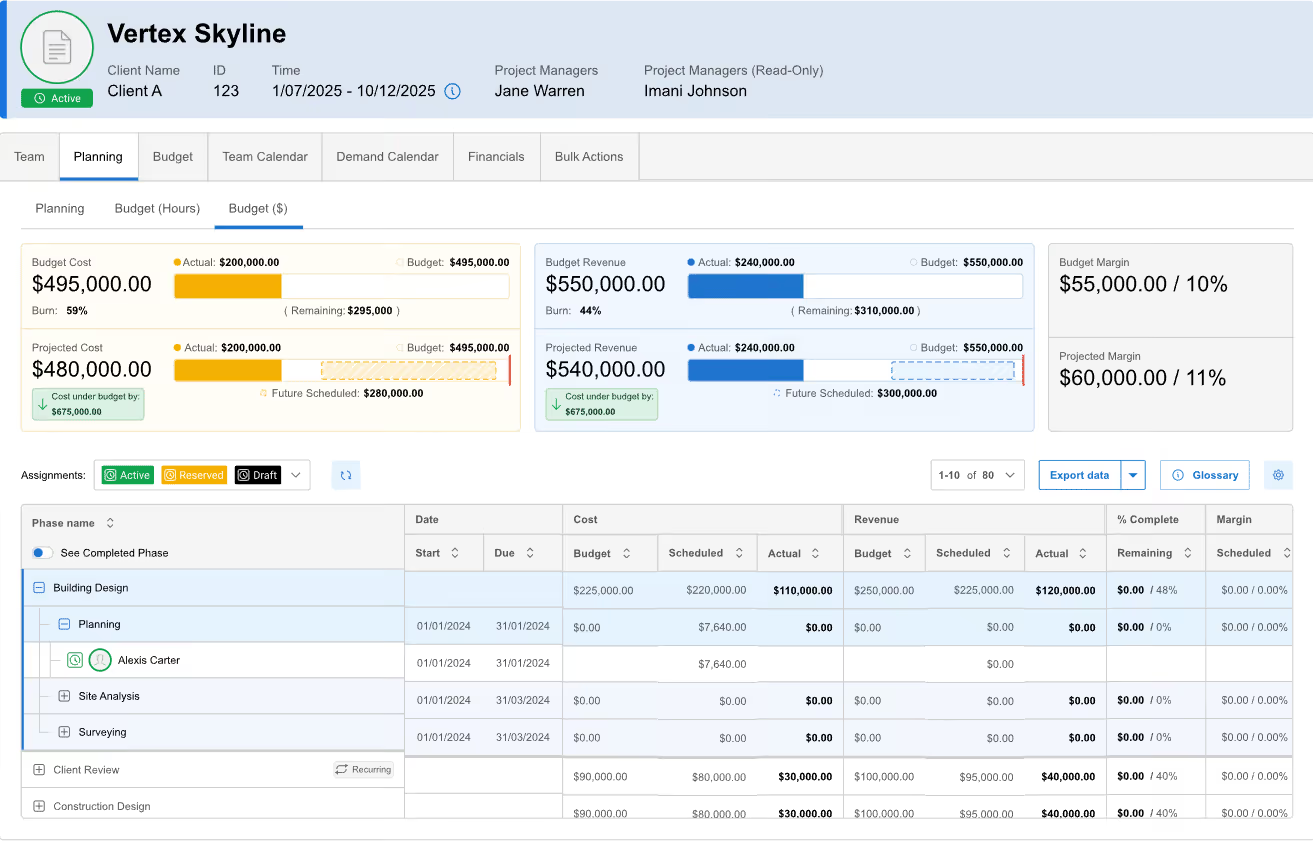
Ravetree supports complex billing scenarios including fixed-fee projects, time and materials, retainers, milestone-based billing, and hybrid arrangements. The platform can automatically generate invoices based on approved time and expenses, apply billing rules and rate cards, and handle multi-currency invoicing for international clients.
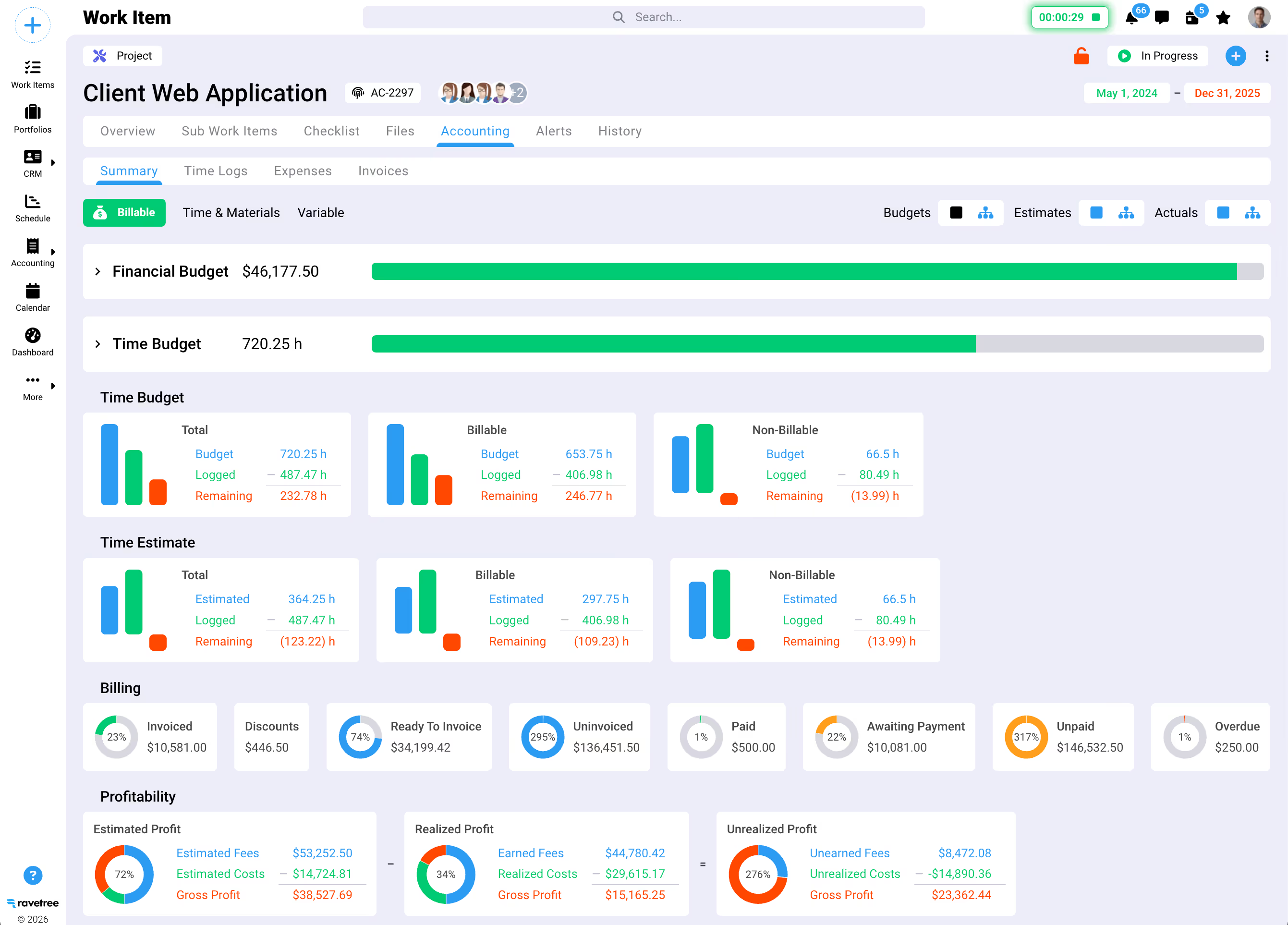
The system provides robust financial reporting that shows project profitability in real-time, helping managers identify unprofitable work before it significantly impacts the bottom line. Integration with accounting systems ensures billing data flows smoothly into the firm's financial records.
BigTime's billing capabilities represent one of its core strengths. The platform excels at converting tracked time into accurate invoices quickly. Firms can configure detailed billing rules, apply different rates for different service types or client tiers, and customize invoice formats to match client preferences. The invoicing workflow includes built-in review and approval steps, reducing errors and ensuring quality control.
Integration with QuickBooks and other accounting platforms means firms don't need to manually re-enter data, saving time and eliminating transcription errors. This tight integration makes BigTime particularly attractive for firms where accounting system connectivity is a priority.
Client Relationship Management
Modern professional services firms recognize that CRM functionality must integrate with project delivery, not exist in a separate silo.
Ravetree includes a built-in CRM designed specifically for service firms. The system tracks client interactions, manages sales opportunities, stores important client information, and connects directly to project delivery. When an opportunity converts to a project, all the context transfers automatically, ensuring continuity from sales through execution.
The CRM module helps firms track their pipeline, forecast revenue, and identify opportunities for account expansion. Because it's integrated with the rest of the platform, teams have a complete view of client relationships including past projects, current work, and future opportunities.
BigTime takes a different approach, focusing on integration with external CRM systems like Salesforce rather than providing built-in CRM functionality. This works well for firms already invested in a separate CRM platform, but creates additional complexity for organizations wanting a unified system.
Implementation and User Adoption
Even the most feature-rich PSA software fails if teams don't actually use it. Implementation complexity and user experience significantly impact long-term success.
Getting Started
Ravetree provides guided implementation support including data migration assistance, configuration guidance, and user training. The platform's modular design allows firms to phase their rollout, starting with core capabilities and expanding over time. This incremental approach reduces risk and helps teams adapt gradually.
The system includes extensive documentation, video tutorials, and example templates that help new users get productive quickly. For firms that prefer hands-on assistance, Ravetree offers implementation services that accelerate time-to-value.
BigTime similarly offers implementation support with varying levels of assistance based on firm size and complexity. The platform's focused feature set can actually simplify implementation compared to more comprehensive systems—there are fewer configuration decisions to make and less setup required.
User Experience and Interface
Ravetree's interface balances comprehensive functionality with usability. The platform organizes features logically, making it relatively easy to find capabilities when needed. While there's a learning curve given the breadth of functionality, most users become comfortable with core features within a few weeks.
BigTime's interface is rather complex and requires more time to master. The platform prioritizes making frequent tasks like entering time or creating invoices as streamlined as possible. This focus on usability helps drive adoption, especially among team members who may resist new software.
Strategic Considerations for Your Firm
Beyond feature checklists, several strategic factors should influence your Ravetree vs. BigTime decision.
Firm Size and Growth Trajectory
North America held 44% of the PSA software market share in 2024, with significant growth driven by mid-sized professional services firms seeking to compete more effectively.
Smaller firms (5-25 people) might find BigTime's focused approach perfectly suited to their needs, especially if time tracking and billing are their primary concerns. The platform's relative simplicity can be an advantage when you don't need extensive project management or resource planning capabilities.
Mid-sized firms (25-150 people) typically benefit from Ravetree's more comprehensive functionality. As organizations grow, they need better resource planning, more sophisticated project management, and integrated CRM to operate efficiently. The platform scales well as firms add team members and expand their service offerings.
Larger firms (150+ people) should carefully evaluate both platforms' ability to handle organizational complexity, support multiple office locations, and provide the governance and control mechanisms large organizations require.
Industry Focus
Different professional services industries have distinct operational patterns and requirements.
Marketing and advertising agencies benefit from Ravetree's comprehensive capabilities including creative workflow management, campaign tracking, and integrated collaboration tools. The platform's project management depth supports the complex, multi-phase campaigns common in agency work.
IT services and consulting firms often prefer BigTime's straightforward time tracking and strong accounting integration, particularly if they're heavily focused on staff augmentation or hourly consulting work where accurate time capture drives everything.
Architecture and engineering firms need robust project management and document management capabilities to handle complex, long-duration projects. Ravetree's project planning features and customizable workflows align well with these requirements.
Integration Requirements
Firms using PSA software increase utilization rates by 7% compared to spreadsheet users, but this benefit depends partly on how well the PSA integrates with other business systems.
Consider your current technology stack. If you're deeply invested in QuickBooks, BigTime's tight integration might be compelling. If you use Salesforce for CRM, either platform can integrate, though the approaches differ.
Ravetree's all-in-one philosophy means you may be able to consolidate several tools into a single platform, potentially reducing both cost and complexity. BigTime's integration-focused approach works well if you prefer best-of-breed tools connected through APIs.
Budget and Total Cost of Ownership
Both platforms operate on subscription pricing models, but the total cost of ownership extends beyond license fees.
Consider implementation costs, ongoing training requirements, integration expenses, and potential productivity impacts during transition periods. A less expensive platform that requires extensive customization or integration work may ultimately cost more than a comprehensive solution that works well out of the box.
Also factor in the cost of inefficiency in your current system. If you're losing significant revenue to poor utilization, missed billable time, or slow invoicing, the ROI from either platform likely justifies the investment.
Making the Right Choice
64% of businesses prefer integrated PSA platforms for seamless project delivery, reflecting the industry trend toward comprehensive solutions rather than point tools.
The Ravetree vs. BigTime decision ultimately depends on your firm's specific needs, priorities, and growth trajectory. Neither platform is objectively "better"—they excel in different areas and serve different organizational profiles.
Choose Ravetree if:
Your firm needs comprehensive project management capabilities beyond basic task tracking. You want integrated CRM, resource planning, and project delivery in a single platform. You're experiencing resource utilization challenges and need better capacity planning tools. Your firm values having an all-in-one solution rather than managing integrations between multiple systems. You anticipate significant growth and need a platform that scales with your organization.
Organizations seeking guidance on strategic PSA selection criteria for professional services organizations will find Ravetree's comprehensive approach aligns with modern best practices for integrated work management.
Choose BigTime if:
Time tracking accuracy and billing speed are your primary pain points. You prefer a focused solution that does specific things exceptionally well rather than a comprehensive platform. You're heavily invested in QuickBooks or another accounting system and need tight integration. Your firm values interface simplicity and wants to minimize the learning curve for team members. You primarily deliver hourly consulting or staff augmentation services where time tracking drives everything.
For firms evaluating whether they're ready for PSA software at all, key indicators that professional services firms need PSA software can help assess your current situation and determine if you've reached the point where better tools will significantly impact performance.
Advanced Considerations
Several additional factors deserve attention as you evaluate these platforms.
Reporting and Analytics
Data-driven decision-making separates high-performing service firms from average ones. Both platforms provide reporting capabilities, but with different approaches.
Ravetree offers extensive built-in reports covering project performance, resource utilization, financial metrics, and client health. The platform's dashboard approach puts key metrics front and center, helping managers identify issues quickly. Custom reporting capabilities allow firms to create specialized views tailored to their specific KPIs.
BigTime provides solid reporting for time, billing, and financial metrics. The platform excels at showing which projects are profitable, how individual team members are performing, and where revenue is being generated. For firms where financial reporting is the priority, BigTime delivers strong capabilities.
Customization and Flexibility
No two professional services firms operate identically, making platform flexibility important.
Ravetree offers substantial customization options including custom fields, workflow automation, project templates, and configurable permission structures. Firms can adapt the platform to match their specific processes rather than forcing their operations to conform to rigid software constraints.
BigTime provides customization primarily around timesheets, invoices, and project setup. The platform's philosophy favors standardization over extensive customization, which can actually be an advantage for firms wanting to implement best practices rather than perpetuate existing inefficiencies.
Mobile Capabilities
Modern professional services work happens everywhere—offices, client sites, home offices, and coffee shops. Mobile access is no longer optional.
Both platforms offer mobile apps that enable time tracking, expense capture, and basic project updates on the go. Ravetree's mobile app provides broader functionality including task management and client communication. BigTime's mobile experience emphasizes quick, easy time entry and expense submission.
Security and Compliance
Professional services firms handle sensitive client data and intellectual property, making security paramount.
Both platforms provide enterprise-grade security including data encryption, role-based access controls, and regular security audits. Consider your specific compliance requirements (GDPR, HIPAA, SOC 2, etc.) and verify that your chosen platform meets them.
Preparing for Successful Implementation
Whichever platform you select, implementation success depends on thorough preparation and strong change management.
Define Your Requirements
Before evaluating platforms, clearly articulate what you need the software to accomplish. Which specific pain points must be solved? What processes need to improve? How will you measure success? Clear requirements prevent you from being swayed by impressive features you don't actually need.
Resources like comprehensive PSA software evaluation framework for service firms can help structure your evaluation process and ensure you consider all relevant factors.
Involve the Right Stakeholders
PSA software impacts multiple roles across your organization. Include project managers, finance personnel, resource managers, and team members in the evaluation process. Their buy-in will prove essential during implementation.
Plan Data Migration Carefully
Moving from your current system—whether it's spreadsheets, legacy software, or disconnected tools—requires careful planning. Decide what historical data needs to migrate, clean it before transfer, and validate it after migration. Poor data quality undermines even the best software.
Invest in Training
Software alone doesn't drive change—people using it effectively do. Budget adequate time and resources for training at all levels. Consider creating internal champions who can mentor their colleagues and answer questions as they arise.
Start with a Pilot
Consider implementing the platform with a single team or department before rolling it out organization-wide. This pilot approach lets you identify issues, refine processes, and build success stories that encourage broader adoption.
Conclusion
The Ravetree vs. BigTime decision represents a significant strategic choice for your professional services firm. Both platforms deliver meaningful value, but they excel in different areas and align with different organizational priorities.
Ravetree provides comprehensive functionality for firms seeking an all-in-one work management platform that integrates project delivery, resource optimization, billing, and client management into a unified system. The platform's depth supports complex service delivery models and scales effectively as organizations grow.
BigTime delivers focused excellence in time tracking and billing, making it ideal for firms where capturing billable hours accurately and invoicing quickly are the primary objectives. The platform's emphasis on usability and accounting integration serves firms that prefer specialized tools over comprehensive suites.
Neither platform is universally superior—the right choice depends entirely on your firm's specific needs, existing systems, growth trajectory, and operational priorities. Firms struggling with resource utilization, project management, and operational visibility typically find Ravetree's comprehensive approach more aligned with their needs. Organizations primarily focused on billing accuracy and accounting integration often prefer BigTime's specialized capabilities.
The professional services software market continues evolving rapidly, driven by cloud adoption, AI integration, and growing expectations for operational excellence. Whichever platform you select, the decision to move beyond spreadsheets and disconnected tools toward purpose-built PSA software positions your firm for stronger financial performance and sustainable growth.
Take time to thoroughly evaluate Ravetree vs. BigTime through trials, customer references, and detailed demos. Involve your team in the process, clearly define success criteria, and select the platform that genuinely addresses your specific challenges. The right PSA software transforms how your firm operates, driving higher utilization, better margins, and stronger client satisfaction.
Frequently Asked Questions
What is the main difference between Ravetree and BigTime?
Ravetree is a comprehensive all-in-one work management platform integrating project management, resource planning, CRM, time tracking, and billing into a unified system. BigTime specializes in time tracking and billing with particularly strong accounting system integration, making it ideal for firms where those capabilities are the primary focus.
Which platform is better for small professional services firms?
It depends on your specific needs. BigTime's focused approach and strong billing capabilities suit smaller firms primarily concerned with time tracking and invoicing. Ravetree better serves small firms anticipating growth or needing integrated project management and resource planning from day one.
How do Ravetree and BigTime compare on pricing?
Both platforms use subscription-based pricing that varies based on user count and feature requirements. Contact each vendor for current pricing tailored to your firm size and needs. Consider total cost of ownership including implementation, training, and integration expenses beyond just license fees.
Can either platform handle complex billing scenarios?
Yes, both platforms support various billing models including fixed-fee, time and materials, retainers, and milestone-based billing. Ravetree provides more extensive project-based billing configuration, while BigTime excels at flexible time-based billing rules and accounting integration.
Which platform has better mobile capabilities?
Both offer mobile apps for time tracking and expense capture. Ravetree's mobile app provides broader project management functionality, while BigTime's mobile experience prioritizes quick, efficient time entry and expense submission.
How long does implementation typically take?
Implementation timeframes vary based on firm size, data migration complexity, and customization requirements. Small firms might go live in a few weeks, while larger organizations with complex needs may require several months for full deployment.
Do these platforms integrate with my accounting software?
BigTime integrates particularly well with QuickBooks, Sage Intacct, and other popular accounting platforms. Ravetree also supports accounting integration but emphasizes its built-in financial management capabilities. Verify specific integration requirements with each vendor.
Which platform provides better reporting capabilities?
Ravetree offers more comprehensive built-in reporting across projects, resources, and financials with extensive customization options. BigTime provides strong financial and billing reports with particular strength in profitability analysis.
Can I try these platforms before committing?
Yes, both vendors typically offer trial periods or demos. Request demonstrations, test the platforms with your actual workflows, and involve team members who will use the software daily.
How do these platforms handle resource scheduling?
Ravetree includes robust resource planning tools with capacity forecasting, skills matching, and pipeline-based planning. BigTime provides basic resource allocation but lacks advanced capacity planning and forecasting capabilities found in dedicated resource management modules.