.png)
Key takeaways:
Today's project management goes beyond task assignment and deadline setting. Modern companies consist of several departments that operate in different time zones and use digital platforms for communication. Thus, organized documentation is now considered one of the most crucial aspects that determine the success of projects.
Proper documentation allows businesses to keep consistent in their operations and minimize risks related to misunderstanding, duplicated efforts, and compliance issues. However, companies that lack effective documentation practices often face problems with inconsistent performance and inefficient management.
Why Organized Documentation Is Important Now
The main task of any project manager is to coordinate the activities of the company while making sure that all stakeholders have necessary information at hand. The absence of a well-structured information base makes even small projects hard to organize and control.
Properly documented procedures can help businesses to:
Coordinate responsibilities and deadlines among employees
Prevent inter-departmental misunderstanding
Increase transparency
Promote accountability
Collaborate with clients and partners
Remote working model also highlights the importance of organized documentation since employees can rely on a written report instead of relying on emails and phone calls.
Organized Documentation Increases Operational Efficiencies
First of all, organized documentation helps companies increase their efficiency significantly. The time spent by employees on finding lost papers, deciphering instructions, and clarifying details could be used to perform tasks effectively.
The use of standardized document templates makes routine procedures more efficient. In addition to that, digital platforms can also help keep and exchange documents.
Properly stored project information helps to make the decision-making process more accurate and quick since all relevant information becomes easily available to stakeholders involved.
Reducing Legal and Compliance Risks
Besides increasing productivity, documentation can be useful for protecting yourself from legal issues. Most businesses deal with a variety of paperwork every day, ranging from contracts and partnership agreements to compliance forms and employee documents.
Inadequate documentation management can lead to serious legal or financial problems.
With platforms like Lawdistrict, you can produce professional-looking legal documents and store them safely for further use. Having well-structured documentation will make audits and dispute resolution easier while simplifying contract management.
For projects, proper agreements and approval records will minimize misunderstanding between customers, suppliers, and internal departments.
Better Collaboration Across Teams
Most modern projects require collaboration among members of marketing, development, finance, operations, and even stakeholders.Documented information helps to organize work better.
Knowledge management resources, centralized file storages, and workflow documentations reduce gaps in communication, thus enabling smoother collaboration and making it easier to transfer responsibility within the team. This is particularly important when working with new members.
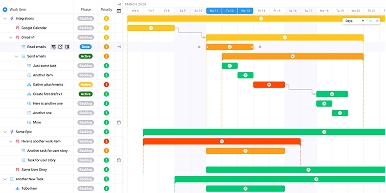
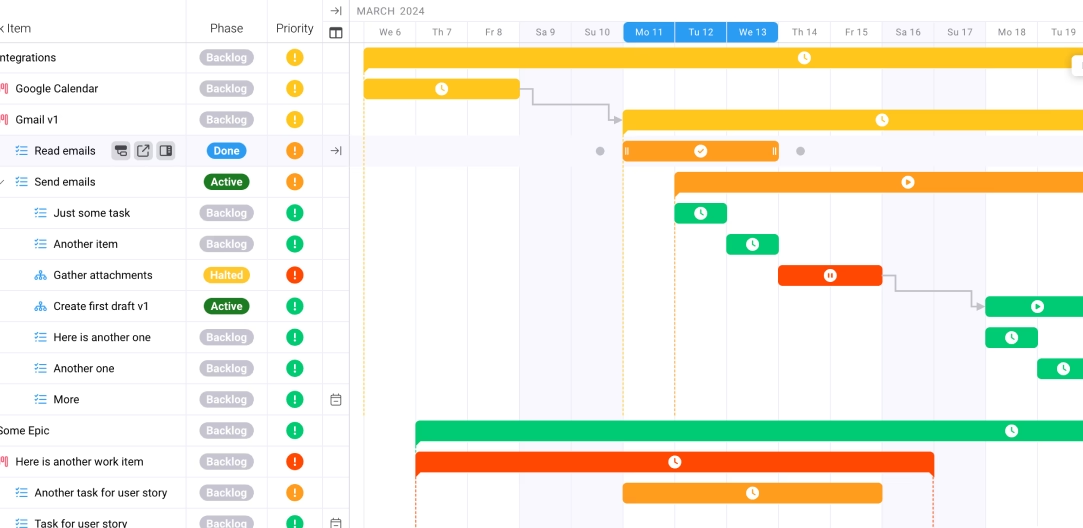
Project management software, such as Ravetree, exemplifies how the organization of workflows and centralization of documents facilitate effective project management in one platform.
Documentation Supports Long-Term Growth
As an organization grows, lack of documentation becomes an even bigger issue. This is because processes are often based on verbal communication or personal knowledge, which causes problems once staff members move on or the scope of work increases.
A well-organized documentation system creates scalable processes that enable sustainable business growth. Organizations can onboard new hires more quickly, standardize operations, and enhance business continuity.
Moreover, documented history gives important information for future decision-making. Evaluating previous reports on projects, their timelines, and results can be very beneficial to a company. It can discover trends, refine its process flow, and learn from past mistakes.
Final Thoughts
In today’s digital business environment, organized documentation is no longer optional — it is essential for successful project management. Businesses that prioritize clear processes, centralized records, and accessible documentation gain significant advantages in productivity, collaboration, and risk management.
Whether managing internal workflows, client deliverables, or legal agreements, structured documentation creates a stronger foundation for long-term operational success.