
Key takeaways:
- Billable utilization averaged 66.4% in SPI's 2026 benchmark, so every hour that fails to reach an invoice carries a measurable cost.
- Judge every Monday.com alternative by where a logged hour becomes an invoice line, not by its feature count.
- Work managers like Wrike, ClickUp and Asana usually need a separate billing tool; PSAs bundle it.
- Rebuilding one closed project's invoice in each finalist is the fastest honest test.
Picture a 25-person agency whose delivery side runs beautifully on Monday boards. Statuses are color-coded, timelines look tidy, automations ping the right people. Then the month closes and someone spends two days copying hours from one place and rates from another into an invoice. The boards were never the problem. The handoff to money was. If that sounds familiar, this guide to the 12 Best Alternatives to Monday.com for Billable Projects is for you, and every one of these Monday.com alternatives is judged on how it handles that handoff.
Full disclosure: this is the Ravetree blog, so Ravetree goes first. The other eleven get the same straight read, including the situations where they're a better pick than we are.
Why billable work strains a board-first tool
Services firms tend to have a utilization problem before they have a tooling problem. SPI Research's 2026 benchmark, built on survey data from 509 firms, put average billable utilization at 66.4% in 2025, the lowest in its 19-year history. Firms at the top maturity level exceeded 80%. The gap is easy to underrate until you run the numbers. One point of utilization on a 30-person team working roughly 1,800 hours each is about 540 hours, which at a blended $150 an hour is $81,000 a year. That's an illustration, not a forecast, but it explains why finance people get twitchy about where hours disappear.
Most work management tools model work as status: who's doing what, by when. Billing needs more. It needs a rate, a role, an approval, a budget, and some way to know whether an hour has already gone onto an invoice. When those pieces live in different places you get orphaned hours: real, logged, and stuck until a human reconciles them. Monday fits the pattern. Logged hours arrive as a column type on higher tiers, and invoicing isn't part of the package, which Ravetree's own comparison walks through in detail. That's a design choice more than a defect. Monday was built to flex across departments, not to run a services P&L.
Plenty of teams should stay put, and some of the best-known Monday.com alternatives would be a step sideways for them. If you invoice five fixed-fee projects a quarter and nobody argues about hours, save yourself the migration.
Five questions that sort the Monday.com alternatives
- Where does a logged hour become an invoice line? Inside the tool, through an export, or via an integration you maintain. Every hop is a place for rework.
- Who needs a seat? Contractors, account managers and finance often log or approve hours, and per-seat pricing punishes broad participation.
- What does each pricing tier switch on? Billable flags, rate settings and timesheet approval frequently sit above the entry plan.
- Can you see who has capacity next Tuesday and which margins slipped last month without building a report first?
- How does it treat recurring-hours deals and fixed fees? Hourly billing is the easy case. Fixed fees need budget burn visible while the work is underway.
Whichever Monday.com alternatives make your shortlist, test the finalists the unglamorous way: rebuild last month's invoice for your messiest client. The tool that gets you there in the fewest manual steps usually wins, whatever the demo looked like.
Three places billable hours go missing
Hourly work with a monthly cap is the classic leak. A client buys 40 hours a month, the team quietly delivers 52, and nobody notices until the quarter closes because the overage sits in a column no one totals. A tool that shows hours against the cap while work is underway catches it in week two. A board plus a spreadsheet catches it in week twelve, which is also when the awkward client conversation happens.
Fixed fees hide the problem differently. The invoice amount never changes, so nobody feels the need to look at hours, and the project quietly loses money. Hours still matter on fixed-fee work; they're how you learn whether your estimates were any good. If a tool can't show budget burn against a flat fee, you'll price the next project with the same blind spot.
Then there's contractor time. Freelancers often log hours late or in bulk, and approval is where it gets interesting: who signs off, and does an unapproved hour still land on the invoice? Ask each vendor that question out loud. The answers vary more than you'd expect.
Built for billable work from the start
1. Ravetree: delivery, time and billing in one system
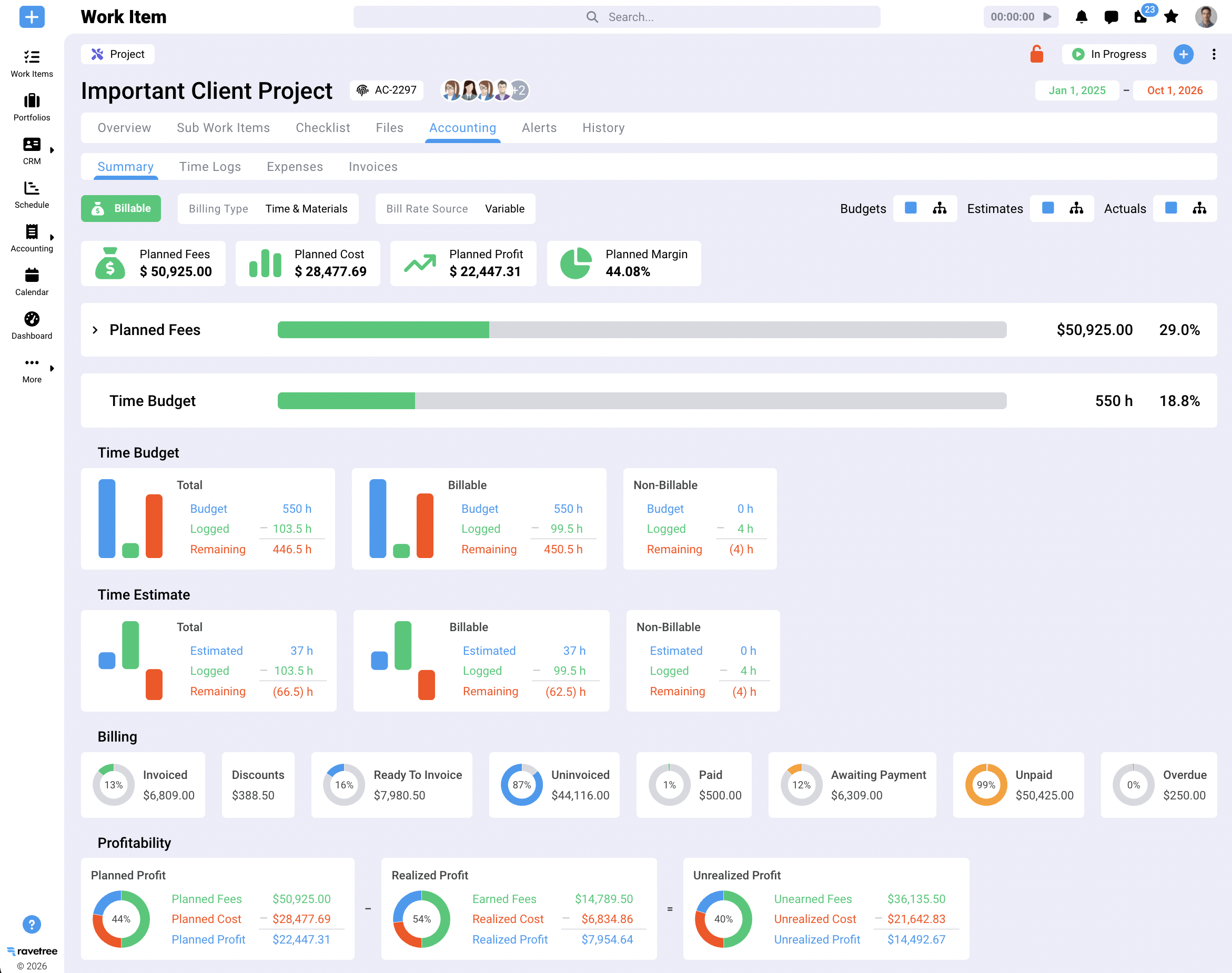
Ravetree's pitch is that one system should carry a client from first deal to final invoice. The suite covers proposals, project management, resource planning, time tracking, retainers, billing and invoicing, expense tracking, purchase orders, requests, a CRM and a client portal. The practical payoff, according to its product pages, is that logged time connects straight to projects and billing, and there's a view of which clients have work ready to invoice.
Reviewers on Capterra describe the same thing in plainer terms. Several arrived after getting tired of juggling tools. One agency left ClickUp because it was too complicated to set up and hard to get the team to use. Others left Accelo over cost and the need to run other apps beside it. A studio owner said retainers were handled better than on most platforms they'd tried.
Best fit: service firms that bill for time or milestones and want fewer systems. Of all the Monday.com alternatives here, it's the one built around the agency-to-invoice path rather than adapted to it.
2. Kantata: enterprise-grade PSA, with the setup that implies
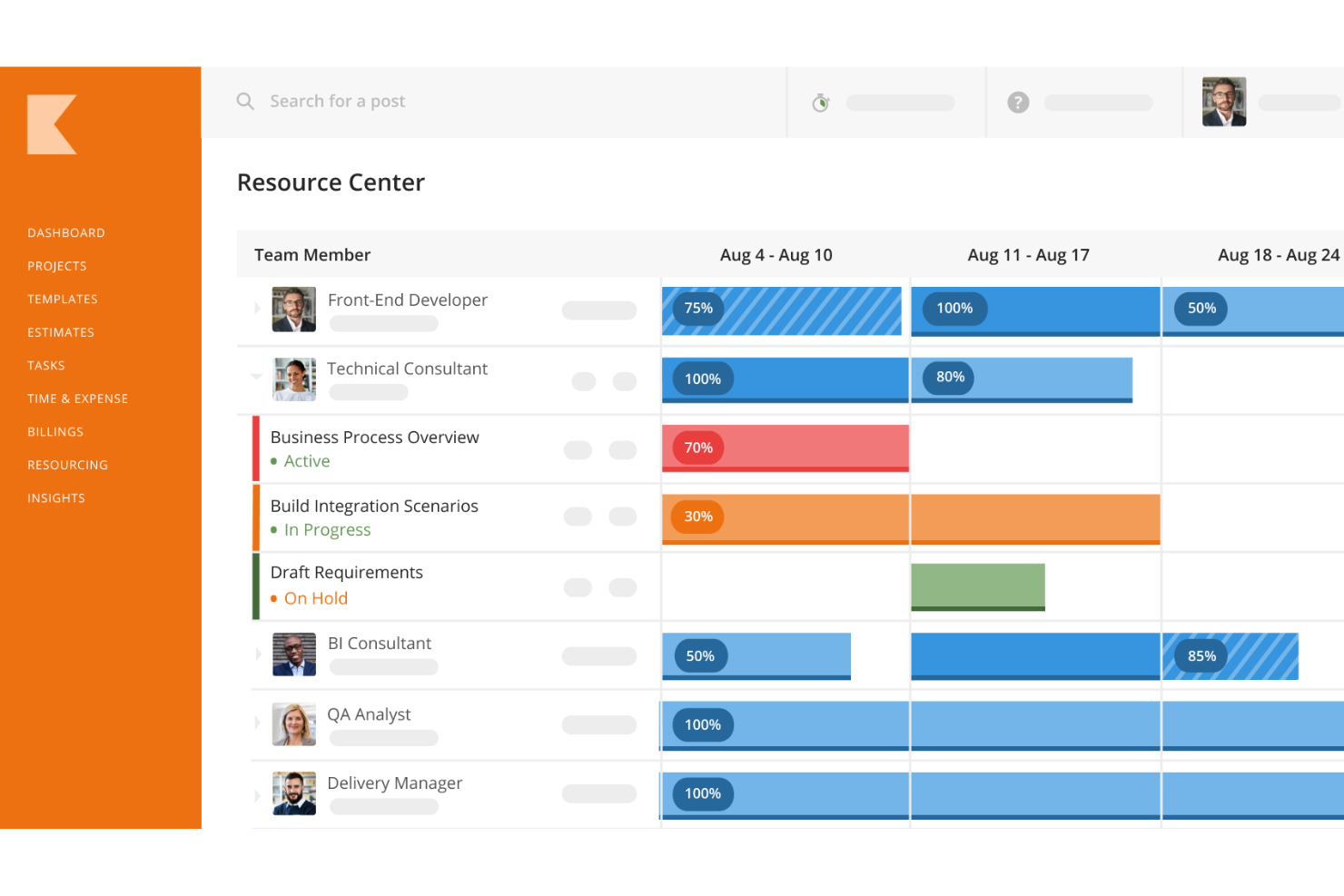
Kantata is a professional services automation platform, and the vendor aims it at firms from about 50 employees into the thousands. Resource management and financials are the headline strengths. Capterra reviewers split in a revealing way: one called it powerful and enterprise-ready for resourcing and financial visibility, another said the complexity and setup effort made it hard to justify.
Both can be true. With a dedicated operations or finance owner, the depth pays off. In a 20-person firm it becomes a second job nobody applied for.
Work management heavyweights that need a billing partner
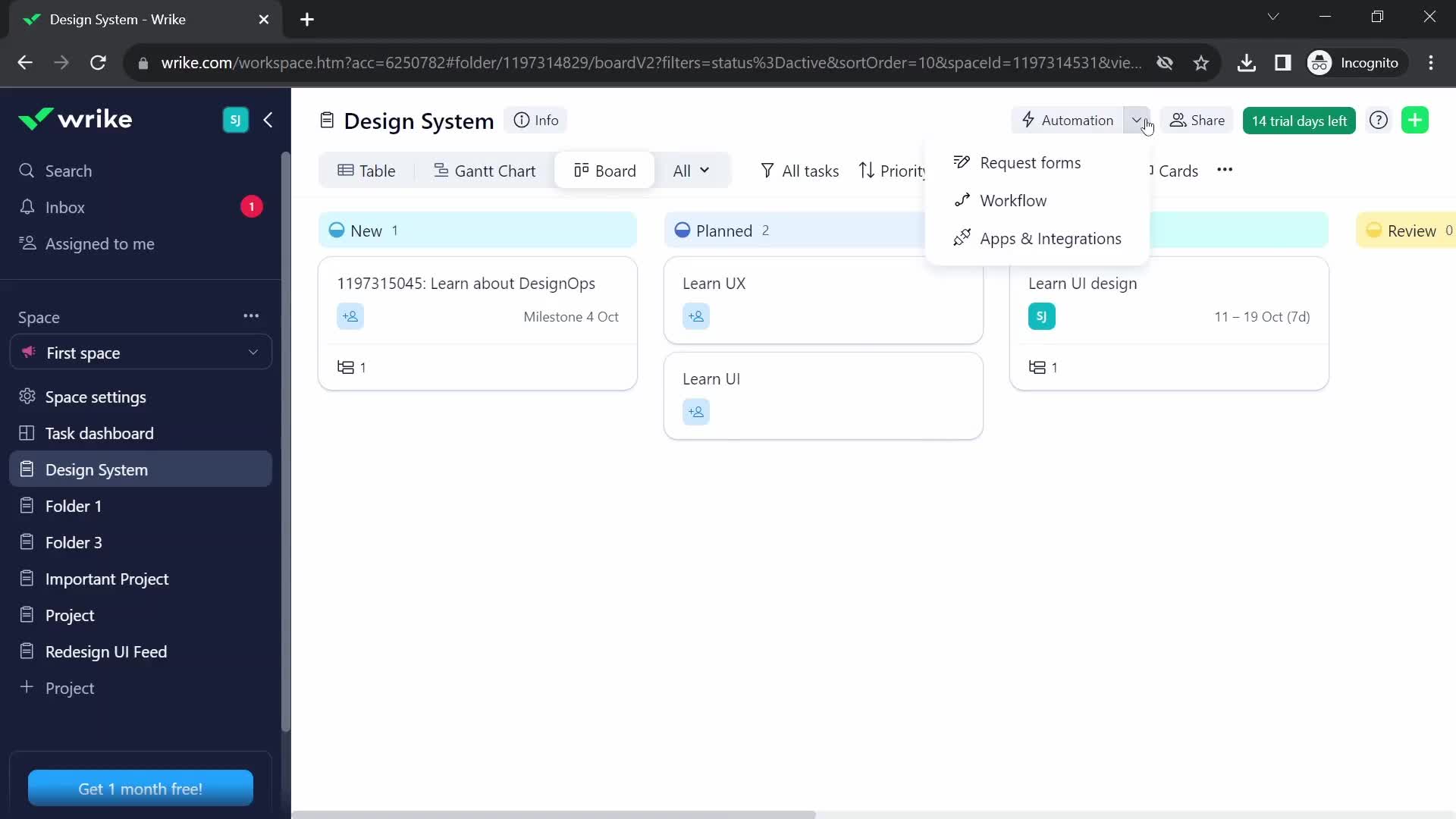
3. Wrike: strong structure, billing lives elsewhere
Wrike organizes tasks, approvals and cross-team work well, and on its top-tier plans you can mark projects and tasks billable or non-billable. What it doesn't do is invoice. TechRadar's review found no billing or invoicing tool, so tracked time has to be exported to another platform. Among Monday.com alternatives, it's the pick if coordinating delivery across departments is the real pain and you're happy keeping billing in accounting software. If billing friction is why you're leaving Monday, you'll recreate it.
4. ClickUp: flexible, with a billing gap you fill yourself
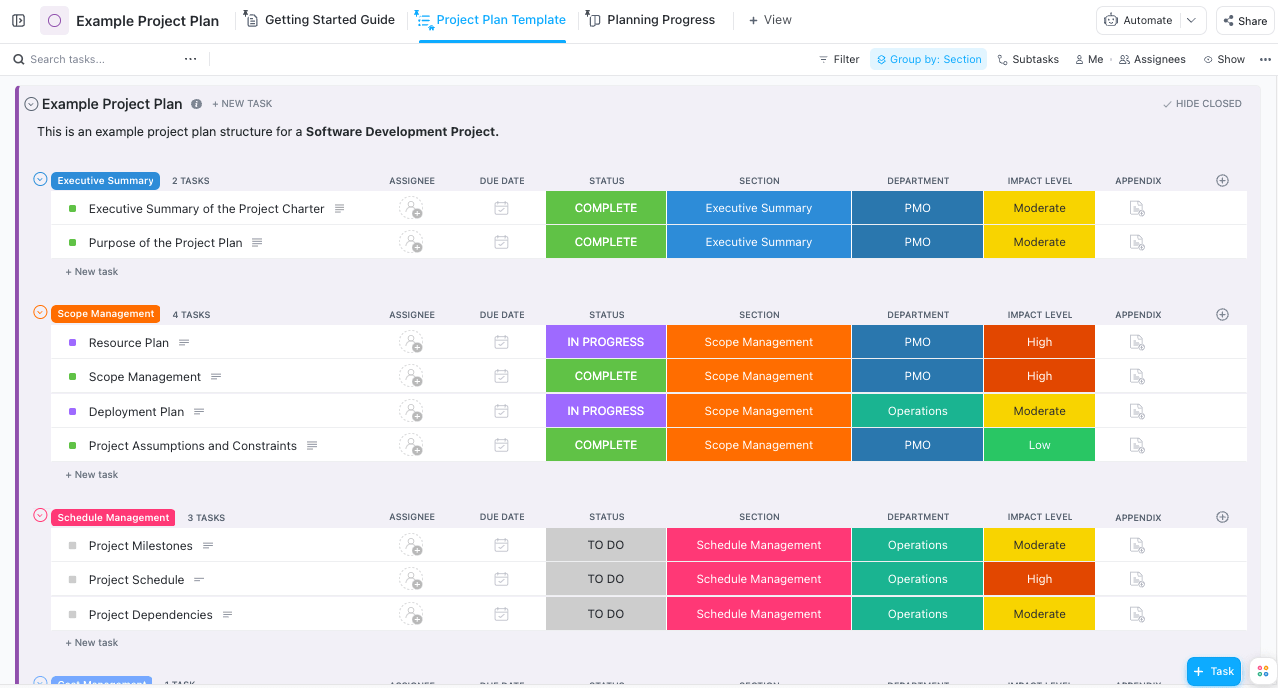
ClickUp has native timers and billable markers, though some of the finer controls depend on the plan. Some have noted that ClickUp's time tracking can flag time as billable but lacks built-in invoicing, rate management and automated billing workflows. The bigger risk is the flexibility itself. Let five teams configure their own spaces and you'll get five habits for logging hours. Settle on one client, project and task structure before anyone logs a minute. For a wider look at how it compares with Monday, Ravetree has a separate breakdown.
5. Asana: clean tasks, shallow on time
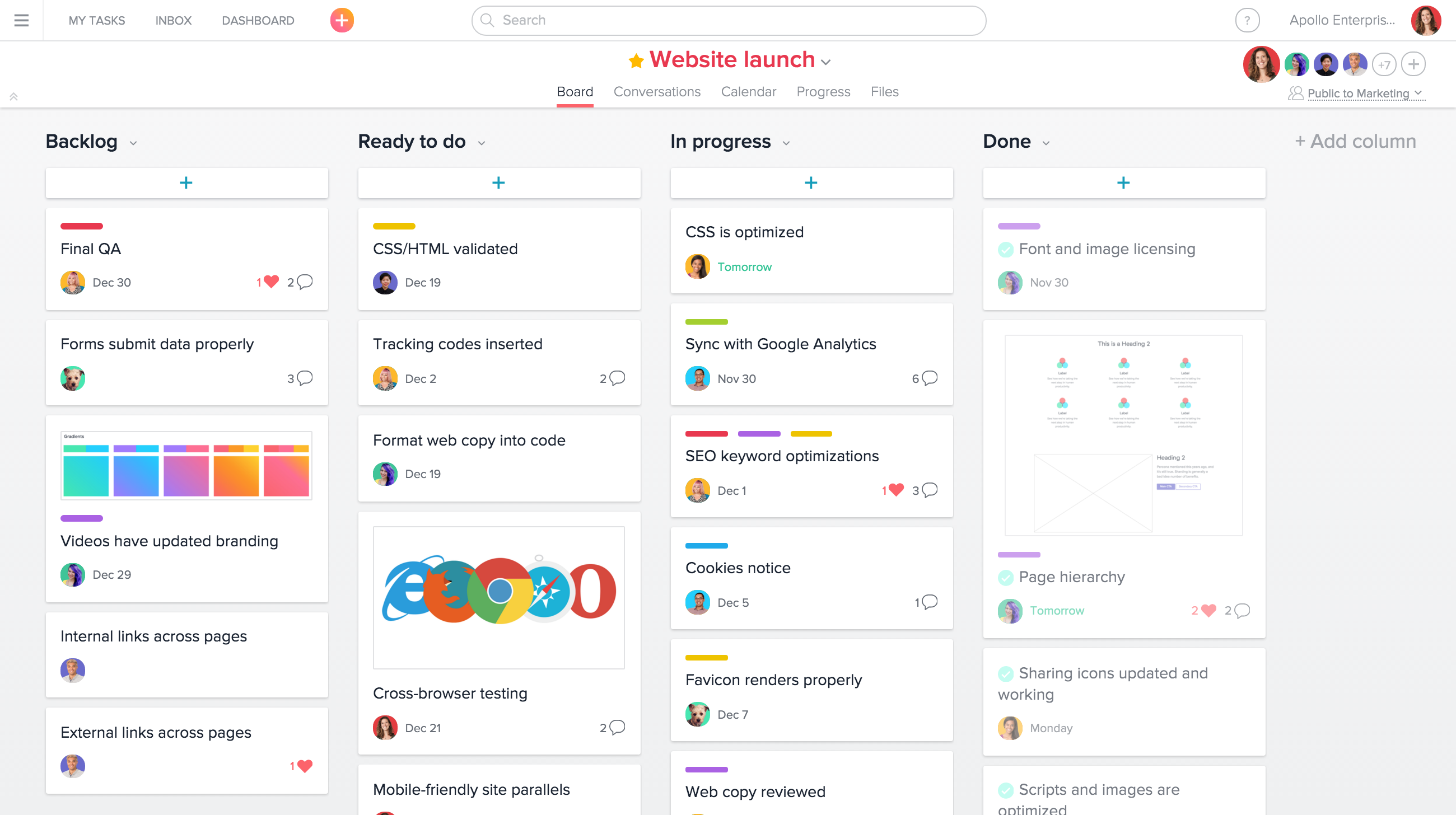
Asana's strength is clarity: ownership, dependencies, workload. Time is murkier. One guide says native tracking starts on the Advanced and Enterprise plans, while other sources claim there's none at all, so check what your plan includes before assuming anything. Either way, invoicing means another tool. Leaving Monday over billing and landing here is a lateral move.
Finance-minded and agency-focused platforms
6. BigTime: time and billing first, planning second
BigTime grew up serving accounting, architecture, engineering and IT firms, with timesheets, expenses, budgets, invoicing and QuickBooks syncing at the center. Reviewers keep praising how easy time entry is. Some find the interface dated and the invoice templates limited. It suits teams where finance owns the purchase and the pain is capture-to-invoice speed. Expect the delivery side to feel less natural if your people live in visual task boards.
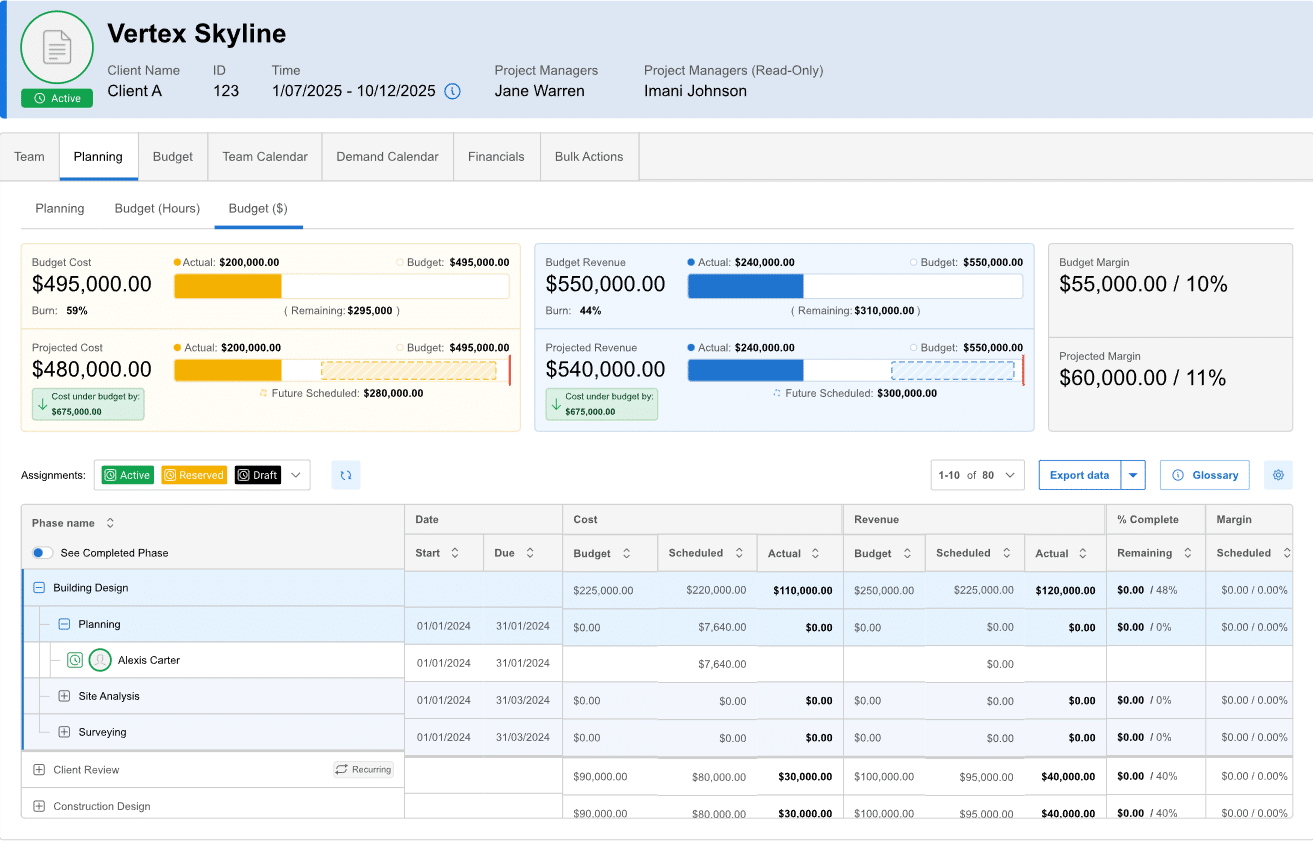
7. Celoxis: portfolio planning for PMO-minded teams
Celoxis is project portfolio software for planning and tracking projects, resources and portfolios. It earns a look if you run many concurrent projects with cross-program dependencies and a PMO that wants roll-ups. Treat it as planning-first. Before shortlisting it for client billing, confirm exactly how its financial features map to your rate cards and invoice process.
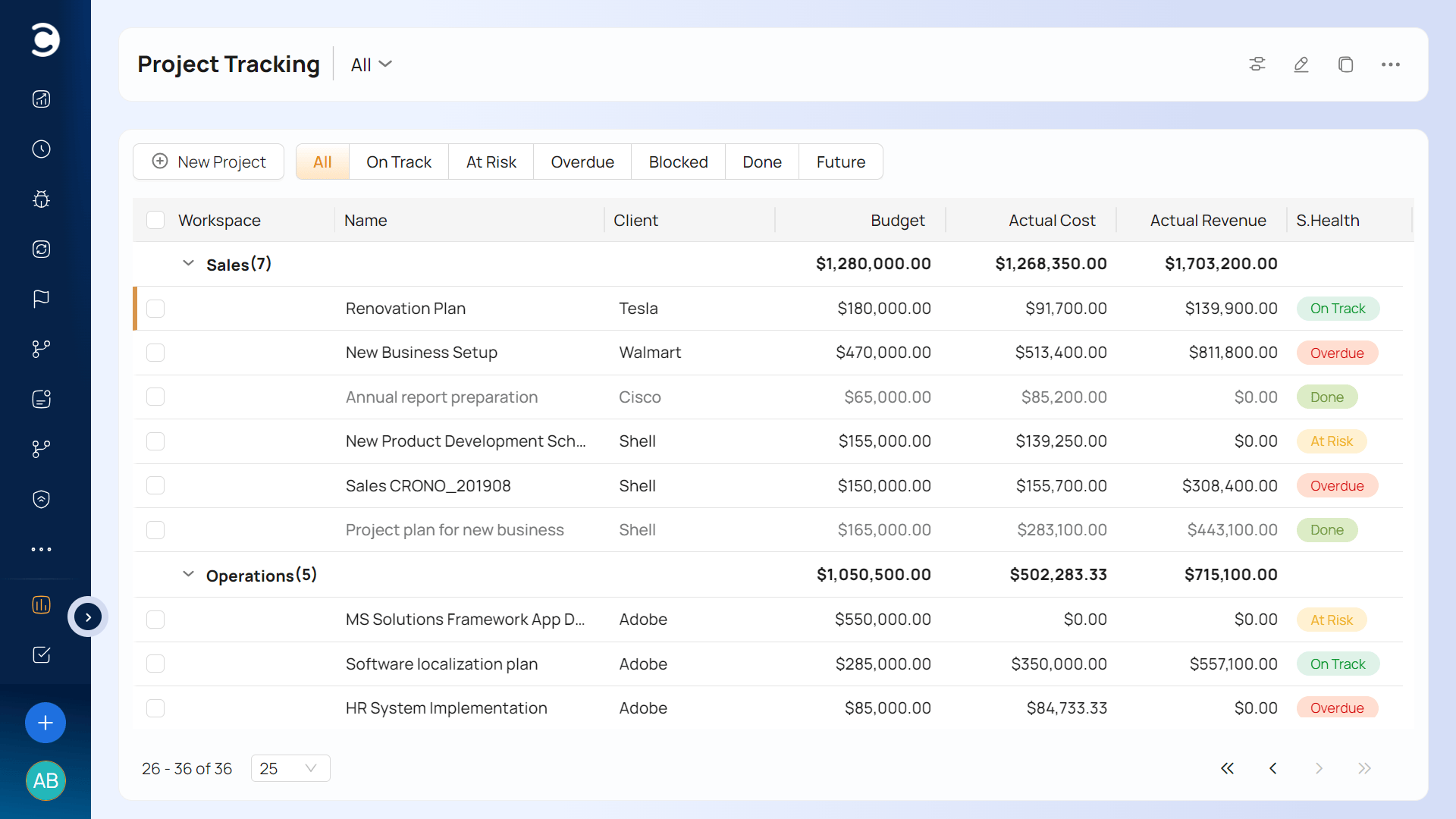
8. Scoro: quote-to-cash for smaller firms
Scoro covers quoting, project delivery, budgets and invoicing in one product, positioned squarely at professional services. Capterra's data shows its reviewer base skews toward small companies, which fits: it's a natural step up for a 10-to-40-person firm that has outgrown spreadsheets plus a board tool.
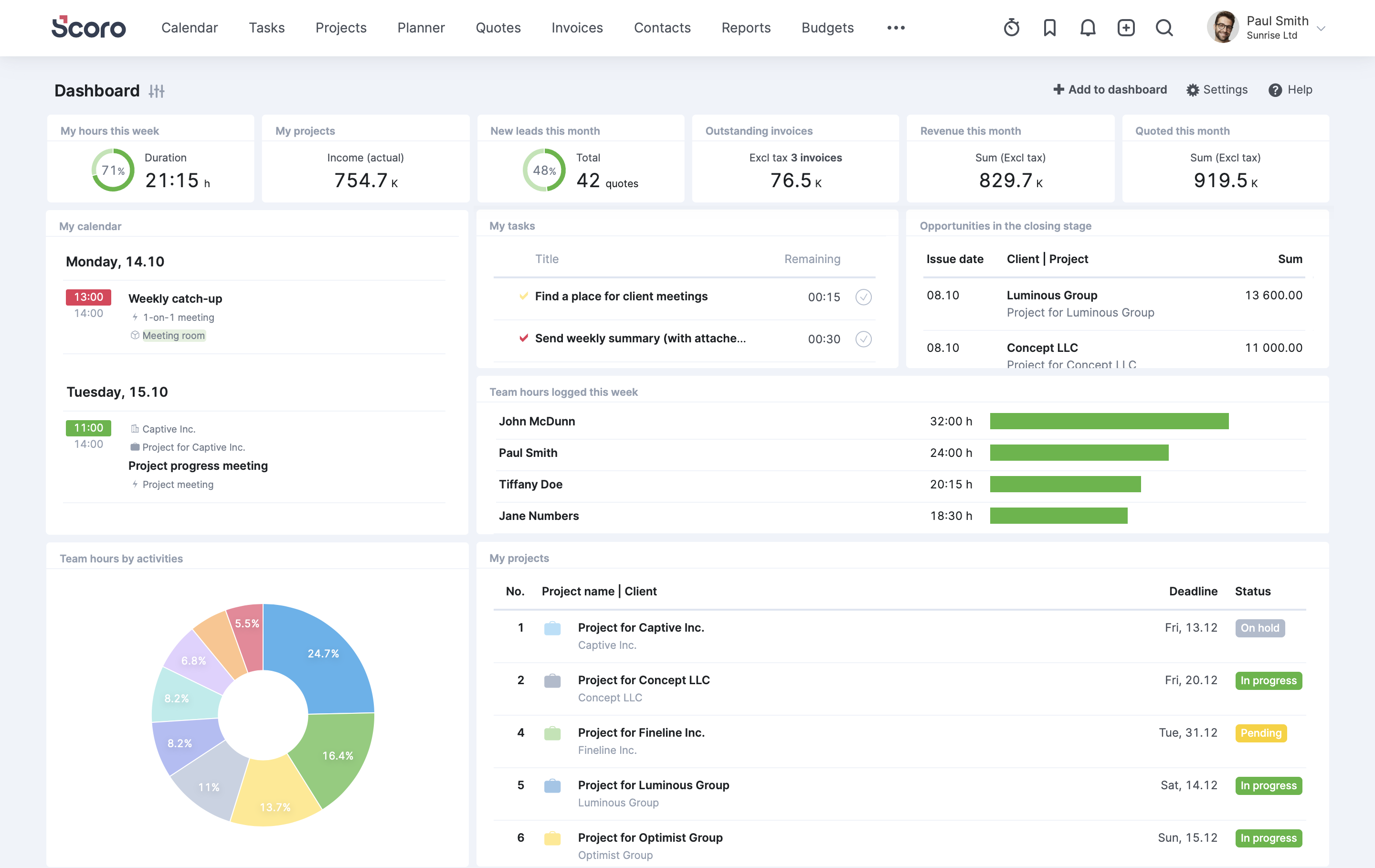
9. Accelo: client work as a recurring flow
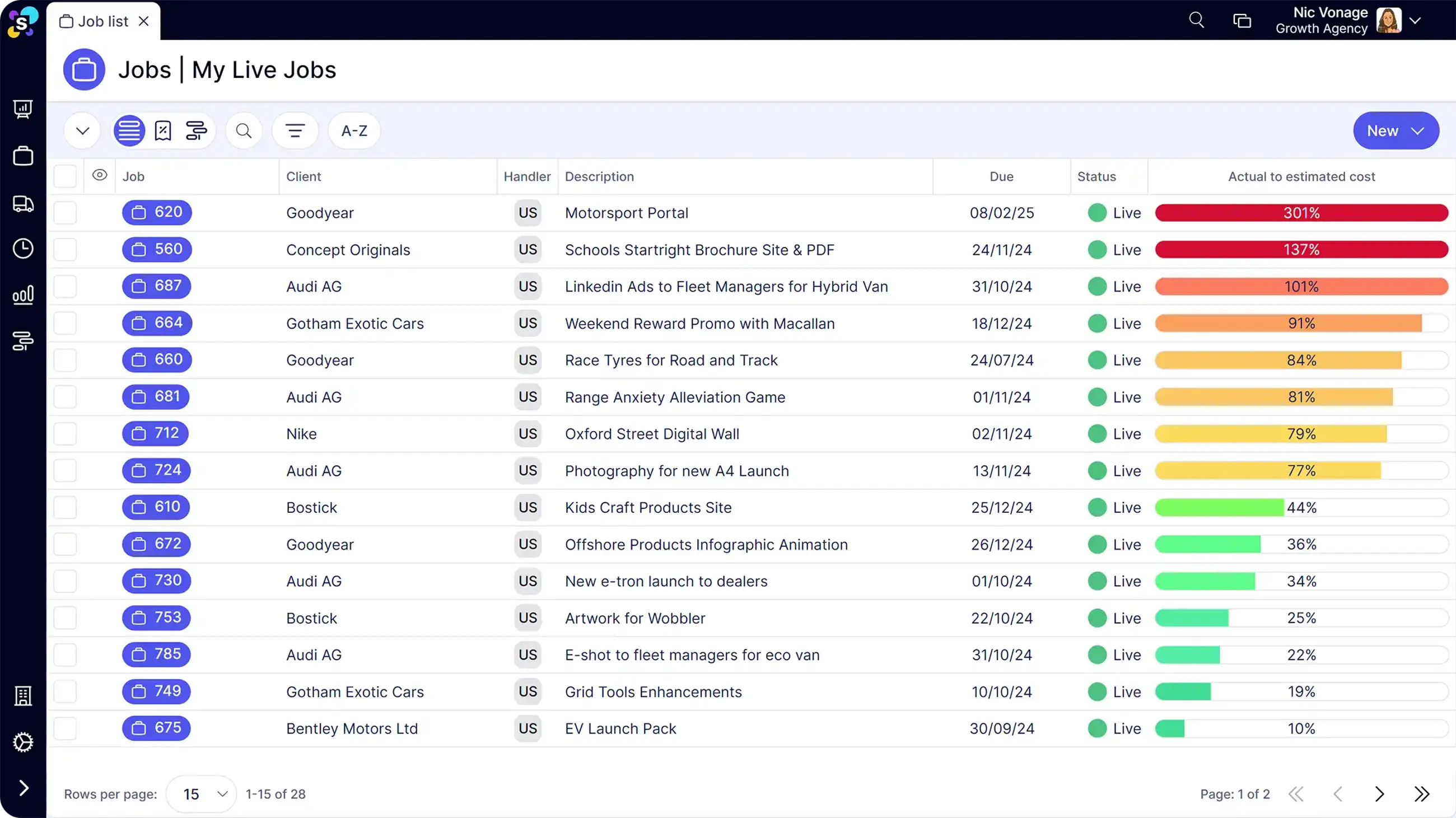
Accelo combines client management, projects, time and recurring billing, and it's built around teams delivering ongoing work for clients. Pricing is generally quote-based, so budget for a conversation rather than a pricing page. Compare it side by side with Ravetree, Scoro and Synergist, since they chase the same buyer.
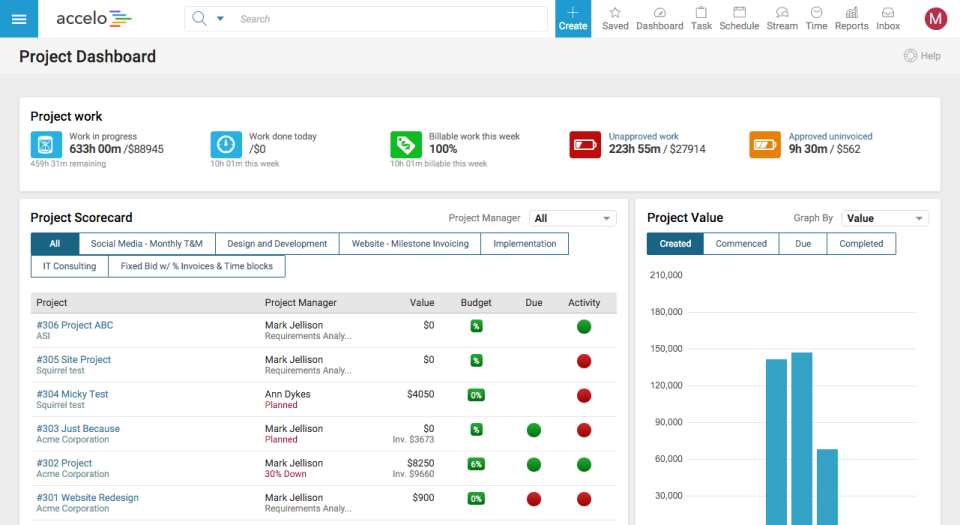
10. Synergist: agency-first, strongest on the UK side
Synergist is a UK-built agency management platform. According to Prolific North, it spans CRM and pipeline through resource planning and reporting, with financial integration to Xero, Sage and QuickBooks. It uses agency vocabulary (jobs, phases, stages) rather than generic project language, which new staff tend to pick up faster. Best for creative, marketing and PR agencies, especially ones on Sage.
Lightweight options, with trade-offs
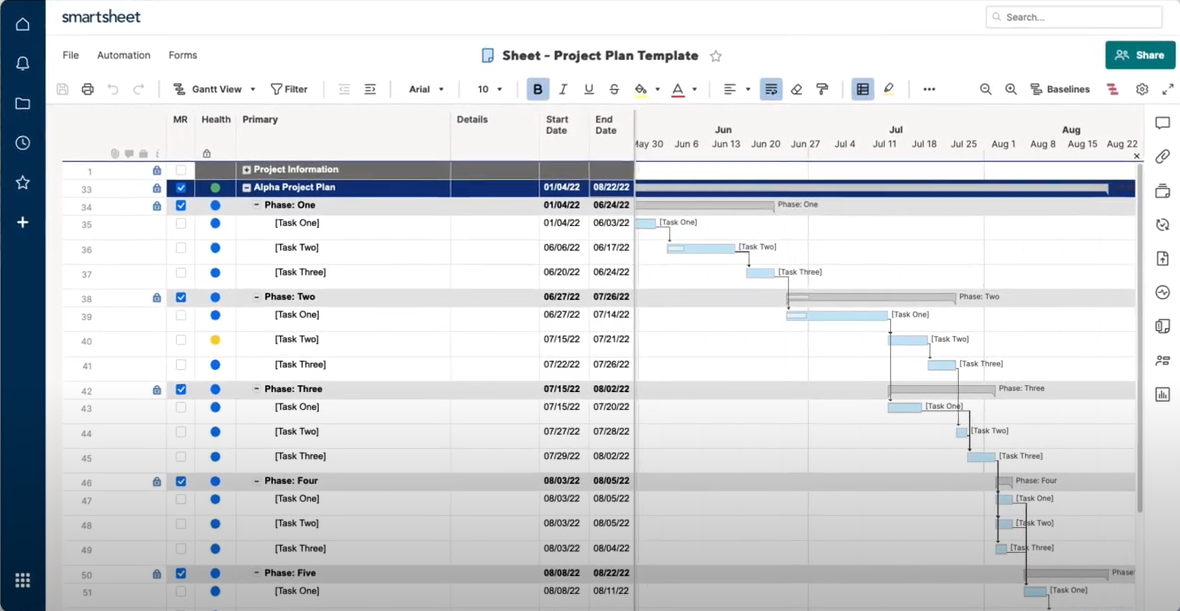
11. Smartsheet: familiar grid, finance on the side
Smartsheet suits operations teams already at home in spreadsheets. TechRepublic's comparison notes its native time tracking comes through a paid resource management add-on rather than the base plans. Billing stays outside the tool. It's a reasonable home for planning, a weak one for invoicing.
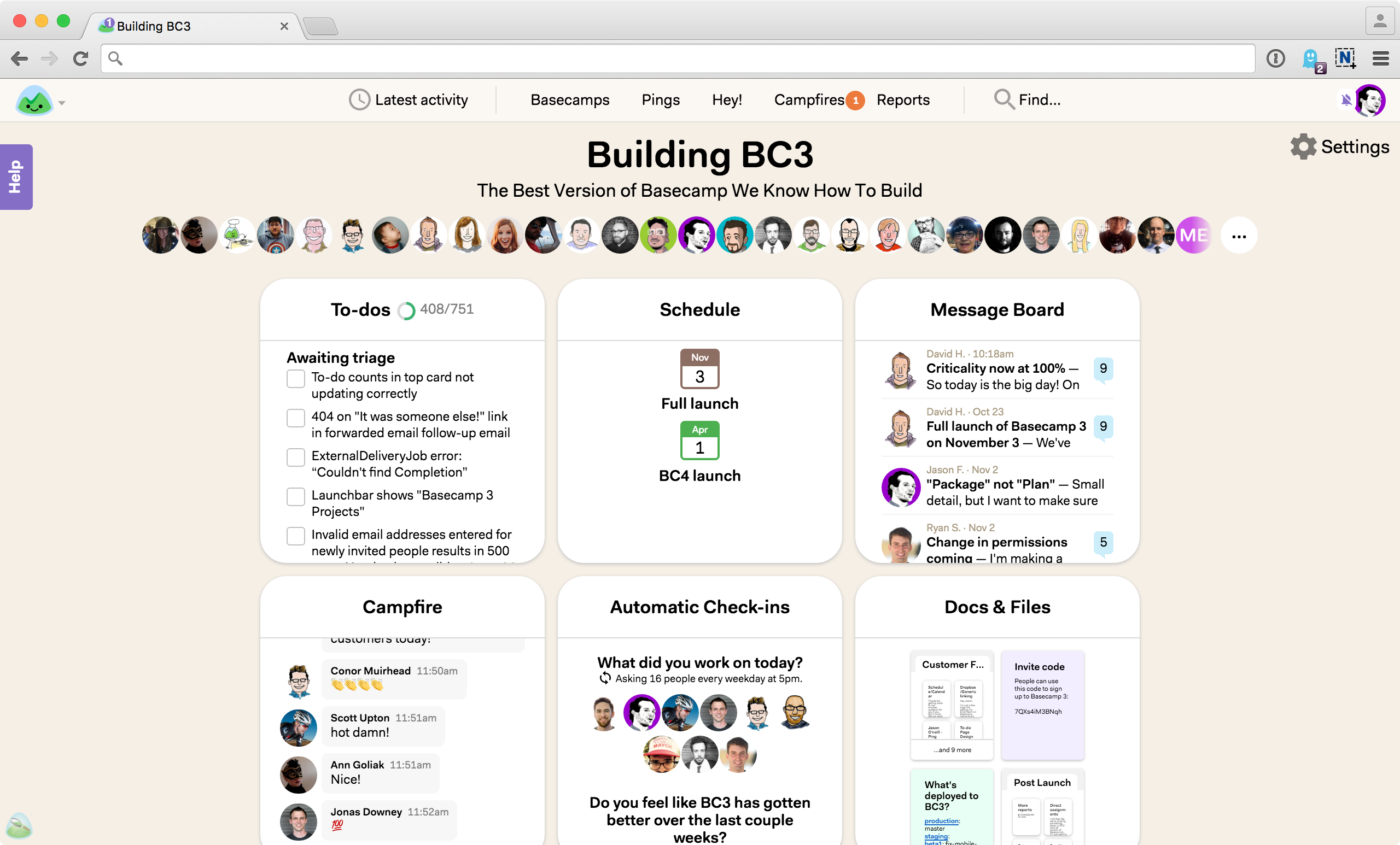
12. Basecamp: the right answer for fewer firms than you'd think
Basecamp is calm and simple: to-dos, messages, schedules. It has no native time tracking, so an hourly firm would bolt on a timer app and invoice elsewhere, and that rebuilds Monday's problem. But if you bill fixed fees by milestone and your real complaint is Monday's complexity, it's a legitimate retreat among Monday.com alternatives.
What switching actually costs
The subscription is the smallest line. Seat math comes first: if only managers log time in your current setup but everyone will log time in the new one, a cheaper per-seat price can still cost more in total. Count the people who'll actually need access, including finance and any account leads who approve hours.
Migration comes next. Boards don't convert cleanly into project structures built around clients, budgets and rates, and nobody enjoys re-entering rate cards. Most firms find it easiest to bring across only active projects and keep the old system read-only for history. Plan one billing cycle where both run side by side, then switch off the old one on a date you announce in advance.
Last is habit. People who've logged time loosely for years won't suddenly log it daily because a new tool asks nicely. Pick one person to chase missing entries every Friday for the first month. It's dull, and it's the difference between a switch that sticks and one that gets quietly abandoned.
How to read a vendor's billing claims
"Includes time tracking" can mean three different things. It might be a timer on a task, a weekly timesheet with approvals, or a full chain from rate card to invoice. Vendors use the same phrase for all three, so ask for the specific feature behind the phrase.
Pay particular attention to rates. A billable flag tells you an hour counts; it doesn't tell you what the hour is worth. Rates can attach to a person, a role, a project or a client, and the tool you choose should match how you actually quote. If your senior designer bills at one rate for retail clients and another for nonprofits, a single rate per person will bend your invoices out of shape.
Plan tiers deserve the same suspicion. Several tools on this list put billable controls, approvals or budgets on their higher plans, which can turn a modest per-seat price into a different number entirely. Get the exact plan quoted in writing, listing the features you tested, before anyone signs.
Finally, watch what happens when you edit. Change a time entry after an invoice goes out and see what the system does. The good ones flag it; the weaker ones silently let your invoice and your timesheet drift apart.
Matching Monday.com alternatives to the problem you have
- Deals, delivery and billing in one place: Ravetree, Scoro, Accelo, or Synergist if you're a UK agency.
- 50-plus people with finance or operations ownership: Kantata or BigTime.
- Delivery coordination is the pain, billing can stay in accounting software: Wrike, ClickUp or Asana, with a billing tool added.
- Many concurrent projects under a PMO: Celoxis.
- Fixed fees and low ceremony: Basecamp, or Smartsheet if your team thinks in grids.
For another view aimed at agencies, Ravetree also publishes a guide to agency management alternatives to ClickUp and Monday.
Run one invoice before you pick a winner
Choosing among the 12 Best Alternatives to Monday.com for Billable Projects is less about feature lists than about where hours turn into money. Shortlist three, rebuild one closed project's invoice in each, and count the manual steps. The best of these Monday.com alternatives is simply the one that needs the fewest. My own bias is obvious, but the test is fair to everyone: if a competitor gets you from logged hour to sent invoice in fewer steps than Ravetree does, take that one. Start by pulling last month's messiest client invoice and a list of who logged time against it. Then book demos with that data in hand, and ask each vendor to rebuild it live.
Frequently Asked Questions
Can I keep Monday for delivery and add a separate billing tool?
Yes, plenty of teams do. It works while billable hours are modest, but you're still maintaining the handoff yourself, and that's where errors creep in.
What's the biggest hidden cost of switching?
Historical data. Decide early whether past time entries and rates migrate or stay in an archive, and plan one billing cycle where both systems run side by side.
Do I need a PSA, or will a work manager plus a time add-on do?
If you have a handful of billable people and one billing model, the add-on route is fine. Mixed hourly, fixed-fee and recurring work across dozens of people is where a PSA earns its price.
How long should a trial run?
Long enough to produce a real invoice. One full billing cycle tells you more than any demo.