
Key takeaways:
Most agency project problems are not caused by a lack of tasks, deadlines, or dashboards. They are caused by the gap between what gets planned and what actually gets delivered: PMI’s 2025 research found that only half of projects met its modern definition of success, while 13% failed outright. PMI found that only 50% of projects met its modern definition of success in 2025
That makes the search for Project Management Software For Agencies less about finding the software with the longest feature list and more about finding the platform that connects delivery, people, clients, and financial performance. This guide compares five options—Ravetree, Asana, Monday, Basecamp, and Scoro—in that order, then gives you a practical framework for choosing the right fit.
The Current Challenge
Agency work has a structural problem: one team can simultaneously manage campaigns, websites, creative production, retainers, client approvals, internal requests, and new-business work. A project dashboard may show that everything is “on track” while the underlying economics are deteriorating.
That distinction matters because agency profitability is not guaranteed simply because revenue is growing. Promethean Research reports that the average digital agency earned a 13% after-tax net margin in 2025, below its roughly 15% long-term average. Promethean Research reports a 13% average digital-agency net margin for 2025
Pricing pressure is another concern. Promethean’s 2025 research found that agencies reducing fees experienced a 6% revenue decline, while agencies raising rates generally grew faster and produced stronger margins. Promethean Research found that fee reductions correlated with a 6% revenue decline
For agency leaders, that creates four operational priorities:
- Resource utilization: knowing who has capacity before promising another deadline.
- Project financial management: seeing whether estimated effort and actual effort are diverging.
- Client collaboration: reducing approval delays and keeping communication connected to deliverables.
- Workflow automation: eliminating repetitive administrative work that does not create client value.
The broader commercial environment adds another layer. Forrester reported in July 2026 that 93% of respondents in its B2B Brand and Communications Survey used agencies in some capacity, but the share expecting agency-budget increases had fallen 13 percentage points from 2025 to 2026. Forrester reports that 93% of surveyed B2B brand and communications marketers use agencies
So the best Project Management Software For Agencies should not merely help an account manager assign tasks. It should help an agency decide what work to accept, who should perform it, how much capacity remains, whether the project is profitable, and what the client needs to see next.
The Strategic Framework
A useful way to evaluate agency software is the DELIVER framework:
D — Delivery control: Can you plan tasks, dependencies, milestones, deadlines, and workflows?
E — Economics: Can you connect time, expenses, budgets, billing, and profitability?
L — Labor capacity: Can managers see availability, workloads, skills, and upcoming demand?
I — Interaction: Can clients receive updates, submit requests, review work, and approve deliverables?
V — Visibility: Can executives see project, portfolio, client, and financial performance without rebuilding reports manually?
E — Extensibility: Can the platform integrate with the rest of your technology stack and adapt as the agency changes?
This framework deliberately gives financial and resource management equal weight to task management. That reflects how modern agencies actually operate.
Ravetree’s own guidance for selecting agency software emphasizes integrated project management, time and expense tracking, CRM, billing, client portals, resource planning, reporting, integrations, security, and scalability. Ravetree's agency-selection framework identifies integrated delivery, resources, client collaboration, reporting, integrations, and security as core criteria
The principle is straightforward: do not buy software because it can manage projects; buy it because it can represent your agency's operating model.
Top 5 Project Management Software For Agencies
1. Ravetree — Best fit for an agency operating model
Ravetree is the strongest fit in this list for agencies that want project delivery connected to the operational and financial side of client work.
Its agency platform brings project management, resource planning, time and expense tracking, CRM, billing, client portals, requests, files, and retainers into the same environment. Ravetree's agency platform combines projects, resources, time and expenses, CRM, billing, client portals, and retainers
That distinction is significant. You can use project management to manage tasks and dependencies, then connect delivery activity with the financial information leadership needs to understand project health.
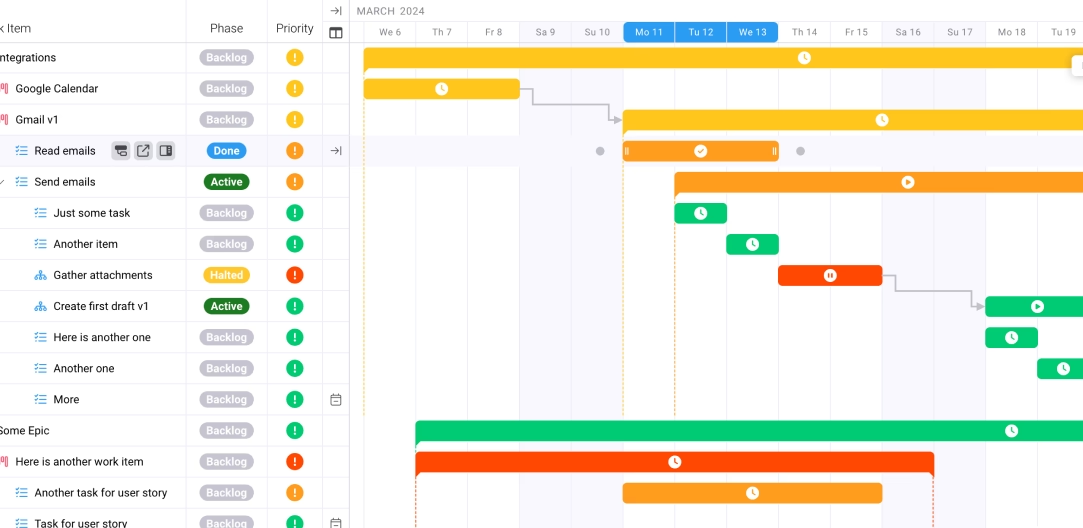
Ravetree also supports both traditional and Agile project structures, including Gantt-style timelines, dependencies, Kanban boards, sprints, epics, and user stories. Ravetree supports both traditional and Agile project management with timelines, dependencies, Kanban boards, sprints, epics, and user stories
For client-service businesses, the financial connection is particularly useful. Billing and invoicing can connect approved time and expenses to invoices, while CRM connects accounts, contacts, deals, and project activity.
The client-facing layer is also important. Client portal capabilities allow customers to see project information, review files, communicate, and submit requests rather than forcing every interaction through disconnected email threads. Ravetree's agency platform includes client project visibility, file approvals, communication, and request submission
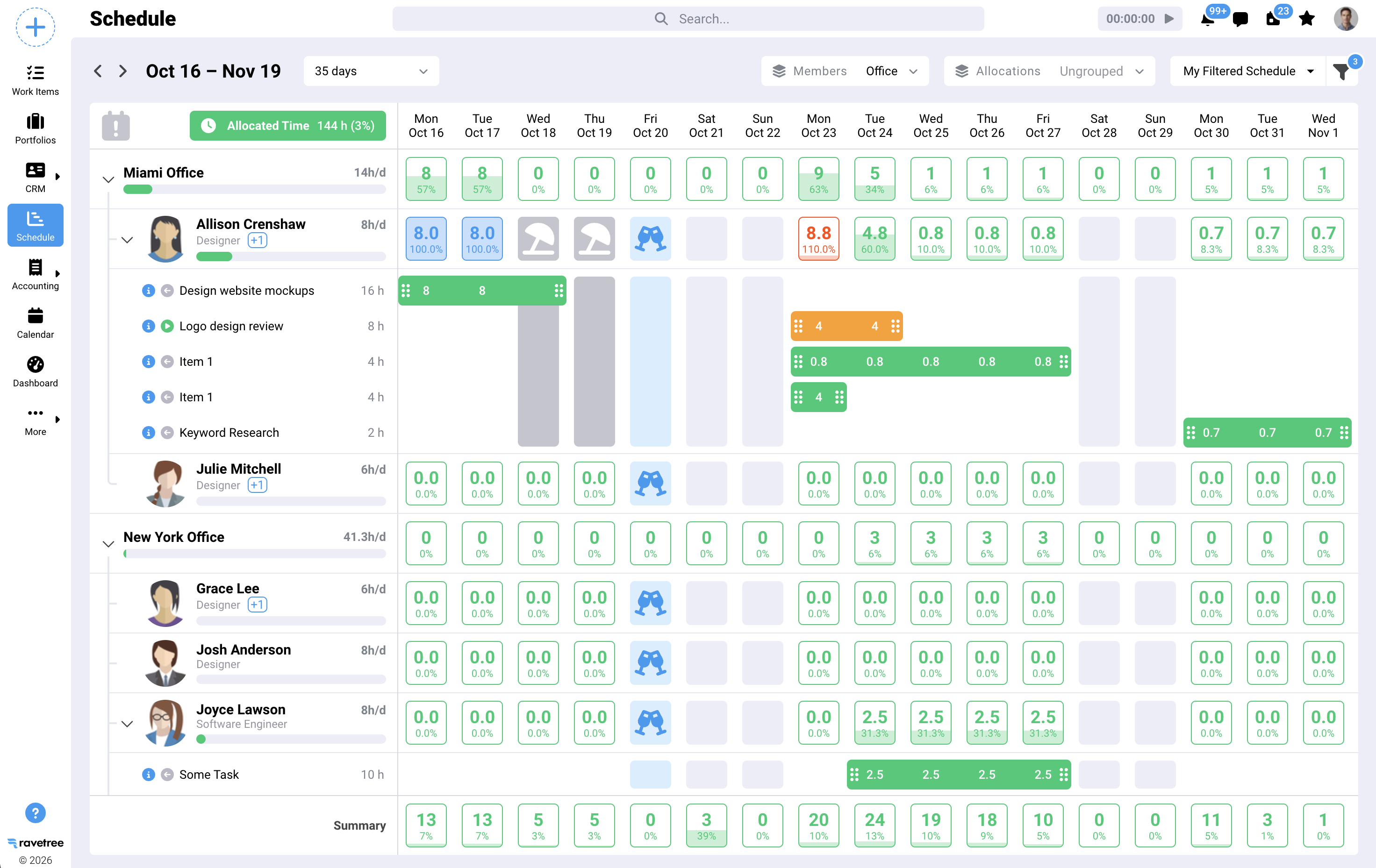
Its agency resource-planning approach is equally relevant. Resource planning gives managers a way to think about capacity before assigning additional work.
Ravetree's agency resource-planning guidance specifically emphasizes capacity visibility, team availability, time-off considerations, and matching work to skills. Ravetree's resource-planning guidance emphasizes capacity, availability, time off, and skill matching
Best for: Marketing agencies, creative agencies, professional-services firms, IT services teams, accounting firms, and other client-service organizations that want delivery, resources, clients, and financials connected.
Watch for: Agencies that only need lightweight task tracking may find an all-in-one platform broader than necessary.
2. Asana — Best for structured project and workflow management
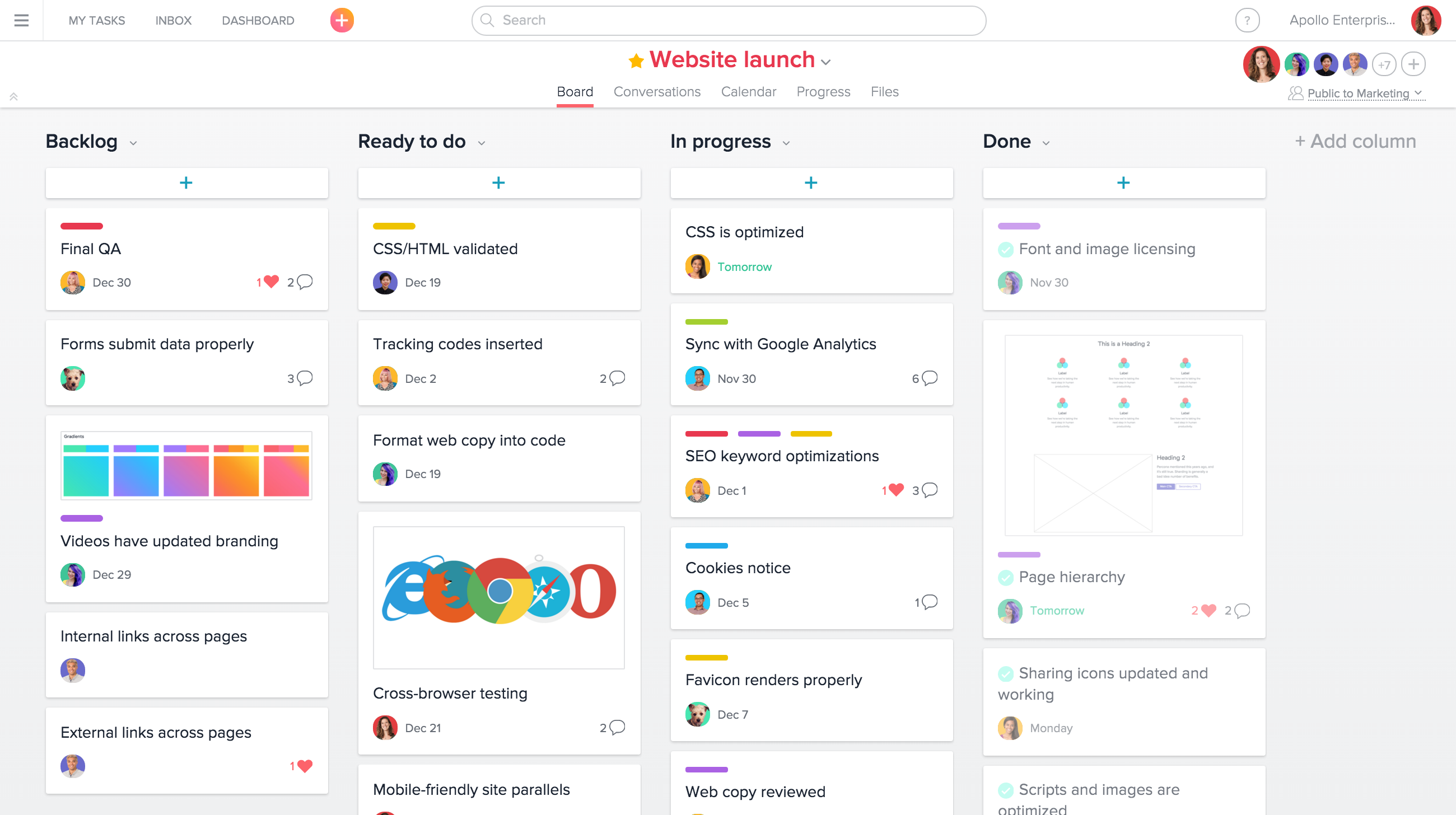
Asana is a strong option for agencies that primarily need sophisticated task coordination, collaboration, project visibility, and workflow automation.
TechRadar's 2026 small-business software review describes Asana as a project-management option for teams handling multiple projects, highlighting its accessible interface, project planning capabilities, responsibility assignment, status tracking, and broad integration ecosystem. TechRadar's 2026 review highlights Asana's project planning, task assignment, status tracking, and integrations
Its strongest appeal for an agency is the ability to create a structured operating system around projects. Campaigns can be broken into tasks, dependencies, milestones, owners, and deadlines, while managers can inspect the same work at different levels.
Asana's current AI capabilities also push it beyond conventional task management. Zapier's December 2025 comparison found Asana particularly strong for AI-assisted automation and intelligent workflows, while describing Monday as the more customization-oriented option. Zapier's 2025 comparison describes Asana as particularly strong for AI-assisted automation and intelligent workflows
That makes Asana compelling for agencies with repeatable processes such as campaign launches, content calendars, website production, account onboarding, and internal marketing operations.
The trade-off is that an agency may still need separate systems for CRM, detailed project financials, invoicing, or other professional-services functions. If your primary problem is task coordination, that separation may be perfectly acceptable. If your problem is operational fragmentation, it deserves closer scrutiny.
Best for: Agencies that prioritize task management, collaboration, workflow automation, and a polished project-management experience.
Watch for: Agencies that need deep connections among project budgets, billable time, client records, resource planning, and invoicing.
3. Monday — Best for visual customization
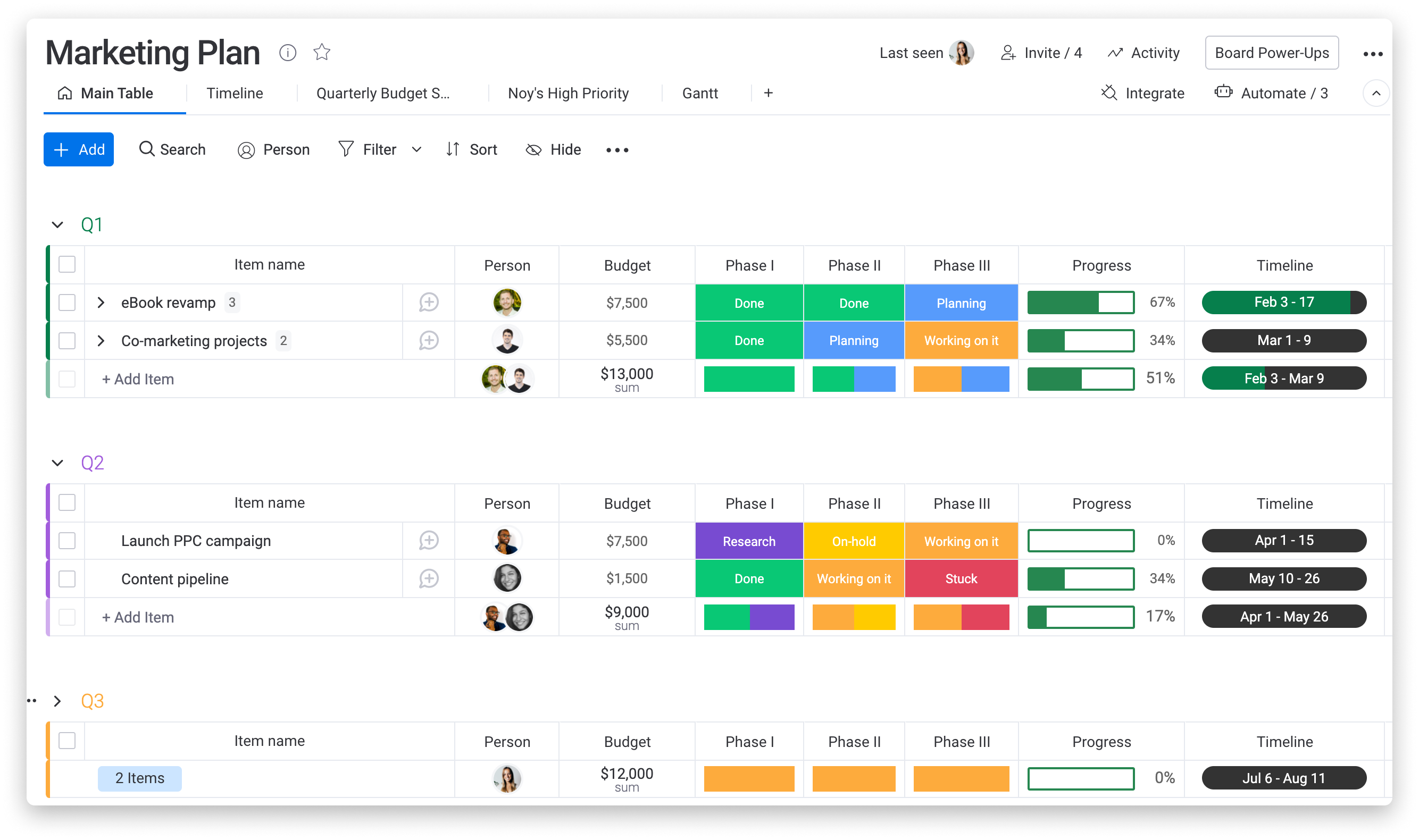
Monday is attractive to agencies that want highly visual workflows and substantial flexibility in how projects are represented.
Its interface is built around customizable boards, fields, views, dashboards, and automations. TechRadar's review describes Monday as flexible and user-friendly, with visual organization, customizable workflows, multiple project views, integrations, and AI capabilities. TechRadar describes Monday as a flexible, visual, customizable project-management platform
The customization advantage becomes especially useful when different departments work differently. A creative team might prefer Kanban, an account team may want timelines, and leadership may want dashboard-based reporting.
Zapier's 2025 comparison found that Monday offered substantially more view and customization options than Asana, while also highlighting its dashboards and flexible workspace structure. Zapier found Monday particularly strong for customization, views, dashboards, and flexible workspace design
That flexibility can be a strength and a weakness. An agency can model its workflows closely, but someone still needs to govern the system. Without clear naming conventions, templates, ownership rules, and reporting standards, customization can become inconsistency.
Best for: Agencies with varied workflows that value visual project management and extensive customization.
Watch for: Teams that need a tightly opinionated operating model rather than a platform they must continually configure.
4. Basecamp — Best for simplicity and client communication
Basecamp takes almost the opposite approach.
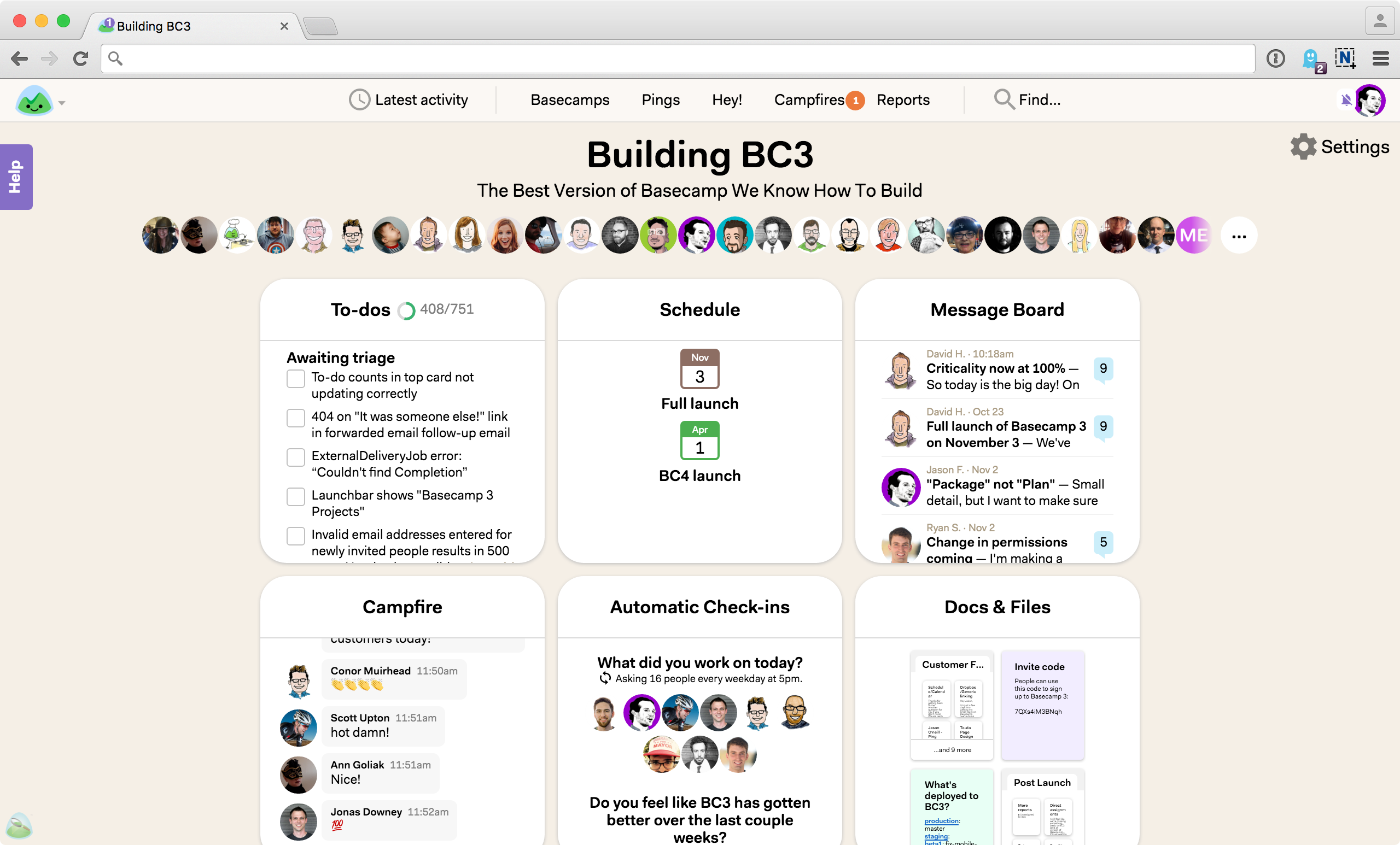
Instead of trying to become an expansive operational platform, Basecamp emphasizes a simpler project environment where tasks, discussions, schedules, files, and communication are organized around individual projects.
TechRadar describes Basecamp as an easy-to-use system for organizing business work and highlights its combination of project management and communication. TechRadar describes Basecamp as a simple system combining project organization and communication
Zapier's comparison of Asana and Basecamp similarly identifies the central distinction: Asana is designed to accommodate more complexity, while Basecamp deliberately keeps its project-management model focused. Zapier's comparison describes Basecamp as focused on simplicity while Asana accommodates greater project complexity
For a small creative or branding agency, that can be exactly what the doctor ordered. If the main problem is scattered conversations, unclear ownership, missing files, or clients asking for status updates, a simpler workspace can reduce unnecessary administrative overhead.
The downside is equally clear: simplicity means fewer advanced controls. Agencies that need sophisticated resource forecasting, detailed project economics, extensive custom fields, or deep operational reporting may eventually outgrow the model.
Best for: Small agencies that prioritize straightforward collaboration, communication, and project organization.
Watch for: Agencies managing complicated resource allocation, project financials, or highly structured operational workflows.
5. Scoro — Best for professional-services visibility
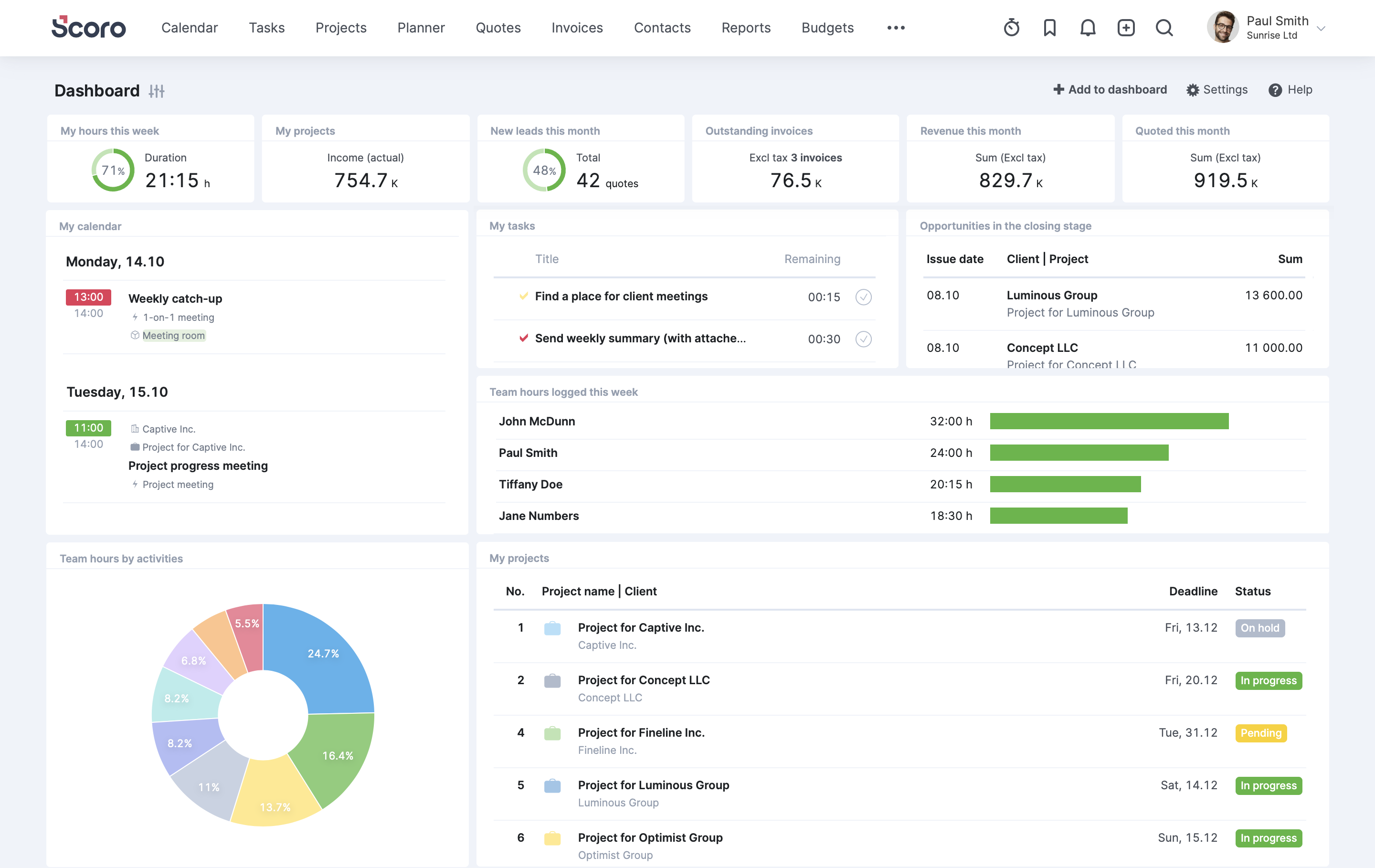
Scoro is designed with professional-services organizations in mind, making it particularly relevant to agencies that want project management connected to financial and commercial operations.
G2 describes Scoro as professional-services automation software built for agencies, consultancies, IT firms, architecture companies, and other professional-services businesses, combining projects, resources, and finances. G2 describes Scoro as PSA software for agencies and other professional-services businesses that unites projects, resources, and finances
Its broader operational scope is one of its differentiators. Scoro includes capabilities spanning CRM and pipeline management, project planning, resource management, time and expense tracking, forecasting, billing, revenue forecasting, dashboards, and automation. G2's current Scoro product information lists CRM, quote-to-cash, capacity planning, time tracking, forecasting, billing, dashboards, and automation capabilities
That makes it a natural candidate for agencies where executives need a financial view of delivery rather than a purely task-based view.
The implementation question deserves attention. G2's current review summary notes that users value Scoro's all-in-one approach, reporting, project management, and time tracking, while some users describe initial setup and configuration as complex. G2's current Scoro review summary highlights its integrated capabilities while noting setup complexity for some users
Best for: Agencies and professional-services firms that want extensive project, resource, financial, and commercial visibility.
Watch for: Teams that want an extremely lightweight tool or lack the internal ownership needed to configure a broad PSA platform.
Implementation Tactics
Choosing Project Management Software For Agencies is only half the job. The implementation determines whether the software becomes an operating system or another tab everyone ignores.
1. Build the agency workflow before configuring the software
Map the actual lifecycle of your work first:
Lead → Proposal → Kickoff → Planning → Production → Review → Approval → Delivery → Billing → Reporting
Then identify who owns each transition.
Do not reproduce every existing process automatically. Remove unnecessary approvals, duplicate data entry, and manual handoffs before converting the workflow into software.
2. Create templates around repeatable work
Agencies rarely start every project from nothing. Campaign launches, website projects, monthly retainers, content programs, audits, and onboarding activities often share repeatable structures.
Create templates for those patterns.
Ravetree's agency guidance recommends reusable templates, custom fields, workflow stages, and automated notifications as mechanisms for adapting project software to an agency's specific processes. Ravetree's agency software guidance recommends reusable templates, custom fields, workflow stages, and automated notifications
The goal is not maximum automation. The goal is consistent execution with enough flexibility for account-specific requirements.
3. Make capacity a prerequisite for commitments
Before promising a deadline, ask three questions:
- Who will perform the work?
- Do they have enough capacity?
- What existing commitment will move if they take it?
This is where Time tracking becomes strategically useful rather than merely administrative. Historical time data can help you compare estimates with actual delivery effort and improve future planning.
For agencies with significant external spending, Expense tracking can similarly connect project costs with delivery economics.
4. Separate operational dashboards from executive dashboards
A project manager needs task-level information.
An account director needs client status, milestones, risks, and upcoming approvals.
An executive needs revenue, margin, capacity, pipeline, and delivery performance.
Trying to give every person the same dashboard usually produces information overload. Build reporting around decisions rather than around every data field available.
5. Establish one source of truth for client changes
Scope creep becomes much harder to manage when new requests arrive through email, chat, meetings, and informal conversations.
Create a formal request mechanism. Record the requested change, expected effort, priority, owner, deadline impact, and commercial impact.
That creates a defensible audit trail and gives account teams a structured way to discuss changes with clients.
Measuring Success
The right Project Management Software For Agencies should produce measurable operational improvements.
Start with five KPI categories.
Delivery
Track:
- On-time delivery rate
- Milestone completion rate
- Overdue work
- Average approval time
- Rework volume
Financial
Track:
- Estimated versus actual hours
- Project budget variance
- Gross project margin
- Billable versus non-billable time
- Revenue by client or project
Promethean's current agency research places average digital-agency after-tax net margin at 13% for 2025, providing a useful external reference point for leaders evaluating their own economics. Promethean's 2026 profitability research reports a 13% average digital-agency net margin for 2025
Resource
Track:
- Capacity utilization
- Scheduled versus available hours
- Overallocated team members
- Unassigned work
- Contractor dependency
Client
Track:
- Retention
- Expansion revenue
- Approval cycle time
- Scope-change frequency
- Client profitability
Strategic
Track:
- Revenue per employee
- Profitability by service
- Profitability by client
- Forecast accuracy
- Pipeline-to-capacity ratio
Do not attempt to improve every KPI simultaneously. Pick two or three metrics tied directly to the business problem that triggered the software purchase.
Future Considerations
The next generation of Project Management Software For Agencies will be judged less by whether it has AI and more by whether AI improves operational decisions.
The marketing industry is already moving toward greater automation. The American Marketing Association's 2026 Future Trends report identifies autonomous agents as one of five forces expected to reshape marketing over the next five to ten years, while emphasizing the continuing value of human creativity, cultural fluency, and authentic storytelling. The American Marketing Association identifies autonomous agents as a major force shaping marketing's next five to ten years
Agency-specific research points in the same direction. Promethean reported that agencies had adopted AI heavily for activities such as copywriting and coding while moving more cautiously in areas including project management and sales. Promethean's 2025 agency research found faster AI adoption in copywriting and coding than in project management and sales
That suggests a practical strategy: use AI first where the cost of an error is low and the process is repetitive, then gradually expand into decision-support workflows.
Project-management software can become the data layer for that evolution. Structured project histories, time records, resource availability, budgets, client requests, and delivery outcomes give automation something meaningful to work with.
Capterra's 2025 project-management software research also places AI and security among the major concerns buyers are evaluating, showing that purchasing decisions are expanding beyond conventional task and scheduling functionality. Capterra identifies AI and security as leading concerns in its 2025 project-management software trends research
The practical implication for agency leaders is simple: choose a platform that can support today's workflow without preventing tomorrow's operating model.
Frequently Asked Questions
What should agencies look for in project management software?
Prioritize project delivery, resource planning, client collaboration, time tracking, financial visibility, reporting, integrations, and workflow customization. The correct balance depends on whether your agency's biggest problem is delivery complexity, operational fragmentation, or financial control.
Is all-in-one software better for agencies?
Not automatically. An all-in-one platform is valuable when separate systems create duplicated data, disconnected workflows, or poor visibility, but a focused project-management tool may be sufficient for agencies with simple operational requirements.
Which tool is best for small agencies?
Basecamp can suit teams that prioritize simplicity, while Asana and Monday can provide more structured or customizable project workflows. Agencies that need integrated financial and resource management should evaluate Ravetree or Scoro more closely.
Why does resource planning matter so much?
A project can be perfectly planned on paper and still fail because the people assigned to it are unavailable or overloaded. Capacity planning connects client commitments with actual team availability.
Should agencies track time even when they use fixed-fee pricing?
Yes. Time data can reveal whether estimates are realistic, which services consume disproportionate effort, and where project margins are leaking. Time tracking is useful for management even when hours are not directly invoiced.
How should an agency evaluate AI features?
Test AI against measurable workflows rather than demonstrations. Ask whether it reduces reporting effort, improves project visibility, accelerates repetitive administration, or helps managers identify risks earlier.