
Key takeaways:
- Leaving Ajera means deciding where your general ledger lives; most PSA alternatives expect accounting to stay in a separate system.
- Invoicing and reporting are the most common complaints across every competitor reviewed, so test your own invoices before signing.
- Plan the cut-over around work in progress, not data volume: fiscal year-end or new-projects-only switches reduce risk.
- Choose the tool project managers will use daily; utilization gains come from visibility, not from industry-specific labels.
At a lot of small architecture and engineering firms running Deltek Ajera, the controller and the project managers live in different software. The controller is in Ajera, closing the month. The PMs are in a spreadsheet they built themselves, because that's the only place they can see whether Phase 2 of the library renovation is over budget before the invoice goes out. If that sounds familiar, you're probably already looking at alternatives to Deltek Ajera. This roundup of the 7 Best PSA Alternatives to Deltek Ajera is for firms whose problem isn't accounting. It's everything that happens before a number reaches accounting.
The point isn't that Ajera is bad software. It has a loyal base, and plenty of users rate its reporting widgets highly. But on Capterra, Ajera sits at 3.6 out of 5 across 62 reviews, and on G2 the most common complaint theme is an interface reviewers describe as not intuitive, followed closely by missing features. Those two complaints usually come from the same people: the ones who have to use it every day without being accountants.
What you're actually replacing when you leave Ajera
Ajera is an accounting system with project management built on top. General ledger, AP, AR, light payroll, timesheets and project budgets all sit in one database. That's its real advantage, and it's the thing most buyers forget to account for when they shortlist replacements.
Most of the tools below work the other way around. They're professional services automation (PSA) platforms: project delivery, time tracking, resource planning and billing and invoicing come first, and the general ledger usually stays in QuickBooks, Xero or something similar. BQE Core is the main exception on this list, since it carries its own accounting.
So the first question isn't "which tool has the best Gantt chart?" It's "where will our books live after we switch?" If you answer that up front, half the shortlist sorts itself.
Ravetree has already covered the case for leaving Ajera at small engineering firms, so this piece skips the general argument and spends its time on how the seven options differ, what their own users complain about, and which kind of firm each one actually suits.
How these alternatives to Deltek Ajera were judged
Every tool here was looked at against five questions a principal or operations manager at a 10–75 person firm would ask:
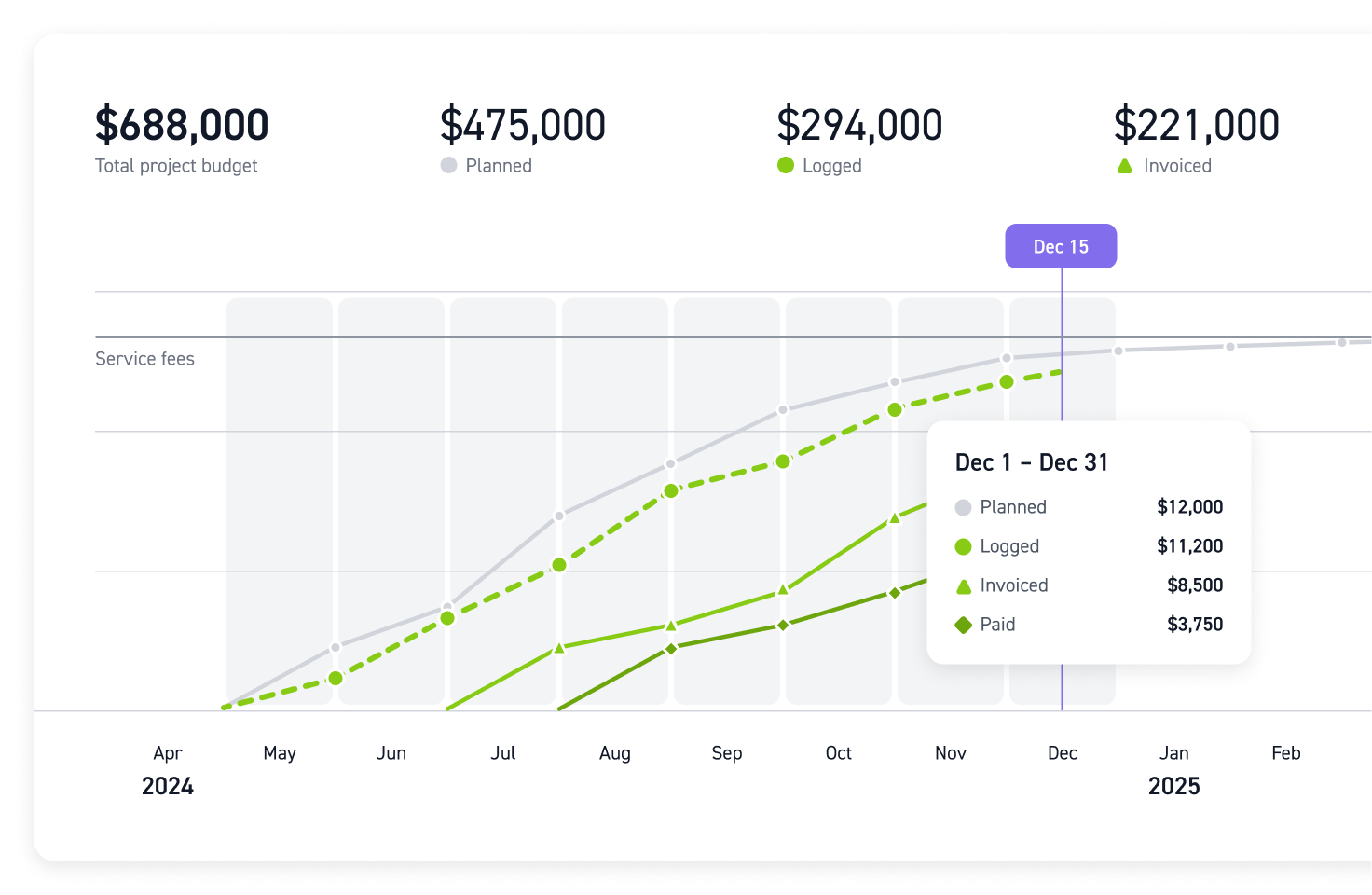
- Can a PM see budget burn by phase without asking finance? If not, the shadow spreadsheet survives the migration.
- Does it handle the billing methods you actually use? Fixed fee by phase, hourly with caps, percent complete and retainers all behave differently on an invoice.
- How much does it lean on another system? A PSA that depends on a fragile QuickBooks sync can create more month-end work than it removes.
- What do users complain about after the honeymoon? We read the low and middling reviews on Capterra and G2, because the five-star ones rarely tell you where the friction is.
- Who was it built for? Agency tools, A&E tools and general PSA tools make different assumptions about how work gets sold and delivered.
The utilization question sits behind all of this. SPI Research's 2026 benchmark of 509 services firms found billable utilization fell to 66.4%, the lowest in the study's 19-year history. Here's a rough way to think about what one point is worth: a 25-person firm with roughly 1,800 available hours per person has about 45,000 hours a year. One percentage point is 450 hours. At a $150 blended rate, that's $67,500 of billable time, which is often more than the annual cost of the software you're debating. That's illustrative math, not a benchmark, but it explains why visibility into who's busy next week matters more than another accounting report.
When staying on Ajera is the right call
Before going further, a fair warning: switching isn't always the smart move. If your firm has a full-time controller who owns Ajera, runs payroll through it, and your PMs genuinely use its widgets to manage budgets, the case for leaving is weak. The same goes for firms with heavy multi-entity accounting or audit requirements, where a combined ledger and project database earns its keep.
The firms that benefit most from alternatives to Deltek Ajera look different. They have a part-time bookkeeper or an outside accountant. Their PMs track phases in Excel. Resource conflicts surface on Monday morning instead of two weeks out. And the principal can tell you last year's profit to the dollar but can't say which three projects are losing money right now. For that firm, generic project management software won't fix it either, because the problem is the gap between the schedule and the invoice. That gap is exactly what PSA platforms are designed to close.
The 7 best PSA alternatives to Deltek Ajera
1. Ravetree
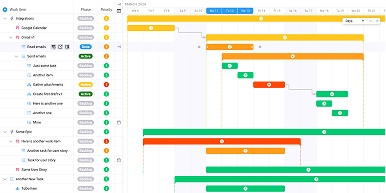
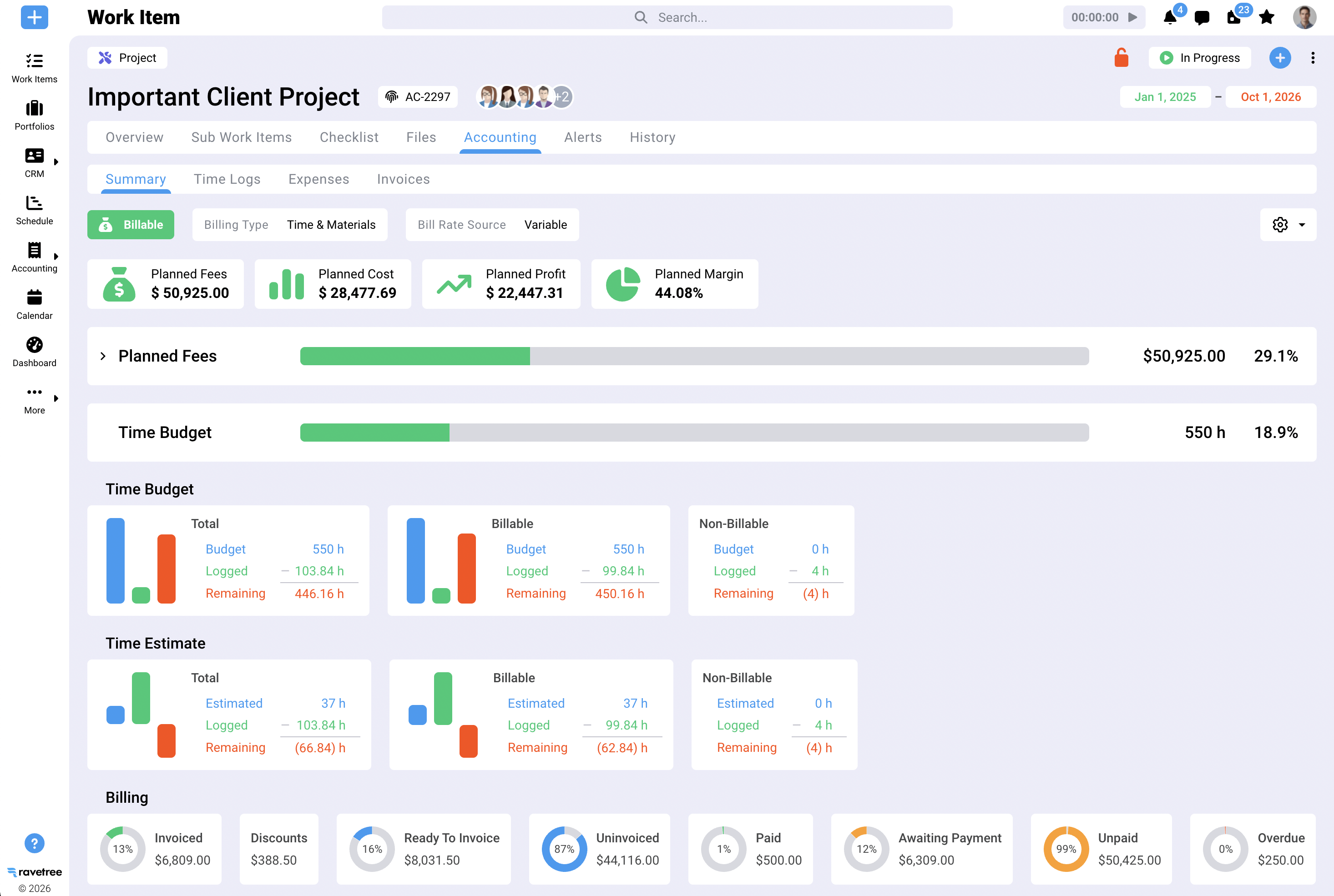
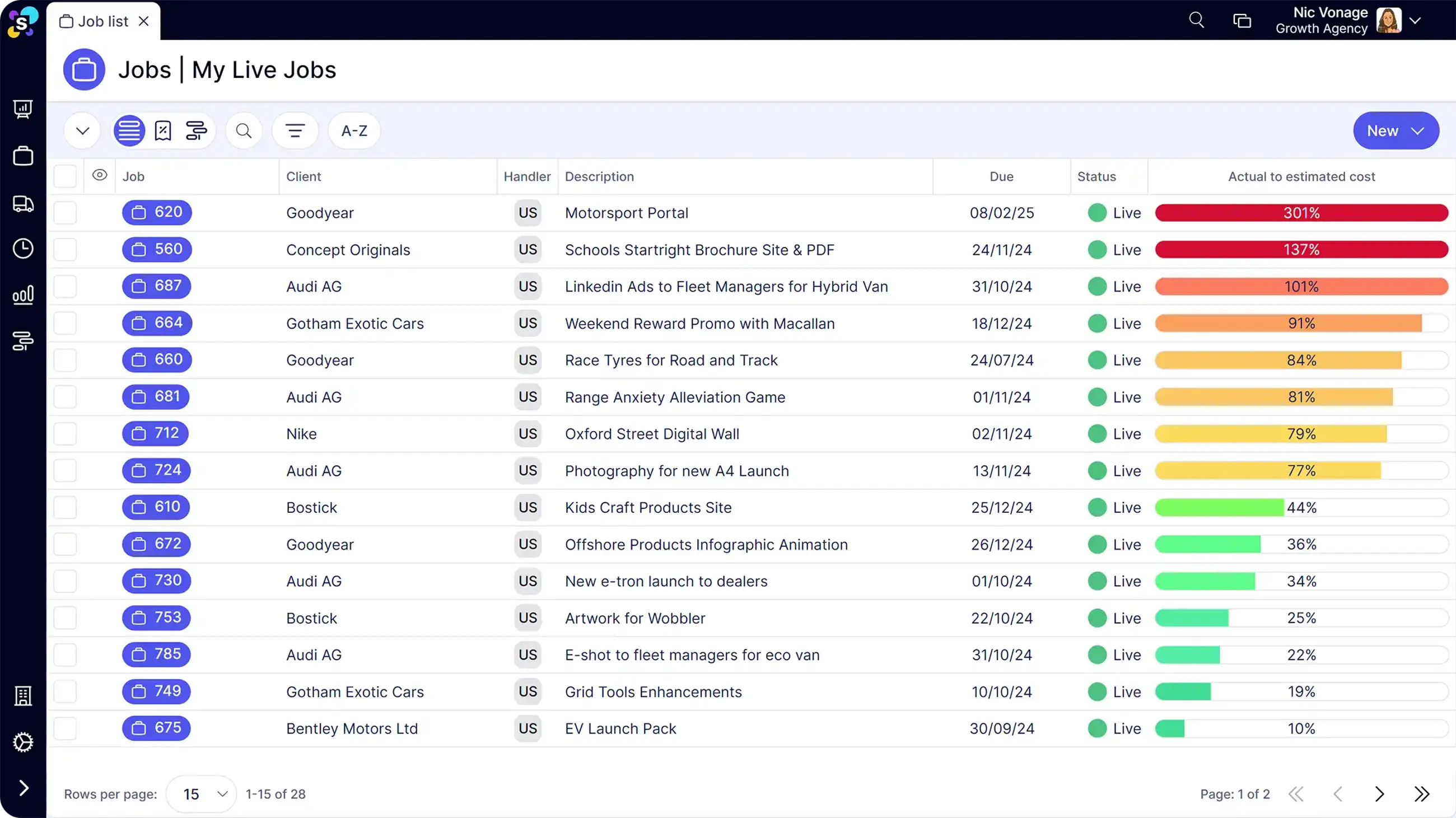
Ravetree is a PSA platform for project-driven services firms: engineering, architecture, consulting and agencies. It isn't built only for A&E, and that's the trade-off to understand going in. What you get is the delivery side of the firm in one place: projects with phases and budgets, a resource schedule, timesheets, expense tracking, proposals, invoicing, a CRM and a client portal where clients can review files and track progress.
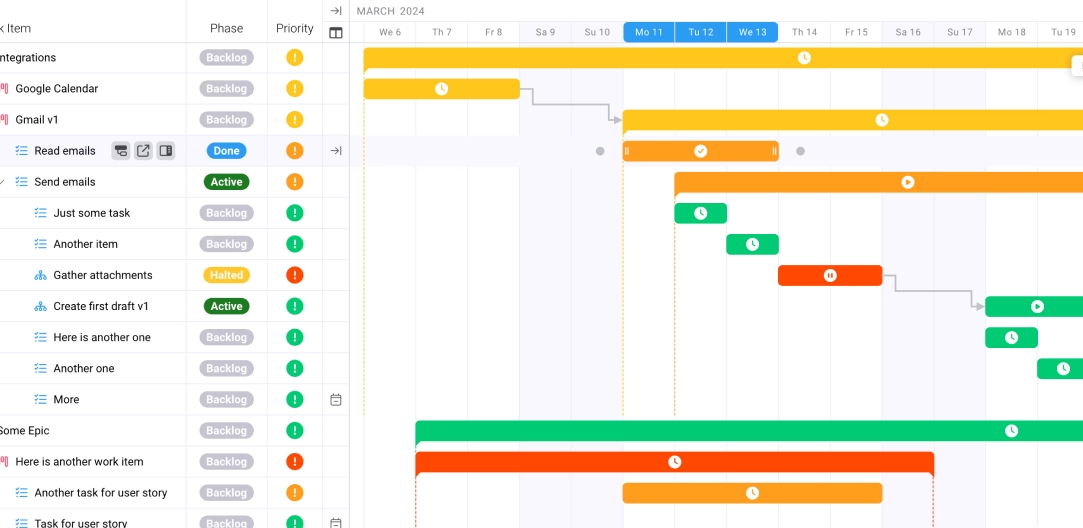
The parts that matter most for a former Ajera shop are the ones Ajera users tend to complain about. Resource planning shows who's booked across every project, not just who has entered time against one. Retainers and purchase orders are handled natively, which helps firms with on-call or term-contract clients. And intake from clients and internal teams can run through requests instead of email threads.
The review themes on G2 are consistent: users point to project management, resource planning and team collaboration living in one platform, along with a balance of depth and ease of use and a support team that responds. On Capterra, some reviewers describe moving over from heavier PSA tools as their teams grew, and one notes that the vendor regularly improves the platform based on customer feedback.
What to watch: Ravetree doesn't replace your general ledger or payroll. If you're leaving Ajera, plan to run QuickBooks, Xero or another accounting system alongside it. For firms that want delivery and billing in one place and accounting kept in an accounting tool, that split is usually a relief. There's more on how it fits engineering workflows in Ravetree's overview of PSA software for engineers.
Best for: A&E and consulting firms of roughly 10–150 people that want PMs, resource managers and billing on one system.
2. BQE Core
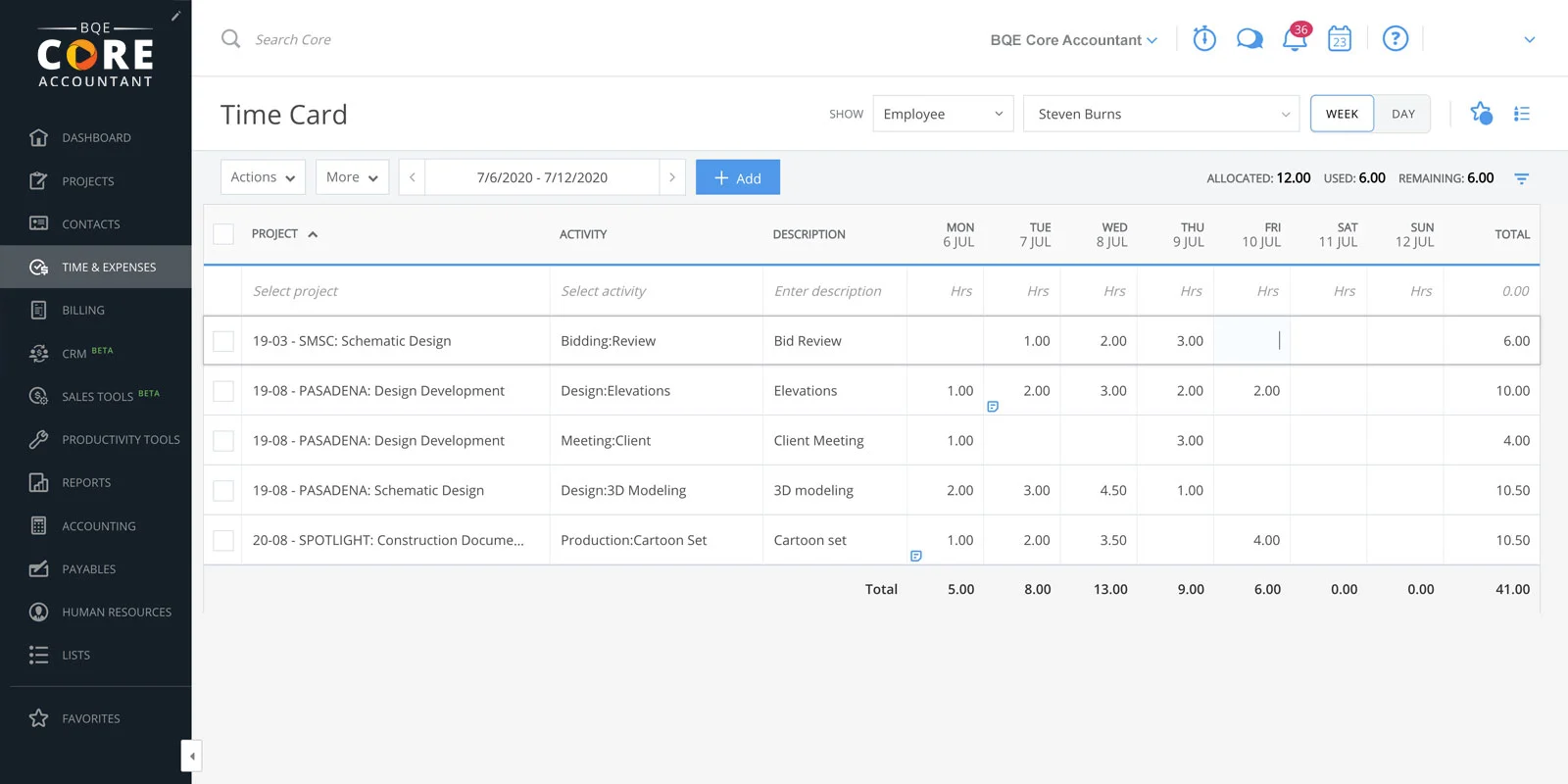
BQE Core is the closest like-for-like replacement on this list because it keeps accounting in the box: time and expense, billing, project management and its own accounting module, aimed squarely at architecture and engineering firms. Firms that came up on BillQuick tend to know it already.
The complaints in BQE Core's Capterra reviews cluster around a few themes. Speed comes up repeatedly, with users describing slow loading and lag at busy times. Several mention occasional bugs. Invoice customization is a sore point: some reviewers say layout changes meant contacting BQE's customization team, and others say custom reports required paid add-ons. A few report sync problems and an uneven support experience.
Best for: Firms that want to replace Ajera's accounting and project management together and can live with a steeper setup.
3. BigTime
BigTime is a long-running PSA built around time, expense and billing, with project and resource management added over the years. It's a common pick for consulting, IT services and A&E firms that bill hourly.
G2's own summary of BigTime reviews lists missing features as the top complaint theme, followed by "time-consuming," learning curve, software bugs and manual entry. In the reviews themselves, users mention capabilities that turn out to be paid add-ons, reports that are limited or tedious to customize, a QuickBooks Online sync that "can be awkward" around invoice dates, and invoice templates that need XML editing to change. If you're weighing it directly, Ravetree has published a head-to-head comparison of Ravetree and BigTime and a broader list of BigTime alternatives.
Best for: Hourly-billing firms whose main pain is timesheets and invoicing rather than resource planning.
4. Scoro
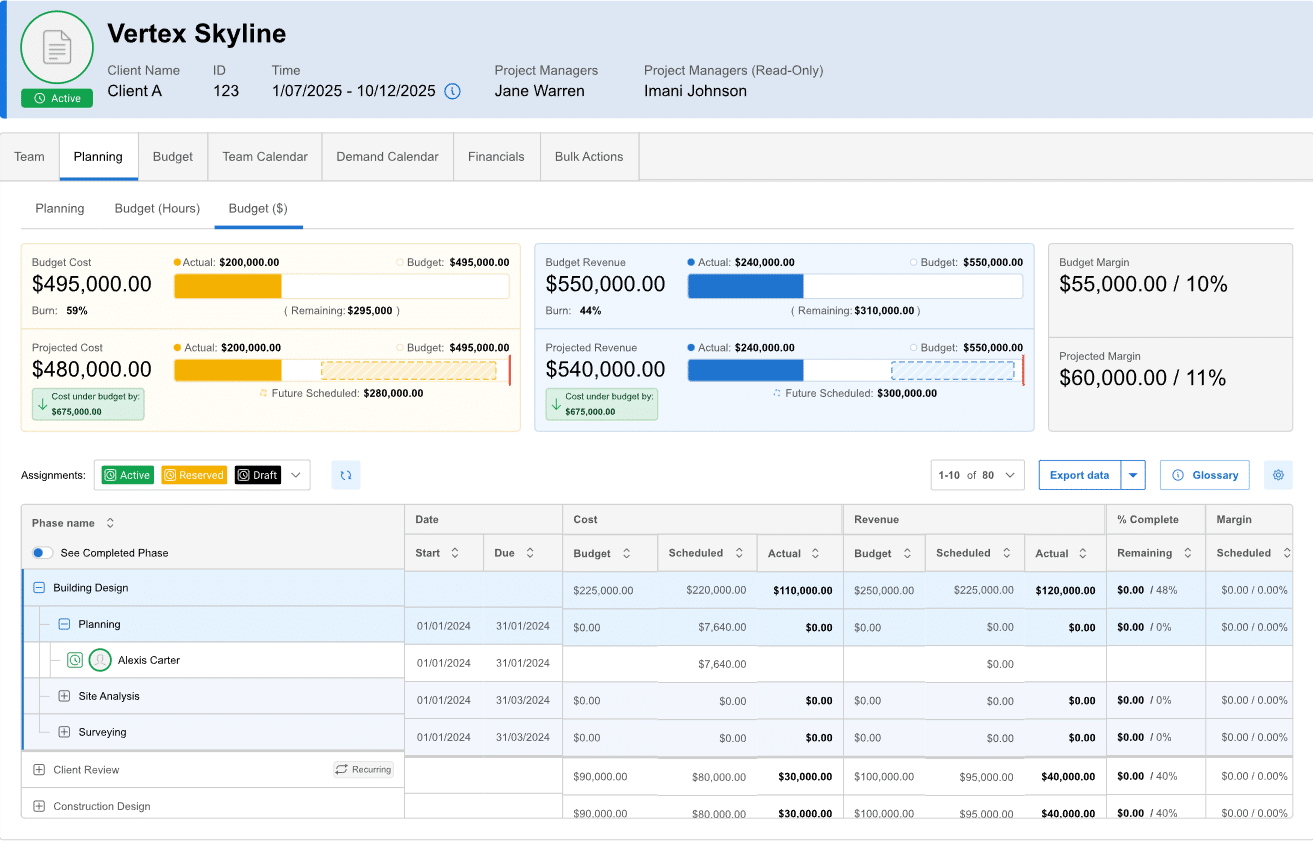
Scoro is an all-in-one work management and PSA platform used mostly by agencies and consultancies. It combines quoting, projects, time, billing and reporting, and its starting price on Capterra is listed at $23.90 per user per month.
The recurring complaints in Scoro's Capterra reviews start with price ("a little expensive" is a common refrain) and the feeling of being overwhelmed early on. Reviewers also describe reports that are difficult to customize, clumsy search for quotes and projects, an imperfect Outlook calendar sync and a weak mobile experience. The harshest comments concern support, with some users saying they had to pay for help. For A&E firms, the bigger issue is fit: Scoro's assumptions come from agency work, not phased design contracts. Ravetree's comparisons of Ravetree and Scoro and of BigTime and Scoro go deeper on where it fits.
Best for: Agency-style firms that sell retainers and campaigns more than phased projects.
5. Accelo
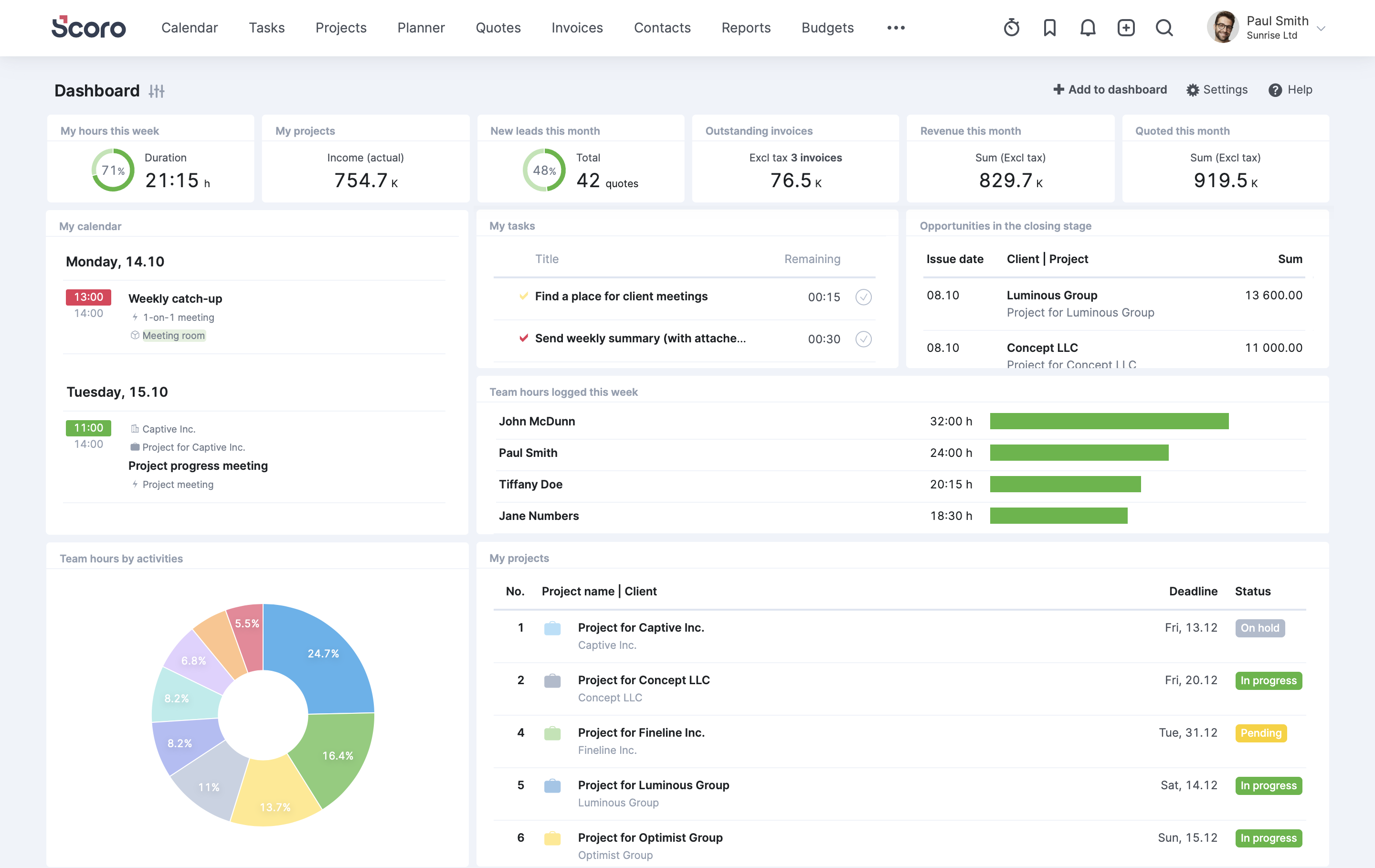
Accelo connects sales, projects, tickets, retainers and billing, and it's popular with IT services firms and consultancies that mix project and support work.
Accelo's own users are blunt about the learning curve. In Accelo's Capterra reviews, one reviewer says a team of eight spent more than 200 hours learning it, and others call it "overly complicated." Cost is another theme; one small business owner calls it their biggest expense after rent, largely because occasional timesheet users still need a paid seat. Reporting is described as weak, pages can be slow, and the QuickBooks Online sync reportedly breaks more often than it should. For a detailed comparison, see Ravetree's piece on Ravetree vs. Accelo or the roundup of Accelo alternatives.
Best for: Firms that run ongoing support tickets alongside projects and have time to invest in configuration.
6. Synergist
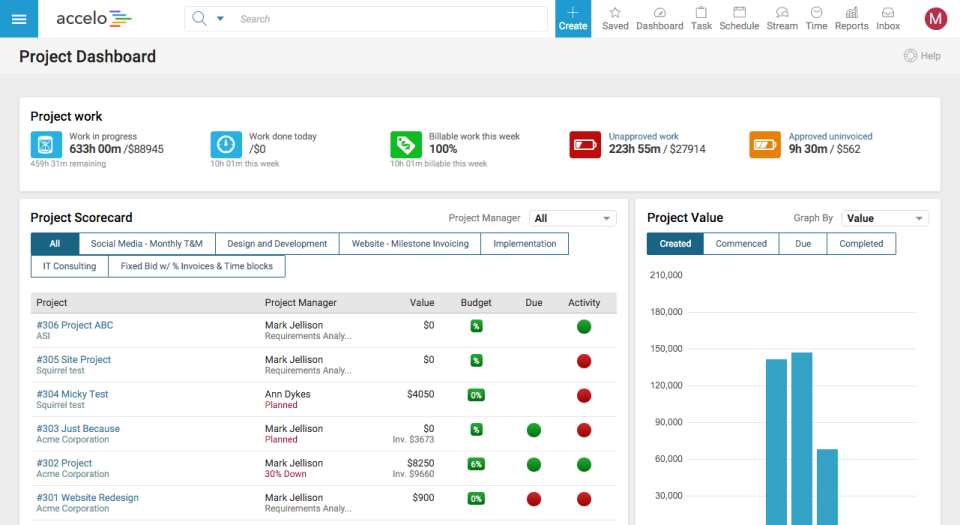
Synergist is a UK-built agency management system covering new business, job costing, resource scheduling, timesheets and billing. It has a strong reputation for customer service among its users.
It's also, by its own reviewers' accounts, not simple. In Synergist's Capterra reviews, users describe a feature-dense interface that feels overwhelming without onboarding, layers of sub-navigation, a look and feel that's dated, and a tool that can be slow. One reviewer says flatly that it isn't a plug-and-play system. Others mention a buggy resource booking calendar and a CRM that needs work. For a US engineering firm leaving Ajera, Synergist is a long shot: it's built around agency jobs, and you'll want to confirm local support and billing conventions before a demo goes far.
Best for: Established creative or marketing agencies that want deep job costing and will invest in setup.
7. Monograph
Monograph is project and practice management built for architecture firms, with phase-based planning, time tracking, invoicing and a clean, visual interface. It relies on QuickBooks Online for accounting.
The interface is what people like. The complaints in Monograph's Capterra reviews center on invoicing: some users describe it as glitchy, and several say invoice layouts can barely be customized. Reviewers also call reports limited, say task management feels bolted onto milestones, and find editing time entries awkward. A few raise concerns about product maturity and how quickly bugs get fixed. Engineering firms in particular may find it leans hard toward architecture. Ravetree's guide to Monograph alternatives for small architecture firms covers that gap.
Best for: Small architecture studios that care most about a simple, phase-based view of fees.
Three decisions to make before you sign anything
Review complaints across all seven tools have something in common: invoicing and reporting show up again and again. That's not a coincidence. Those are the two places where a firm's specific habits collide with a vendor's defaults, and they're almost never tested properly in a demo. So before you commit:
- Decide where the general ledger lives. If you're moving to a PSA, pick the accounting system first and confirm exactly what syncs: invoices, payments, expenses, or all three. A one-way invoice push and a two-way payment sync create very different month-end routines.
- Pick your cut-over point on purpose. The hardest part of leaving Ajera isn't moving contacts. It's moving work in progress: unbilled time, percent-complete billing history and retainage on projects that are mid-phase. A common approach is to switch at fiscal year-end, or to start new projects in the new system while old ones finish in Ajera. Running both for a quarter costs less than reconstructing a half-billed fee schedule. Whatever you choose, reconcile unbilled totals in both systems before you turn the old one off, and keep read-only Ajera access for at least one audit cycle.
- Make the vendor build your invoice. Send three real invoices (one fixed-fee by phase, one hourly with a not-to-exceed, one with reimbursables) and ask to see them produced in the trial. If it takes a support ticket or an XML template to match them, you've learned something no feature list will tell you.
Which alternative fits which firm
Short version, based on firm type:
- A&E or consulting firm, 10–150 people, wants delivery and billing unified with accounting kept separate: Ravetree.
- A&E firm that wants accounting inside the same product: BQE Core.
- Hourly-billing consultancy focused on timesheets and invoices: Ravetree or BigTime.
- Agency selling retainers and campaigns: Ravetree, Scoro, or Synergist if you're an established agency willing to invest in setup.
- Services firm mixing projects with support tickets: Accelo.
- Small architecture studio wanting simplicity above all: Ravetree or Monograph.
One contrarian note: don't over-weight "built for A&E." Industry-specific vocabulary is pleasant, but what decides whether a switch works is whether project managers open the tool every day. A general PSA that your PMs use beats an A&E tool they avoid.
Pick the system your project managers will actually open
Most firms don't leave Ajera because the books are wrong. They leave because the people running projects can't see what they need in time to act on it. The best alternatives to Deltek Ajera fix that first, then make billing faster, and treat accounting as a separate, solid foundation rather than the center of the universe. Start with the general-ledger decision, test your real invoices, and choose from these 7 Best PSA Alternatives to Deltek Ajera based on which one your PMs would use without being told to.
Frequently Asked Questions
What is the best alternative to Deltek Ajera for a small engineering firm?
It depends on whether you want accounting in the same product. Firms that want delivery, resource planning and billing in one place with accounting kept in QuickBooks or Xero tend to look at Ravetree; firms that want everything in one product usually evaluate BQE Core.
Is Deltek Ajera being discontinued?
Deltek still actively markets Ajera to small A&E firms in 2026. Most firms that switch do so because of fit and usability, not because of an end-of-life deadline, but confirm the product roadmap with Deltek directly if it affects your timing.
Can a PSA tool replace Ajera's accounting and payroll?
Usually not on its own. Most PSA platforms handle time, projects and invoicing and pass financial data to a separate accounting system, so plan for a general ledger and a payroll provider alongside the PSA.
How long does it take to migrate off Deltek Ajera?
Plan for at least a couple of months for a small firm, longer if you have many active projects with unbilled work. Switching at fiscal year-end, or letting old projects finish in Ajera, shortens the painful part.
Does Deltek Ajera publish its pricing?
No. Pricing isn't publicly listed and is quoted by the vendor, which makes direct cost comparisons harder until you request quotes.
What's the difference between PSA software and A&E accounting software?
PSA software is built around delivering client work: projects, resources, time and billing. A&E accounting software like Ajera starts from the ledger and adds project tracking, which is why finance teams and project managers often feel differently about it.
Which Ajera alternative handles percent-complete billing?
Several do, but the details vary a lot. Test it with a real invoice from an active project during the trial rather than relying on a feature checklist.